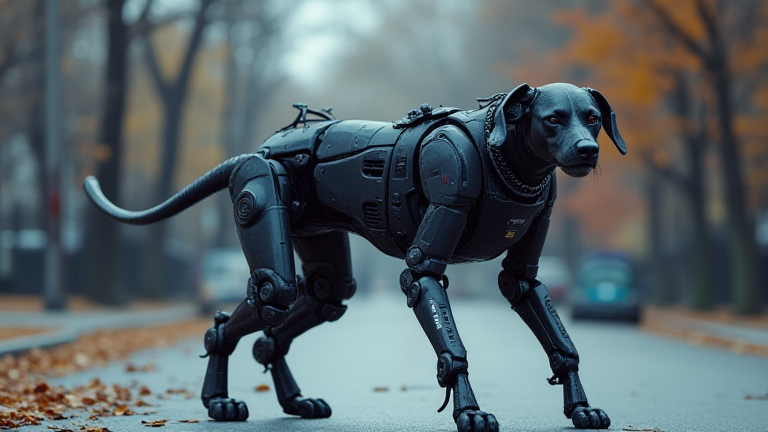
ICE Plans Robot Dogs for Officer Safety: Millions on Boston Dynamics Tech
TL;DR: U.S. Immigration and Customs Enforcement has secured funding to acquire Boston Dynamics Spot robots to enhance officer safety during high-risk operations. This deployment aims to reduce human exposure to hazards by utilizing autonomous quadruped technology for reconnaissance and perimeter security.
The landscape of law enforcement technology is shifting rapidly, and the recent decision by Immigration and Customs Enforcement (ICE) to invest millions in Boston Dynamics’ Spot platform marks a significant milestone. This is not merely a purchase of hardware; it represents a strategic pivot toward leveraging advanced robotics to mitigate the inherent dangers faced by federal agents. By integrating these machine dogs into their operational toolkit, ICE is addressing a critical gap in force protection while exploring the practical applications of autonomy in complex, unpredictable environments.
If you want to dig deeper, check out our guide on Notion Tutorial: How to Build a Second Brain from Scratch.
Key Feature Highlights
The Spot robot is not a generic toy; it is a rugged, industrial-grade asset designed for demanding conditions. One of the primary features driving this adoption is its ability to navigate difficult terrain that would be hazardous for a human agent, such as steep inclines, rubble, or unstable structures. Its 360-degree camera array provides real-time, high-definition visual data back to the command center or the agents on the ground, allowing for remote assessment of situations before anyone physically enters a potentially hostile zone. Additionally, Spot’s battery life, which offers up to four hours of continuous operation, ensures it can sustain a full shift or multiple tactical deployments without frequent recharging interruptions. The robot’s lightweight design also allows it to be easily transported in standard agency vehicles, ensuring rapid deployment to any location within the jurisdiction.
Comparisons to Traditional Methods
When comparing Spot to traditional law enforcement tactics, the advantages become starkly clear. Previously, agents had to physically breach or scout areas, risking injury or death from booby traps, active shooters, or structural collapse. In contrast, Spot can enter these spaces autonomously, gathering intelligence without putting a single human life at risk. Furthermore, compared to other robotic solutions on the market, such as wheeled rovers or drone swarms, Spot offers superior all-terrain capability. While drones struggle with wind and indoor navigation, and wheeled robots get stuck on debris, the quadrupedal design of Spot allows it to climb stairs, jump over obstacles, and maintain stability on uneven surfaces. This versatility makes it a more reliable tool for the diverse environments ICE agents encounter, from border crossings to urban search-and-rescue scenarios. The investment in Boston Dynamics’ technology signals a preference for proven, high-reliability platforms over untested experimental devices, ensuring that the agency is not gambling officer safety on prototype technology.
Call to Action
As public discourse around robotic policing intensifies, it is crucial for citizens, policy makers, and community leaders to stay informed. We encourage you to review the official ICE statements regarding the deployment protocols and oversight mechanisms for these robots. Understanding the ethical guidelines and legal frameworks surrounding autonomous technology in law enforcement is more important than ever. If you are a researcher, journalist, or concerned citizen, we invite you to follow the ongoing developments in this sector. Your engagement helps ensure that the integration of robotics into public safety remains transparent, accountable, and aligned with civil liberties. Visit our resource center for detailed reports on the legal implications of AI in policing and how to advocate for responsible innovation in your local community.
FAQ
Q: How much did ICE spend on these robots?
A: The initial investment is in the millions, covering the acquisition of multiple units, necessary software licenses, and training for the operational teams.
Q: Can the robots operate autonomously without human control?
A: No, the robots are teleoperated or semi-autonomous, meaning they require human oversight and intervention for critical decision-making processes.
Q: What is the primary safety benefit for officers?
A: The primary benefit is keeping agents at a distance from immediate threats, reducing the risk of physical injury during reconnaissance and perimeter checks.
Leave a Reply