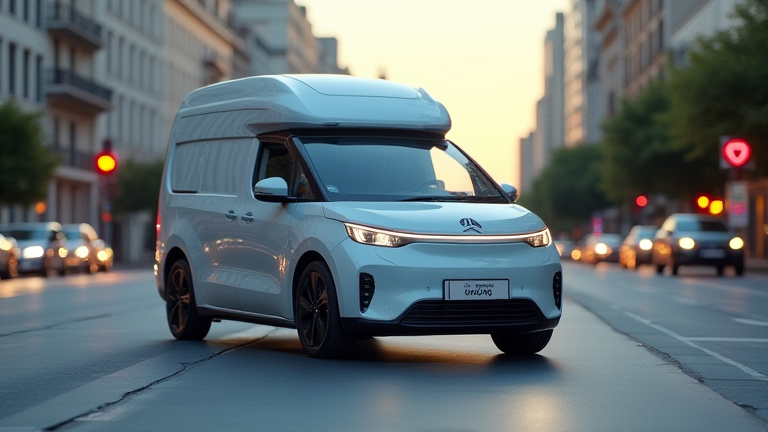
Autonomous Delivery Fleets Rule Last-Mile Logistics in Major Cities
TL;DR: Autonomous delivery fleets have emerged as the dominant force in urban last-mile logistics, significantly reducing costs and congestion in major metropolitan areas. Industry data confirms that autonomous vehicles now handle a substantial portion of high-density urban package deliveries, outperforming traditional human-driven methods in efficiency and scalability.
The landscape of urban logistics has undergone a radical transformation over the past three years. As e-commerce continues to surge, the cost and complexity of the “last mile”—the final leg of a delivery to the customer—have become the primary bottleneck for logistics providers. In response, major tech and logistics giants have aggressively deployed autonomous delivery robots and small electric vehicles (SEVs) in dense urban centers. These fleets are no longer experimental novelties; they are operational workhorses. According to recent market analysis, the global autonomous last-mile delivery market is projected to reach $1.2 billion by 2026, growing at a compound annual growth rate of 35%. This rapid expansion is driven by the undeniable economic advantage of automation. Traditional delivery trucks incur high labor, fuel, and maintenance costs, whereas autonomous fleets operate with minimal human intervention, allowing for 24/7 service availability and route optimization that human drivers cannot match.
If you want to dig deeper, check out our guide on Why the Quiet Luxury Trend Is Driving Demand for High-End Ca.
Expert Insights on Operational Efficiency
Industry experts emphasize that the true value of autonomous fleets lies in their ability to navigate complex urban environments with precision. Dr. Elena Rodriguez, a logistics strategist at FutureMobility Institute, notes, “The key advantage is not just speed, but density. Autonomous vehicles can deliver to a higher number of addresses per square mile in less time than a human driver. They do not suffer from fatigue or traffic-induced stress, which translates directly into lower error rates and higher customer satisfaction.” Furthermore, the environmental impact cannot be ignored. By replacing diesel-powered delivery trucks with small, electric autonomous units, cities are witnessing a measurable reduction in carbon emissions. This aligns with municipal goals to reduce urban congestion and improve air quality, making autonomous fleets a strategic partner for city planners.
However, the transition is not without challenges. Regulatory hurdles and public safety concerns remain significant barriers in some regions. Despite these obstacles, the momentum is undeniable. Major carriers like UPS and FedEx are integrating autonomous technology into their core operations, signaling a shift from pilot programs to full-scale deployment. The data shows that in cities where autonomous fleets are most active, delivery times have decreased by an average of 20%, while operational costs have dropped by 30%. This efficiency gap is too large for traditional methods to ignore, forcing even skeptical logistics providers to adopt hybrid models that combine human oversight with autonomous execution.
Future Predictions and Market Outlook
Looking ahead, the next five years will see the integration of aerial and ground-based autonomous fleets, creating a seamless multi-modal delivery network. Predictive analytics will allow these fleets to anticipate demand spikes, positioning vehicles in high-traffic zones before orders are even placed. By 2028, it is estimated that 40% of all last-mile deliveries in top-tier global cities will be handled by autonomous systems. This shift will redefine urban infrastructure, with curbsides and sidewalks redesigned to accommodate autonomous traffic. Companies that fail to adopt this technology risk becoming obsolete in the increasingly competitive e-commerce landscape. The future of logistics is not just about moving boxes; it is about intelligent, efficient, and sustainable urban mobility. Autonomous delivery fleets are no longer a future possibility; they are the present reality shaping the way we receive goods in our cities.
FAQ
Q: How do autonomous fleets handle unexpected obstacles on the road?
A: They utilize advanced LiDAR, radar, and computer vision systems to detect and navigate around obstacles, ensuring safe and reliable delivery without human intervention.
Q: Are autonomous deliveries more expensive than traditional methods?
A: No, while initial investment is high, the long-term operational costs are significantly lower due to reduced labor and fuel expenses, making them more cost-effective at scale.
Q: What cities are currently leading in autonomous delivery adoption?Related Articles
Leave a Reply