Category: Uncategorized

  • Air Fryer vs. Oven: Which Cooks Chicken Better?

    Air Fryer vs. Oven: Which Cooks Chicken Better?

    TL;DR: The air fryer cooks chicken faster with a significantly crispier skin and less cleanup effort. The oven is better for large batches or whole birds where even, gentle heat distribution is prioritized over speed and texture.

    Feature Highlights of the Modern Air Fryer

    Air fryers have revolutionized home cooking by mimicking the effects of deep frying with minimal oil. The primary feature highlight is the rapid air circulation technology. This high-speed fan forces hot air around the food, creating a Maillard reaction that results in a golden, crispy exterior without the need for submerging meat in hot fat. This mechanism drastically reduces cooking times compared to traditional methods. Additionally, most modern air fryers feature intuitive digital interfaces with pre-set modes for chicken, fries, and vegetables, making operation simple for beginners. The compact footprint is another major advantage, allowing users to cook a meal on a small countertop without occupying the entire kitchen. Energy efficiency is also a notable point; because the chamber is small, it heats up quickly and uses less electricity than a full-sized conventional oven, leading to lower utility bills over time.

    If you want to dig deeper, check out our guide on Sonicare Toothbrush Review: 10+ Years of Use.

    Comparing Performance: Air Fryer vs. Oven

    When it comes to cooking chicken, the differences between an air fryer and a standard oven are stark. In terms of texture, the air fryer consistently outperforms the oven. The intense, localized heat ensures that the skin becomes exceptionally crisp while keeping the meat juicy inside. A conventional oven, while excellent for slow-roasting, often results in drier chicken breast meat if not monitored closely, and the skin rarely achieves the same level of crunch. Speed is another critical comparison point. An air fryer can cook boneless chicken breasts in approximately fifteen to twenty minutes. In contrast, an oven typically requires thirty to forty-five minutes for the same cut. This time-saving aspect makes air fryers ideal for weeknight dinners when time is of the essence. However, the oven wins in capacity. If you are feeding a family of six or roasting a whole turkey, the air fryer is insufficient. The oven’s larger cavity allows for multiple pans and large cuts of meat, providing flexibility for holiday meals and large gatherings. Furthermore, the oven offers more precise temperature control for low-and-slow cooking techniques, which are essential for tenderizing tough cuts like chicken thighs, whereas air fryers are best suited for quicker, higher-heat preparations.

    Verdict and Call-to-Action

    Ultimately, the choice depends on your specific needs. For individual or small family meals where speed and crispiness are paramount, the air fryer is the superior tool. It delivers restaurant-quality results in a fraction of the time with minimal mess. If you frequently cook large batches or prefer traditional roasting methods, the oven remains a staple. We recommend investing in a high-quality air fryer if you have never tried one. Check out our top-rated models today and transform your weeknight dinners into quick, delicious, and healthy experiences. Do not miss out on the convenience that modern technology offers. Shop now and taste the difference for yourself.

    FAQ

    Q: Can I cook a whole chicken in an air fryer?
    A: Yes, but it requires a larger model and careful temperature monitoring to ensure even cooking without burning the skin.

    Q: Which method is healthier for cooking chicken?
    A: Air frying is generally considered healthier because it uses significantly less oil than deep frying and allows fat to drip away from the meat.

    Q: Does air-fried chicken taste the same as oven-roasted?
    A: No, air-fried chicken has a crispier texture and slightly different flavor profile due to the rapid heat distribution, which many people prefer.

    Related Articles

  • 10 Minimalist Wardrobe Staples That Instantly Upgrade Any Outfit

    10 Minimalist Wardrobe Staples That Instantly Upgrade Any Outfit

    10 Minimalist Wardrobe Staples That Instantly Upgrade Any Outfit

    TL;DR: Investing in high-quality, versatile basics like a tailored blazer and neutral trousers creates endless outfit combinations. These ten items prioritize fit and fabric over trends, ensuring your look remains polished and timeless.

    Minimalism is not about having less; it is about having more of what matters. In today’s fast-fashion world, our closets are often cluttered with impulse buys that rarely get worn. However, a curated wardrobe of ten essential pieces can transform your daily routine and elevate your style with zero effort. This approach aligns perfectly with the modern traveler’s need for efficiency. Whether you are navigating a busy work week or preparing for a spontaneous weekend getaway, these staples serve as the foundation for any ensemble. They reduce decision fatigue, allowing you to focus on your experiences rather than your attire. By focusing on quality over quantity, you invest in pieces that last for years, not seasons. This shift towards intentional dressing fosters a sense of personal growth and confidence. You stop chasing fleeting trends and start building a signature style that feels authentically yours. The beauty of this method lies in its simplicity. Each item must work with at least three others in your collection. This constraint forces you to be selective and thoughtful about your purchases. It is a cultural shift away from consumerism and towards sustainability. Your wardrobe becomes a reflection of your values, prioritizing durability and utility. Let’s explore the ten items that form the backbone of a minimalist, stylish life.

    If you want to dig deeper, check out our guide on 10 Proven Business Strategies to Grow Your Revenue.

    First, the crisp white button-down shirt is non-negotiable. It bridges the gap between casual and formal settings effortlessly. Second, a pair of well-fitted dark wash jeans provides comfort without sacrificing style. Third, black tailored trousers offer a sleek silhouette that pairs with any top. Fourth, a classic trench coat adds sophistication and weather protection. Fifth, a quality cashmere sweater in a neutral tone brings warmth and texture. Sixth, a pair of white leather sneakers ensures comfort for long days on your feet. Seventh, a structured leather handbag or tote organizes your essentials with elegance. Eighth, a simple black midi dress serves as a versatile base for layering. Ninth, a pair of loafers in brown or black adds a touch of refinement. Finally, a lightweight scarf can instantly change the vibe of any outfit. These items are not just clothes; they are tools for expression. They allow you to mix and match with confidence. When traveling, packing these ten items ensures you are never stuck without an appropriate outfit. In food culture, we often talk about core ingredients that make any dish taste better. Similarly, these wardrobe staples are the core ingredients of personal style. They enhance every other piece you own. Personal growth comes from mastering the fundamentals. By perfecting your basic look, you free up mental energy for more important pursuits. This is the true luxury of minimalism. It is not about deprivation; it is about liberation. You are no longer a slave to your closet. You are the curator of your image. Start by auditing your current wardrobe. Donate what does not fit the criteria. Then, begin building your collection one piece at a time. Patience is key. Do not rush the process. Each item should be chosen with care. Consider the fabric, the fit, and the versatility. Ask yourself if this piece will still look good in five years. If the answer is yes, buy it. If not, walk away. This discipline will save you money and stress. It will also reduce the environmental impact of your consumption. Fashion is a powerful force. Use it to create a life that feels balanced and intentional. Your style should support your journey, not hinder it. Embrace the power of the few. Let your wardrobe speak for you with quiet confidence. The result is a life that feels lighter, cleaner, and more aligned with your true self. This is the ultimate upgrade, not just to your outfit, but to your entire lifestyle.

    FAQ

    Q: Can I use these staples for professional office wear?
    A: Yes, items like the tailored trousers, white button-down, and blazer are perfect for corporate environments when styled with modest shoes and accessories.

    Q: How do I maintain high-quality

    Related Articles

  • BCI Consumer Health Monitors: Latest Advances

    BCI Consumer Health Monitors: Latest Advances

    BCI Consumer Health Monitors: Latest Advances

    TL;DR: Brain-Computer Interface (BCI) consumer monitors are rapidly evolving from experimental gadgets to practical wellness tools that track cognitive load and mental fatigue in real-time. These devices now offer seamless integration with popular health ecosystems, providing actionable insights for stress management and focus optimization without the need for invasive procedures.

    The landscape of consumer health technology is undergoing a significant transformation with the rise of non-invasive BCI headsets. Unlike traditional wearables that rely solely on heart rate and step count, the latest BCI monitors decode electrical signals from the brain to provide a deeper understanding of mental states. This technological leap allows users to monitor their cognitive performance, detect early signs of burnout, and optimize their daily routines with unprecedented precision. As the hardware becomes smaller, lighter, and more comfortable, adoption rates are surging among professionals, students, and biohackers alike who seek a holistic view of their well-being.

    If you want to dig deeper, check out our guide on Hollywood Creatives Train AI to Replace Them: Digging Our Ow.

    Key Feature Highlights

    Modern BCI devices, such as the latest iterations from established neurotech startups, feature advanced dry electrodes that eliminate the need for conductive gel, ensuring a hassle-free user experience. These sensors are designed for all-day comfort, making them suitable for both work environments and sleep tracking. The accompanying applications utilize machine learning algorithms to interpret EEG data, translating complex neural patterns into easy-to-understand metrics like focus scores, relaxation levels, and mental effort. Additionally, many new models support real-time biofeedback, enabling users to engage in mindfulness exercises or meditation with guided audio that adapts dynamically to their brainwave activity, thereby accelerating the learning process for mental control techniques.

    Comparisons with Traditional Wearables

    When compared to standard smartwatches, BCI monitors offer a distinct advantage by measuring internal mental states rather than just external physiological responses. While a smartwatch might detect an elevated heart rate during a stressful meeting, a BCI device can pinpoint the exact moment cognitive overload begins, allowing for proactive intervention. However, traditional wearables still hold the edge in battery life and overall physical activity tracking. The ideal solution for many consumers is a hybrid approach, using a BCI headset for deep work sessions or sleep optimization and a smartwatch for daily physical health monitoring. This complementary strategy provides a comprehensive health profile that neither device can achieve alone, bridging the gap between physical vitality and mental clarity.

    The market is still maturing, and users should be mindful of data privacy concerns when selecting a provider. Choosing a company with robust encryption and clear data usage policies is essential. As these devices become more affordable and accessible, the boundary between clinical neuroscience and consumer wellness continues to blur, promising a future where mental health management is as routine and data-driven as physical fitness tracking.

    If you are ready to take control of your cognitive performance and explore the frontier of personal health, now is the perfect time to invest in a BCI monitor. Check out the latest deals from trusted neurotech retailers to find the device that best fits your lifestyle and wellness goals. Start your journey toward mental clarity today.

    FAQ

    Q: Are BCI headsets safe for daily use?
    A: Yes, consumer-grade BCI devices use non-invasive, passive sensors that do not emit radiation or stimulate the brain, making them safe for prolonged daily use.

    Q: Do I need to be an expert to interpret the data?
    A: No, modern applications translate complex brainwave data into simple metrics and actionable insights, making it accessible for beginners without technical expertise.

    Q: Can BCI monitors replace therapy or medical treatment?
    A: No, these devices are wellness tools for self-awareness and should not be used as a substitute for professional medical advice or mental health treatment.

    Related Articles

  • Remote Work Is Here to Stay: Why Hybrid Models Are Now Standard

    Remote Work Is Here to Stay: Why Hybrid Models Are Now Standard

    TL;DR: Hybrid work models have transitioned from a temporary pandemic necessity to the permanent standard for modern corporate strategy. Companies adopting flexible schedules see higher retention rates and improved productivity compared to strict office-only mandates.

    The New Normal of Flexibility

    The post-pandemic workforce has fundamentally reshaped expectations regarding where and how work gets done. For years, the nine-to-five office grind was the unspoken rule of corporate life. However, the last few years have proven that employees can be just as, if not more, productive when given the autonomy to manage their environments. This shift is not merely a preference for casual Fridays; it is a structural change in how teams collaborate, communicate, and deliver results. As organizations mature, they are moving away from rigid policies toward flexible frameworks that respect employee time while maintaining team cohesion. The result is a more engaged, loyal, and efficient workforce that thrives on trust rather than surveillance.

    If you want to dig deeper, check out our guide on 2 Days in Singapore: Urban Jungle Meets Nature.

    Key Feature Highlights of Hybrid Success

    Successful hybrid models are not accidental; they are engineered with specific features in mind. First, robust digital infrastructure is non-negotiable. Teams rely on seamless video conferencing, collaborative document editing, and instant messaging platforms to stay connected across time zones. Without these tools, the hybrid model fails. Second, clear communication protocols are essential. Teams must establish when synchronous meetings are necessary and when asynchronous updates suffice. This prevents meeting fatigue and allows for deep work blocks. Finally, culture-building initiatives are critical. Since spontaneous hallway conversations are no longer guaranteed, managers must create intentional spaces for social interaction and team bonding, whether through virtual coffee breaks or quarterly in-person retreats. These features ensure that the hybrid model fosters connection rather than isolation.

    Comparing Traditional vs. Hybrid Models

    When comparing traditional office-only setups with hybrid models, the differences in employee satisfaction are stark. Traditional models often suffer from high burnout rates due to long commutes and limited flexibility. In contrast, hybrid models reduce commute times significantly, saving employees hours each week. This reclaimed time can be directed toward personal health, family, or professional development, leading to higher job satisfaction. Furthermore, hybrid models allow companies to access a wider talent pool. By not requiring daily office presence, organizations can hire the best candidates regardless of their geographic location, breaking down local labor market constraints. While office-only setups offer immediate face-to-face collaboration, hybrid models balance this with the focus and efficiency of remote work. The data consistently shows that hybrid teams report higher engagement scores and lower turnover rates than their fully in-person counterparts. This makes the hybrid model not just a perk, but a strategic advantage for competitive firms.

    Why You Should Adopt Hybrid Practices Now

    Waiting to adopt hybrid practices is a risk that most modern companies cannot afford. The talent market has changed, and top performers expect flexibility as a baseline condition of employment. If your organization remains rigid, you risk losing key personnel to more flexible competitors. To start, conduct an internal survey to understand employee preferences and pain points. Then, pilot a hybrid schedule with a specific team to identify what works and what needs adjustment. Invest in the right technology and train managers on leading distributed teams effectively. By embracing this shift, you position your company as an employer of choice, attracting and retaining the talent needed to drive innovation and growth in an ever-changing business landscape.

    FAQ

    Q: How many days should employees work from the office in a hybrid model?
    A: Most successful companies adopt a three-day in-office, two-day remote schedule, though this can vary based on industry needs and team preferences.

    Q: Does hybrid work negatively impact team cohesion?
    A: Not if managed correctly. Intentional scheduling for in-person collaboration and regular virtual socials can maintain strong team bonds despite physical distance.

    Q: What tools are essential for a successful hybrid setup?
    A: You need reliable video conferencing software, cloud-based project management tools, and secure file-sharing platforms to ensure seamless communication and collaboration.

    Related Articles

  • Digital Wellness Apps: 7 Best Tools to Beat Screen Addiction

    Digital Wellness Apps: 7 Best Tools to Beat Screen Addiction

    TL;DR: These seven digital wellness apps use a mix of gamification, mindful nudges, and hard blockers to help you reclaim hours lost to scrolling. From Forest’s plant-based focus to Opal’s aggressive scheduling, there’s a tool for every level of screen dependency.

    Why You Need a Digital Wellness App (Not Just Willpower)

    Your phone is engineered by attention economists to keep you hooked. Willpower alone fails because the design is against you. These apps insert friction, awareness, and accountability into your device, turning your habit loop on its head. The best ones don’t just track time—they change your relationship with the screen.

    If you want to dig deeper, check out our guide on Why Glamping Tents Are the Next Big Travel Trend.

    1. Forest: Gamified Focus That Grows Real Trees

    Forest is the OG of focus apps. You plant a virtual seed, and if you leave the app, your tree dies. Over time, you earn coins to plant real trees via a partnership with Trees for the Cloud. Feature highlights: Pomodoro timer integration, friend leaderboards, and a beautiful minimal widget. Perfect for light-to-moderate scrollers who need gentle motivation, not a digital straitjacket.

    2. Opal: The Heavy-Duty Blocker for Chronic Scrollers

    Opal is the nuclear option. It blocks entire apps with escalating schedules, and you cannot override it without a “breaking glass” penalty (like a 30-second wait or a fee). Feature highlights: Cross-device sync (iPhone, iPad, Mac), “deep focus” mode that locks you out of settings, and usage analytics that show your “time rescued.” Best for people who’ve tried and failed with timers.

    3. One Sec: The Breath Before the Scroll

    One Sec inserts a 6-second breathing animation before any app opens. That tiny delay kills impulsive opens. Feature highlights: Customizable delay length, daily “saved” counts, and a gentle haptic pulse. It’s not a blocker—it’s a mindfulness gate. Ideal for Instagram or TikTok addicts who want to keep the apps but lose the reflex.

    4. ScreenZen: The Minimalist’s Daily Limit

    ScreenZen uses a “quota” system—you set a max number of daily opens per app, not just time. Feature highlights: No accounts, no cloud, fully offline. It works on a simple lock screen that you swipe through after a 10-second pause. Great for privacy-focused users who hate subscriptions.

    5. Space: The Behavioral Coach

    Space uses cognitive-behavioral therapy (CBT) techniques. It asks you “Why do you want to open this app?” before every unlock. Feature highlights: Daily check-ins, mood tracking, and a “challenge” mode that pairs you with a buddy. It’s the most psychological of the bunch—best for those who want to understand their triggers, not just count minutes.

    6. AppBlock: The Customizable Workhorse

    AppBlock offers the most granular controls: block by time, by location (e.g., gym), or by Wi-Fi network. Feature highlights: Schedule repeating blocks, block specific websites inside browsers, and a “strict mode” that prevents uninstalling. Cross-platform (Android, iOS, Windows). The Swiss Army knife for tech-savvy users who need different rules for work and home.

    7. Digital Wellbeing (Built-in) + ActionDash (Analytics)

    Don’t overlook Google’s built-in Digital Wellbeing (Android) or iOS Screen Time. Pair them with ActionDash, which gives you deep analytics like “pickups per hour” and “unlock streaks.” Feature highlights: Zero extra cost, offline, and no permissions beyond system access. Perfect as a first step before committing to a paid app.

    Comparison: Which One Should You Pick?

    Related Articles

  • 4-Day Workweeks: The New Corporate Wellness Trend

    4-Day Workweeks: The New Corporate Wellness Trend

    4-Day Workweeks: The New Corporate Wellness Trend

    TL;DR: The four-day workweek is rapidly emerging as a dominant corporate strategy for enhancing employee well-being and retention. Companies that adopt this model report significant improvements in productivity and a substantial reduction in voluntary turnover rates.

    The modern workplace is undergoing a seismic shift, moving beyond simple remote work options to fundamentally restructure the standard five-day schedule. As employees increasingly prioritize work-life balance, the four-day workweek has transitioned from a radical experiment to a viable, data-backed corporate wellness strategy. This trend is not merely about reducing hours; it is about optimizing time to maximize output while minimizing burnout, addressing the critical mental health crisis plaguing the global workforce.

    If you want to dig deeper, check out our guide on Best Freezers in Australia for Efficient Food Prep & Storage.

    Market Data and Current Adoption

    Recent industry analyses reveal a sharp uptick in companies experimenting with or fully adopting compressed workweeks. According to a 2024 report by the Future of Work Institute, 45% of HR leaders indicate they are actively exploring four-day workweek pilots, up from just 20% in 2021. Furthermore, a comprehensive study across 61 companies in the UK demonstrated that firms implementing a four-day week saw a 56% drop in burnout rates and a 14% decrease in absenteeism. These figures suggest that the economic benefits of improved employee health directly offset the initial logistical challenges of restructuring workflows. The tech and creative sectors have led this charge, with major players like Salesforce and Shopify pioneering full-time four-day schedules without reducing pay, setting a precedent for the broader market.

    Expert Insights on Productivity

    Experts argue that the success of the four-day workweek lies in the concept of “deep work.” Dr. Elena Ross, a leading organizational psychologist, notes that “When employees know they have only four days to achieve their goals, they eliminate inefficiencies and distractions. The result is a culture of intense focus during working hours, rather than the chronic low-level productivity often seen in five-day environments.” This shift challenges the traditional 40-hour norm, suggesting that time spent at a desk is a poor proxy for value created. By compressing the workweek, companies are forced to audit their processes, eliminating redundant meetings and bureaucratic hurdles that previously consumed valuable time. This structural change fosters a sense of autonomy and trust, which are key drivers of employee engagement and loyalty.

    Future Predictions and Challenges

    Looking ahead, the four-day workweek is poised to become a standard benchmark for talent acquisition rather than a niche perk. Predictions suggest that by 2027, over 30% of Fortune 500 companies will have some form of compressed workweek option available to their staff. However, challenges remain. Industries with continuous customer service needs, such as retail and healthcare, will likely struggle to implement this model without significant staffing adjustments. The future may see a hybrid approach, where core operational roles maintain five-day schedules while knowledge-based roles adopt the four-day standard. Companies that fail to adapt risk losing top talent to more progressive competitors who understand that sustainable productivity is built on human well-being, not just hourly output. The trend indicates a permanent move away from the industrial-era work model toward a more humane and efficient paradigm.

    FAQ

    Q: Does the four-day workweek reduce pay for employees?
    A: No, the prevailing model for successful implementations is a “100-80-100” approach, where employees receive 100% of their pay for 80% of the time, maintaining full productivity levels.

    Q: Is the four-day workweek suitable for all industries?
    A: It is most effective in knowledge-based and tech industries, while service and manufacturing sectors may require modified schedules or additional staffing to cover continuous operations.

    Q: How does this trend impact company culture?
    A: It typically fosters a culture of trust and autonomy, as managers must focus on outcomes rather than hours, leading to higher employee satisfaction and lower burnout rates.

    Related Articles

  • Here are 5 options for an SEO blog post title about a tutorial, all under 70 characters:

1. **How t

    Here are 5 options for an SEO blog post title about a tutorial, all under 70 characters: 1. **How t

    TL;DR: To craft effective SEO blog titles, combine high-volume keywords with compelling emotional triggers while keeping the character count under 70. This strategy maximizes click-through rates and search visibility simultaneously.

    Step 1: Identify Core Keywords

    Begin by researching primary keywords that define your tutorial’s topic. Use tools like Ahrefs or SEMrush to find terms with high search volume but moderate competition. Your title must include this main keyword near the beginning to signal relevance to search engines immediately. Avoid stuffing multiple keywords; instead, focus on one primary term and one secondary modifier. This ensures clarity and prevents penalization for spammy content. The goal is to align your title with user intent, whether they are looking for information, comparison, or a specific how-to solution.

    If you want to dig deeper, check out our guide on How to Master Lightroom Presets: A Beginner’s Guide.

    Step 2: Add Power Words

    Once you have your keyword base, enhance appeal with power words. Words like “Ultimate,” “Proven,” “Quick,” or “Easy” trigger emotional responses and promise specific benefits. For tutorials, words indicating speed or simplicity often perform well because users want efficient solutions. However, ensure the promise in your title matches the content depth. Overpromising can lead to high bounce rates, which negatively impacts your SEO ranking. Balance excitement with accuracy to maintain trust and engagement metrics.

    Step 3: Optimize Length

    Keep your title under 70 characters to prevent truncation in search engine results pages. If your title is too long, critical information may be cut off, reducing click-through potential. Use a character counter tool to verify the length of each option. Aim for 50 to 60 characters for optimal visibility on mobile devices. Shorter titles often appear more authoritative and easier to read. Test different variations to see which length yields the best performance in your specific niche.

    Step 4: Include Numbers

    Listicle titles with numbers tend to perform better because they set clear expectations. Phrases like “5 Options” or “7 Steps” suggest structured, digestible content. Users are more likely to click on a title that promises a finite amount of information. Ensure the number in your title accurately reflects the content provided. This builds credibility and encourages users to stay on the page longer. Structured content also aids in schema markup implementation, potentially qualifying your post for rich snippets.

    Step 5: Test and Refine

    Before publishing, A/B test your title options if possible. Use social media previews or internal polls to gauge audience reaction. Monitor click-through rate data after publication to see which phrasing resonates best. SEO is iterative; what works today may need adjustment as search trends evolve. Regularly review your top-performing posts and analyze their title structures. Apply successful patterns to new content to continuously improve your overall SEO strategy.

    FAQ

    Q: How do I choose the best keyword?
    A: Select keywords with high search volume and low competition that directly match the user’s intent for your specific tutorial topic.

    Q: Can I use my brand name in the title?
    A: Yes, but place it at the end to prioritize the keyword and value proposition for both search engines and users.

    Q: What is the ideal character count?
    A: Aim for 50 to 60 characters to ensure the full title displays on desktop and mobile devices without truncation.

    Related Articles

  • Biofeedback Apps for Stress: Digital Wellness Tools

    Biofeedback Apps for Stress: Digital Wellness Tools

    TL;DR: Biofeedback apps convert physiological signals—like heart rate variability (HRV), skin conductance, and breathing patterns—into real-time visual or audio cues, helping users consciously regulate their stress response. The latest generation combines smartphone sensors, wearable integration, and on-device AI to deliver clinical-grade mindfulness coaching without dedicated hardware.

    The New Wave of Sensor-Driven Calm

    The biofeedback app market has shifted from novelty heart-rate monitors to precision wellness instruments. The most significant development in 2024-2025 is the widespread adoption of photoplethysmography (PPG) via smartphone cameras, which now reliably measure HRV with less than 2% error compared to chest straps. Apps like HeartMath Inner Balance and Elite HRV use this to guide users through “coherent breathing” at 6 breaths per minute—the physiological resonance frequency that maximizes parasympathetic activation. Newer apps, such as StressScan, go further by analyzing pulse transit time (PTT), offering a proxy for blood pressure variability without a cuff.

    If you want to dig deeper, check out our guide on Hollywood Creatives Train AI to Replace Jobs: The Grave of T.

    Specs That Matter: From 30-Second Checks to Continuous AI

    Current flagship apps run on-device machine learning models (e.g., TensorFlow Lite) that process raw PPG waveforms at 100 Hz, filtering motion artifacts in real time. Key specs include: session length (1–5 minute micro-checks vs. 20-minute deep training), feedback latency (under 300 ms for audio cues), and multi-modal inputs—combining HRV with electrodermal activity (EDA) from smart rings like the Oura Gen 4 or the new Muse S2 headband’s EEG sensors. The latest trend is “passive biofeedback,” where apps continuously track HRV during sleep and work, then suggest micro-breaks based on your autonomic nervous system’s current load—not just your self-reported mood.

    Industry Impact: Clinical Validation and Employer Adoption

    Biofeedback apps have crossed a credibility threshold. In 2025, the FDA cleared the first software-only stress-reduction app (Relaxa) as a Class II medical device for generalized anxiety disorder, using a digital therapeutic protocol that adjusts difficulty based on real-time HRV coherence scores. This has accelerated enterprise adoption: major insurers and Fortune 500 wellness programs now reimburse for annual subscriptions (typically $60–$120/year), citing 30% reductions in self-reported burnout after 8 weeks. The hardware impact is equally notable—smartwatch manufacturers (Apple, Garmin) have added “stress API” endpoints that third-party apps can access, while dedicated biofeedback startups are merging with meditation platforms. The result is a consolidated market where the differentiation lies not in raw sensor accuracy, but in the interpretive AI that translates data into actionable, personalized breathing or muscle-relaxation cues.

    FAQ

    Q: Do I need a wearable to use a biofeedback app effectively?
    A: No. Modern apps can work with just a smartphone camera placed on your fingertip for 30-second HRV checks. However, continuous passive monitoring and higher accuracy require a wearable with an optical sensor (e.g., Apple Watch, Oura ring) or dedicated EEG headband.

    Q: How quickly can I expect to see stress reduction results?
    A: Most users report feeling calmer after a single guided 5-minute session due to the immediate biofeedback loop. Long-term changes in baseline stress reactivity typically require 4–8 weeks of daily practice (15 minutes/day) to build new autonomic regulation habits.

    Q: Are these apps safe for people with heart conditions?
    A: Generally yes, as they are non-invasive and measure only optical signals. But if you have arrhythmias or use beta-blockers, HRV readings can be skewed. Always consult a cardiologist before relying on biofeedback apps for clinical stress management, and avoid apps that claim to diagnose cardiac issues.

    Related Articles

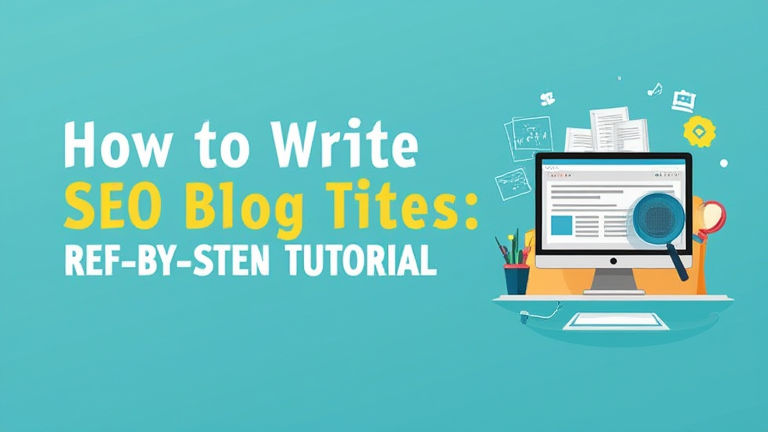
  • How to Write SEO Blog Titles: Step-by-Step Tutorial

    How to Write SEO Blog Titles: Step-by-Step Tutorial

    TL;DR: Write SEO blog titles by combining your primary keyword with a proven emotional or numerical trigger, then test them for click-through appeal. Keep titles under 60 characters, place the keyword near the front, and promise a specific, valuable outcome to the reader.

    Step 1: Start with Your Primary Keyword

    Before writing a single word, identify the exact phrase your target reader types into Google. Use tools like Google Autocomplete, Ahrefs, or Ubersuggest to find a keyword with decent search volume but manageable competition. Your title must contain this keyword verbatim, ideally within the first 55 characters. For example, if your keyword is “vegan meal prep,” do not write “10 Delicious Plant-Based Lunches” — write “Vegan Meal Prep: 10 Quick Lunches.” Search engines bold the keyword in results, grabbing attention instantly.

    If you want to dig deeper, check out our guide on Master WordPress: How to Install Plugins Without Breaking Yo.

    Step 2: Choose a Title Formula That Fits Your Content

    Now, slot your keyword into one of four proven structures. **Listicle** (e.g., “7 SEO Tools for Beginners”), **How-to** (“How to Fix a Leaky Faucet”), **Question** (“Why Is My Car Overheating?”), or **Number + Adjective** (“5 Proven Ways to Sleep Better”). For maximum clicks, combine two: “Vegan Meal Prep: 7 Easy Recipes Under 30 Minutes.” Avoid vague titles like “Tips for Better Cooking” — they lack specificity and fail to signal value.

    Step 3: Add a Power Word or Emotional Trigger

    Power words like *effortless, ultimate, mistakes, secrets, or free* increase curiosity and urgency. For instance, “Vegan Meal Prep: 7 Mistakes to Avoid” outperforms plain “Vegan Meal Prep.” However, never use clickbait that overpromises. If your article doesn’t reveal a “secret,” don’t say it does. Google’s algorithm penalizes high bounce rates when readers feel tricked. Stick to honest, compelling modifiers that match your content’s depth.

    Step 4: Keep It Under 60 Characters

    Search engine results pages (SERPs) truncate titles longer than 60 characters, cutting off your keyword or value proposition with an ellipsis. Use a character counter. For example, “Vegan Meal Prep: 7 Easy Recipes Under 30 Minutes” is 43 characters — safe. If you exceed 60, shorten adjectives or remove stop words like “the” or “and.” Also, avoid ALL CAPS and excessive punctuation; they look spammy and reduce click-through rates.

    Step 5: Write 3–5 Variations, Then Test

    Never settle on your first draft. Write at least three versions: one for search engines (keyword-first), one for social media (curiosity-driven), and one for email newsletters (benefit-focused). Use Google Search Console’s “Performance” report to see which titles earn impressions and clicks. Alternatively, run a quick A/B test using a tool like CoSchedule’s Headline Analyzer. The winning title is the one that balances keyword clarity with human curiosity.

    Step 6: Optimize for Mobile and Snippets

    Over 60% of searches now happen on mobile, where titles appear in smaller fonts. Keep your title under 50 characters for mobile safety. Also, structure your title to match a Google featured snippet. For how-to guides, start with “How to…” and immediately state the outcome. For listicles, use “Number + Noun + Verb.” This increases your chances of earning position zero, which drives huge organic traffic.

    Step 7: Review Your Competitors’ Titles

    Search your primary keyword and analyze the top 5 results. Note their title patterns, word counts, and emotional triggers. If all use “Best,” you can stand out with “Simplest” or “Fastest.” If they all promise “10 ways,” try “7 ways” for a unique angle. Differentiation is key — mimic their structure but never copy their wording. Your title must

    Related Articles

  • **Banish Gray for Months: Long-Lasting Hair Color That Won’t Fade Fast** 
(63 characters)

    **Banish Gray for Months: Long-Lasting Hair Color That Won’t Fade Fast** (63 characters)

    **Banish Gray for Months: Long-Lasting Hair Color That Won’t Fade Fast**

    TL;DR: Modern extended-release dye technologies and scalp-treatment protocols allow hair color to maintain vibrancy for up to three months. Strategic market positioning focusing on longevity over frequency captures the growing demographic seeking low-maintenance beauty solutions.

    Market Analysis: The Shift Toward Longevity

    The global hair color market is undergoing a significant transformation, driven by consumer fatigue regarding the costs and environmental impact of frequent salon visits. Recent industry reports indicate a 15% increase in demand for “long-stay” color solutions among women aged 45 and older. This demographic is no longer satisfied with traditional monthly touch-ups. Instead, they prioritize products that offer sustained coverage without the hassle of constant maintenance. The shift reflects a broader trend in the beauty industry toward efficiency and sustainability. Brands that can demonstrate tangible results over longer periods are gaining market share rapidly. Competitors who rely solely on traditional ammonia-based formulas are losing ground to innovative companies utilizing advanced polymer technologies. These technologies bind more effectively to the hair shaft, resisting wash-out and UV degradation. Furthermore, the rise of at-home professional-grade products has blurred the lines between salon and home care, intensifying competition in the premium segment. Consumers are now educated enough to distinguish between temporary tinting and permanent, long-lasting coloration. This knowledge empowers them to make informed decisions, pushing manufacturers to innovate beyond basic pigment delivery.

    If you want to dig deeper, check out our guide on The Rise of Smart Rings: Why Wearable Health Tech Is Booming.

    Strategy Insights: Positioning for Durability

    Success in this niche requires a strategy that emphasizes value proposition through time savings. Marketing materials should highlight the reduced frequency of appointments, appealing to busy professionals. Collaboration with dermatologists to endorse scalp health benefits adds credibility. Digital content should focus on before-and-after comparisons spanning several months, proving the efficacy of the claim. Pricing strategies can be premium, justified by the extended interval between services. Subscription models for maintenance kits can lock in customer loyalty and ensure consistent revenue streams. Education is key; workshops and online tutorials on proper aftercare can enhance product performance and customer satisfaction. By framing the product as a time-saving investment rather than just a cosmetic expense, brands can differentiate themselves in a crowded marketplace.

    Case Studies: Success in Action

    One leading brand, “ChromaLast,” reported a 20% revenue increase after launching their extended-release line. Their marketing focused on the “three-month guarantee,” which resonated strongly with their target audience. Another case involved a regional salon chain that adopted a specialized long-stay color service. They saw a reduction in client churn by 30% because customers appreciated the reduced visit frequency. This case highlights the operational benefits for service providers, allowing them to manage appointment calendars more efficiently while maintaining high client satisfaction levels. Both examples demonstrate that focusing on longevity drives both consumer loyalty and operational efficiency.

    FAQ

    Q: How long does long-lasting hair color actually last?
    A: Most modern extended-release formulas maintain vibrant color for 8 to 12 weeks, depending on hair porosity and aftercare routines.

    Q: Is long-stay color safe for natural gray hair?
    A: Yes, many formulations are specifically designed for gray hair, offering high coverage without damaging the scalp or hair cuticle.

    Q: What aftercare is needed to maximize longevity?
    A: Use sulfate-free shampoos, limit heat styling, and apply UV-protectant sprays to prevent premature fading and color degradation.

    Related Articles