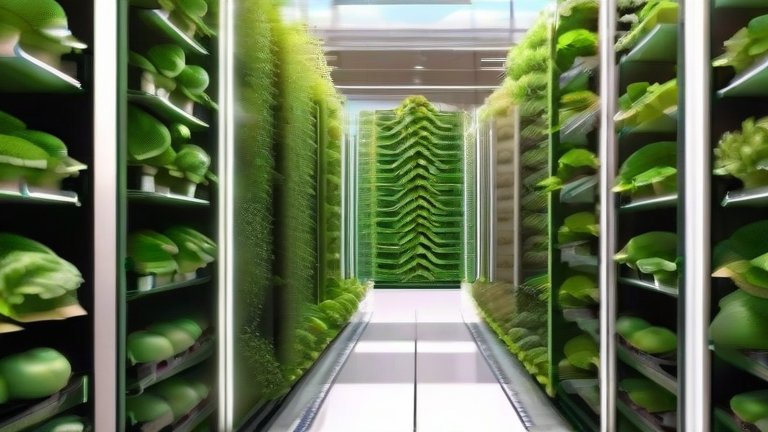
TL;DR: Vertical farming is rapidly expanding in major urban centers globally, driven by the urgent need for sustainable food security and reduced supply chain vulnerabilities. This agricultural revolution leverages advanced technology to maximize crop yields per square foot while minimizing environmental impact.
The Rise of Urban Agriculture

The landscape of global agriculture is undergoing a profound transformation. As urban populations swell and arable land becomes increasingly scarce, vertical farming has emerged as a critical solution for feeding future cities. Unlike traditional farming, which relies heavily on vast tracts of land and unpredictable weather, vertical farming utilizes controlled environment agriculture (CEA) techniques. These systems stack crops in layers, often within repurposed warehouses or dedicated high-rise structures, allowing for year-round production regardless of external climatic conditions. This shift is not merely a trend but a necessary evolution in how we produce food in the twenty-first century.
If you want to dig deeper, check out our guide on Remote Work Mandates: Return to Office by Q3.
Market Analysis and Economic Viability
The global vertical farming market is projected to grow exponentially over the next decade. Recent market analysis indicates a compound annual growth rate (CAGR) of nearly eighteen percent, driven by rising consumer demand for locally sourced, pesticide-free produce. Investors are increasingly recognizing the potential for high returns, although the initial capital expenditure remains significant. The primary economic drivers include reduced transportation costs, lower water usage—up to ninety-five percent less than conventional farming—and the ability to harvest multiple times a year. However, the high energy costs associated with artificial lighting and climate control remain a challenge. Companies are now focusing on renewable energy integration and more efficient LED technologies to lower operational expenditures and improve profitability margins.
Strategic Insights for Success
For businesses entering this sector, strategic planning is paramount. Success requires a deep understanding of both horticulture and data science. Operators must optimize light spectrums, nutrient delivery systems, and humidity levels to maximize plant growth rates. Furthermore, building strong partnerships with local retailers and restaurants is crucial for distribution. By shortening the supply chain, vertical farms can offer fresher products while reducing spoilage rates. Additionally, transparency in sourcing and production methods appeals to eco-conscious consumers. Companies that invest in brand storytelling and community engagement often see higher customer loyalty and premium pricing power. Strategic diversification into other revenue streams, such as selling excess energy or carbon credits, can also enhance financial resilience.
Global Case Studies
Several pioneering companies illustrate the potential of this model. In Singapore, Sky Greens operates one of the world’s lowest-carbon height-adjustable commercial vertical farms. Their unique A-Gro system uses hydraulic water movement to rotate crops, ensuring even sunlight exposure without electricity for rotation. In the United States, AeroFarms has transformed abandoned industrial spaces in Newark, New Jersey, into high-tech farms that produce tons of leafy greens annually. Another notable example is Infarm, a Berlin-based startup that brings mini-farms into supermarkets, allowing customers to buy produce harvested hours before purchase. These case studies demonstrate that vertical farming is scalable, adaptable, and viable across different cultural and economic contexts.
FAQ
Q: Is vertical farming more sustainable than traditional farming?
A: Yes, it uses significantly less water and land, eliminates pesticides, and reduces transportation emissions by locating farms near consumers.
Q: What are the main challenges facing vertical farms?
A> The primary challenges are high initial setup costs and ongoing energy consumption for lighting and climate control systems.
Q: Can vertical farms grow staple crops like wheat or rice?
A: Currently, most vertical farms focus on high-value, fast-growing crops like leafy greens and herbs due to economic and space constraints.
Leave a Reply