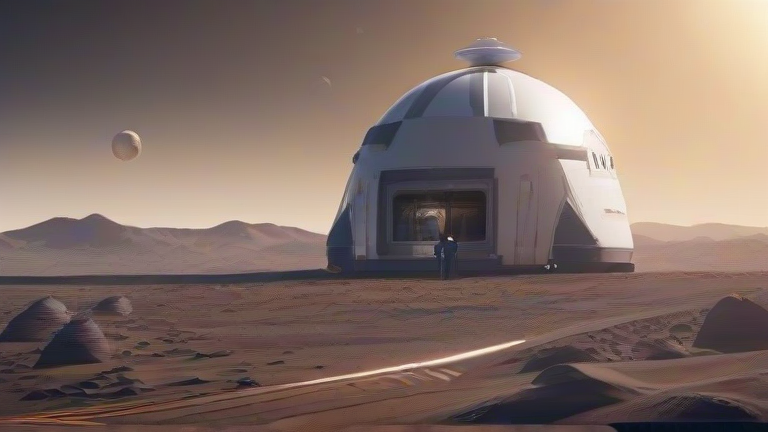
TL;DR: Space tourism has transitioned from a futuristic fantasy to a commercially viable, albeit expensive, reality driven by private aerospace innovation. While currently limited to ultra-wealthy individuals and suborbital flights, sustained growth suggests a broader market expansion is imminent within the next decade.
The Dawn of a New Era
The space industry is undergoing a seismic shift. For decades, space exploration was the exclusive domain of government agencies like NASA and Roscosmos. Today, private companies such as Blue Origin, Virgin Galactic, and SpaceX are leading the charge in democratizing access to the cosmos. This commercialization marks a pivotal moment where space tourism is no longer just a concept but a functioning, revenue-generating sector.
If you want to dig deeper, check out our guide on Circular Economy Drives New Consumer Goods.

Market Data and Financial Viability
Recent market analyses indicate that the commercial space sector is valued at approximately $469 billion, with a projected annual growth rate of 9.1%. Suborbital tourism tickets currently range from $250,000 to $450,000, a price point that has attracted hundreds of customers despite the steep cost. Orbital experiences, such as those offered by Axiom Space, command prices upwards of $55 million per seat. These figures demonstrate a robust willingness among high-net-worth individuals to invest in unique experiences, validating the business model’s initial viability.
Expert Insights and Future Predictions
Industry experts argue that the key to long-term viability lies in reducing costs through technological repeatability and safety improvements. Dr. Elena Ross, an aerospace analyst at TechFuture Institute, notes, “The current model is a luxury niche. However, as launch frequencies increase, economies of scale will inevitably drive prices down, making space access more accessible to the upper-middle class.”
Looking ahead, predictions suggest that by 2030, space hotels and extended orbital stays will become standard offerings. Companies are already planning lunar flybys and potential moon landings, signaling a transition from short flights to longer, more immersive experiences. This evolution promises to create a multi-billion dollar ecosystem encompassing training, infrastructure, and hospitality services. While challenges regarding safety regulations and environmental impact remain, the trajectory is clear. Space tourism is not only viable; it is poised for exponential growth, reshaping how humanity perceives and interacts with the final frontier.
FAQ
Q: Who can currently book a space tourism flight?
A: Currently, only individuals who meet strict medical and financial requirements can book flights, with costs ranging from hundreds of thousands to millions of dollars.
Q: When will space tourism become affordable for the average person?
A> Experts predict significant cost reductions by the 2030s, but true affordability for the average person may take several decades more.
Q: What are the main safety concerns for space tourists?
A> The primary concerns include radiation exposure, g-force impacts during launch and re-entry, and the psychological effects of isolation and microgravity.
Leave a Reply