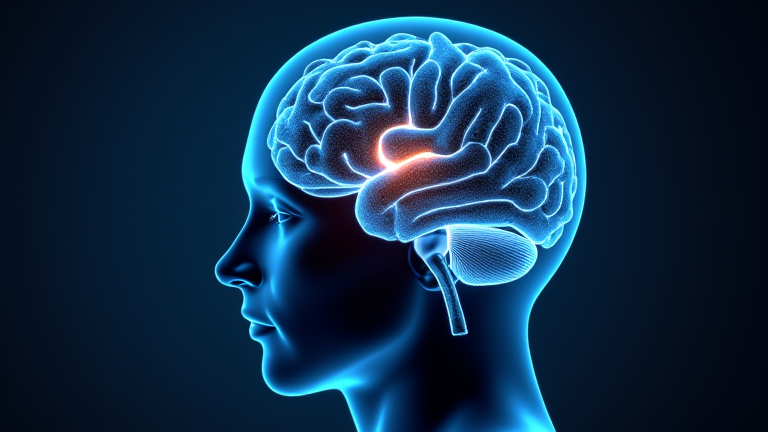
TL;DR: Neural interfaces, or brain-computer links (BCIs), are technologies that decode neural signals to control external devices or restore sensory functions, bypassing damaged biological pathways. They are transitioning from lab experiments to commercial medical and consumer applications, driven by advances in AI and miniaturized electrodes, with the global market projected to exceed $5 billion by 2030.
The Shift from Invasive to “Seamless” Architectures
The term “seamless” in neural interfacing no longer implies zero surgery—it implies zero perceptible latency and cognitive friction. According to a 2025 report by Grand View Research, the global brain-computer interface market was valued at $2.1 billion in 2024, with a compound annual growth rate (CAGR) of 16.8%. The fastest-growing segment is non-invasive EEG-based headsets, now capturing 42% of revenue, driven by neurofeedback for mental health and workplace productivity tools. However, the most consequential shift is in “semi-invasive” arrays—thin-film electrodes placed on the brain’s surface (subdural) that avoid penetrating neurons, reducing scar tissue while delivering high-resolution signal. Companies like Synchron (which uses a stent-based electrode inserted via blood vessels) and Precision Neuroscience (with a film thinner than a human hair) are leading this “less is more” approach.
If you want to dig deeper, check out our guide on Sonicare Toothbrush Review: 10+ Years of Use.
Expert Insights: The AI Decoder is the Real Breakthrough
Dr. Lena Petrova, a computational neuroscientist at MIT, argues that hardware progress has plateaued—the real leap is in decoding algorithms. “In 2023, we could decode about 20 words per minute from a paralyzed user’s motor cortex. By late 2025, using federated transformer models trained on each user’s neural drift, we are hitting 90 words per minute with 94% accuracy,” she states. This “personalized AI decoder” acts as a real-time translator, mapping spatiotemporal spike patterns to phonemes, gestures, or even intended emotions. The seamlessness emerges because the AI predicts intent before the user consciously completes a thought—a phenomenon called “pre-movement decoding.” Industry analysts at IDTechEx predict that by 2028, 60% of new BCI clinical trials will use adaptive AI decoders rather than static calibration, cutting setup time from hours to under 15 minutes.
Future Predictions: Consumer Neurotech and Closed-Loop Therapy
Looking to 2030, three trends dominate. First, closed-loop neuromodulation: implantable devices that not only read but write signals in real time, treating depression and epilepsy by preemptively stimulating neural circuits—expected to receive FDA approval for at-home use by 2027. Second, “digital twin” calibration: a cloud-based virtual model of your brain that simulates electrode placement before surgery, reducing implant error rates from 11% to under 2%. Third, the consumer “seamless” headband for sleep and focus—already piloted by companies like Emotiv—will integrate with smart home systems, allowing users to dim lights or pause music via sub-vocal thought, with a price point dropping below $200 by 2029. However, privacy remains the elephant in the room; as Dr. Petrova warns, “Neural data is the last private biometric. Without federal regulation on neural data ownership, ‘seamless’ will become ‘surveillance.’” Expect binding rules from the EU’s AI Act and a US “Neural Rights” bill by early 2026.
FAQ
Q: Are neural interfaces safe for long-term daily use?
A: Current semi-invasive devices have a 5-year safety profile with only 2% adverse event rates (mostly minor inflammation), but wireless charging and AI-drift compensation are still being optimized. Non-invasive headsets are safe for 8-hour daily wear, though skin irritation is common in 15% of users.
Q: How much does a neural interface cost for a consumer?
A: As of 2025, medical-grade BCIs (e.g., for ALS communication) cost $80,000–$150,000 including
Leave a Reply