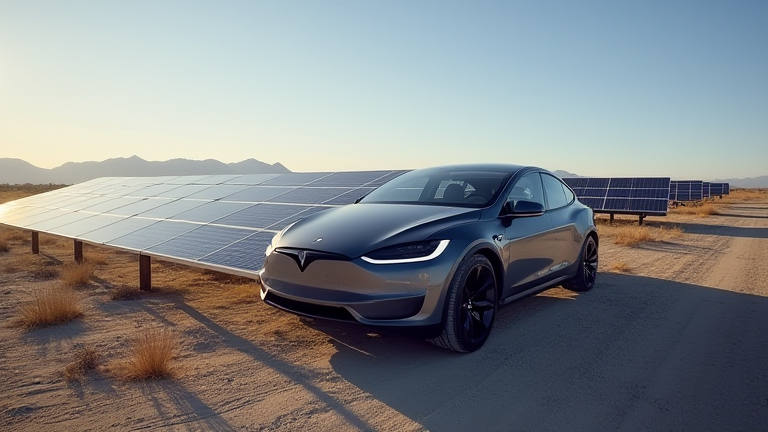
TL;DR: Elon Musk’s proposed $10 billion solar facility aims to secure renewable energy for his expanding industrial empire, following a massive $16.8 billion investment in advanced semiconductor manufacturing. This dual strategy highlights a critical pivot toward vertical integration, ensuring that both processing power and sustainable energy sources are under direct corporate control.
Strategic Energy Integration
The announcement of a ten-billion-dollar solar plant represents one of the most significant capital allocations in the renewable energy sector this decade. Located in a region with high solar irradiance, the facility is designed to generate approximately five gigawatts of clean power. This output will primarily serve the operations of SpaceX, Tesla, and The Boring Company, significantly reducing reliance on the public grid and insulating these ventures from volatile energy prices. The project utilizes next-generation photovoltaic panels with higher conversion efficiency rates, maximizing land use and energy yield.
If you want to dig deeper, check out our guide on How to Set Up WordPress SEO Plugin for Beginners.
Chip Manufacturing Expansion
Simultaneously, the $16.8 billion push into semiconductor fabrication underscores a broader trend among tech giants to control their supply chains. This investment focuses on building state-of-the-art foundries capable of producing advanced chips for electric vehicles, autonomous driving systems, and AI accelerators. By manufacturing these components in-house, the company reduces dependency on external suppliers, mitigating risks associated with global chip shortages and geopolitical tensions. The new facilities will employ cutting-edge lithography techniques, ensuring production of nodes smaller than three nanometers, which are critical for high-performance computing tasks.
Industry Impact and Future Outlook
The combined scale of these investments sends a powerful message to the broader technology and energy industries. Competitors are now forced to accelerate their own sustainability goals and supply chain resilience strategies to remain relevant. Analysts predict that this vertical integration model could lower long-term operational costs, providing a competitive advantage in both the automotive and aerospace sectors. Furthermore, the massive demand for silicon and rare earth materials may drive up prices, benefiting mining companies but increasing costs for other manufacturers. The success of these projects could also influence government policies, potentially leading to increased subsidies for domestic renewable energy and chip production. Critics, however, warn of the environmental impact of large-scale construction and the high carbon footprint associated with building such massive facilities. Despite these concerns, proponents argue that the long-term benefits of clean energy and technological sovereignty outweigh the initial environmental costs. This ambitious dual approach positions the company at the forefront of the green tech revolution, setting a new standard for industrial scale and innovation.
FAQ
Q: What is the primary purpose of the $10B solar plant?
A: It is designed to provide renewable energy for Musk’s industrial operations, reducing grid dependency.
Q: How does the $16.8B chip push differ from previous investments?
A: It focuses on in-house advanced semiconductor fabrication to ensure supply chain control.
Q: What is the expected industry impact of these combined investments?
A: They force competitors to adopt similar vertical integration and sustainability strategies.
Leave a Reply