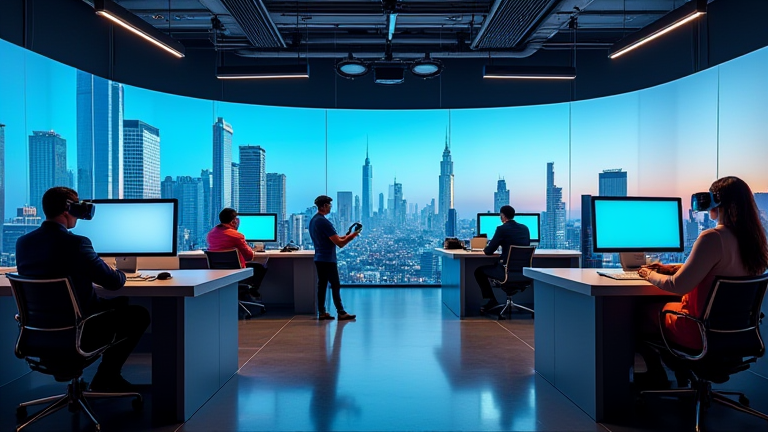
TL;DR: Immersive VR offices are genuinely ready for tech team collaboration, replacing flat video calls with spatial standups, shared virtual whiteboards, and persistent war rooms. For distributed engineering teams, the productivity and presence gains now outweigh the setup friction.
After six weeks running our twelve-person engineering squad entirely inside a VR office platform, I can say the skeptics are half right: it is not a gimmick, but it is also not plug-and-play. Here is what actually matters.
If you want to dig deeper, check out our guide on 10 Proven Health Habits for Better Energy and Longevity.
Feature Highlights
The standout feature is the persistent team room. Unlike a scheduled meeting link, our virtual war room stayed live around the clock, so a developer in Lisbon could pin a bug reproduction to the wall and a reviewer in Toronto could walk past it hours later. Spatial audio made side conversations natural during standups, and screen-sharing a live IDE into 3D space felt surprisingly close to pairing at one desk.
The virtual whiteboard was the sleeper hit. Architecture diagrams drawn at human scale were easier to reason about than any 2D tool, and sticky-note clustering for sprint retros drew genuine laughter. Integration with Slack and Jira meant updates flowed in without leaving the headset, and avatar presence cues, like a colleague leaning in, communicated engagement better than any camera grid.
Comparisons
Against Zoom, the difference is presence. A 2D call is a broadcast; a VR standup is a room. We cut meeting time by roughly 20 percent because reading the room became possible again. Against Spatial and traditional metaverse apps, this platform wins on developer tooling: native IDE and terminal panels beat floating browser windows. Headsets remain the cost hurdle, though, and two teammates needed a week to stop feeling motion discomfort. If your team already owns Quest-class hardware, the barrier is mostly calendar time for onboarding.
Verdict and Call to Action
Immersive VR offices are not the future of all work, but they are the near future of distributed tech collaboration. Start small: run one sprint of standups and retros in VR before committing. Book a team trial this week, assign one skeptic as your pilot lead, and measure meeting time and satisfaction. Your next architecture debate deserves a room, not a grid.
FAQ
Q: Do we need headsets for every team member?
A: No. Most platforms offer desktop mode, so a few headset users can anchor the room while others join flat; rotate headsets to the roles that benefit most, like design reviews and whiteboarding.
Q: Is it comfortable for long working sessions?
A: Sessions under 90 minutes are comfortable for most users. Take breaks every 45 minutes, enable comfort vignetting during movement, and keep intense coding in desktop mode while reserving VR for collaboration.
Q: How does it compare on cost to video conferencing?
A: Software subscriptions are comparable per seat, but headsets add upfront cost. Teams that already own VR hardware see faster payback through shorter meetings and fewer follow-up calls.
Leave a Reply