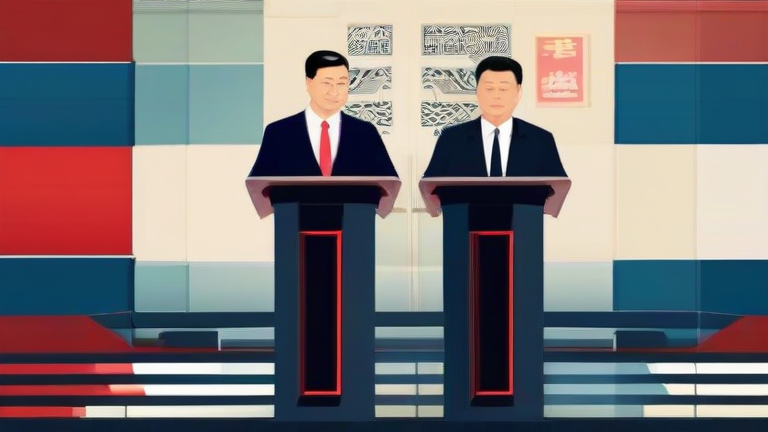
TL;DR: The United States is actively pressuring its international allies to align with American artificial intelligence standards and supply chains to counter China’s rapid technological ascent. This strategic maneuver aims to secure global dominance in AI by restricting access to critical semiconductors and fostering a unified Western technological ecosystem.
The Geopolitics of Compute
The global landscape of artificial intelligence is no longer just a contest of algorithms; it has become a high-stakes geopolitical battleground. Washington’s recent diplomatic push underscores a critical realization: control over advanced computing infrastructure is synonymous with national security and economic supremacy. By urging allies in Europe, Asia, and North America to side with the US, American policymakers are attempting to create a cohesive bloc that can effectively rival Beijing’s state-driven AI ambitions. This strategy relies heavily on the concept of “technological decoupling,” where supply chains are restructured to minimize dependency on Chinese manufacturing and raw materials.
If you want to dig deeper, check out our guide on Top 5 Emerging Trends Shaping 2026: What You Need to Know.
Market data supports the urgency of this shift. The global AI chip market is projected to reach $200 billion by 2027, with NVIDIA currently dominating over 80% of the accelerated computing market. However, China’s domestic chipmakers, such as Huawei, are closing the gap rapidly due to heavy state subsidies. To maintain a lead, the US has implemented stringent export controls on high-end GPUs, forcing allies to choose between accessing cutting-edge technology and maintaining open trade relations with China. This dilemma has created significant friction within NATO and the EU, where nations struggle to balance economic interests with security alliances.
Expert Insights and Strategic Divergence
Industry experts argue that a fragmented approach weakens the West’s overall position. Dr. Elena Rossi, a senior analyst at the Global Tech Policy Institute, notes that “silicon sovereignty” is the new oil. She emphasizes that without a unified front, individual nations will be outpaced by China’s integrated approach to data collection and model training. Conversely, some European leaders warn against total alignment, fearing that it may stifle innovation and limit market opportunities. They advocate for a “multi-alignment” strategy that allows for selective cooperation with both blocs, though this position is gaining less traction as security concerns mount.
Future predictions suggest that the next five years will see a consolidation of AI development centers within allied territories. The US Department of Commerce is expected to expand its “Chips and Science Act” incentives to include joint research initiatives with partner nations. This move aims to keep advanced R&D within the Western sphere, ensuring that breakthroughs in generative AI, autonomous systems, and quantum computing remain proprietary to the alliance. Furthermore, regulatory harmonization is likely to follow, with allies adopting similar ethical AI frameworks that reflect Western values, thereby creating a distinct digital identity separate from China’s state-controlled model.
FAQ
Q: Why is the US pressuring allies to choose sides?
A: The US seeks to prevent China from gaining access to critical advanced semiconductors and to consolidate Western technological dominance in the global AI race.
Q: What is the projected size of the global AI chip market?
A: The global AI chip market is projected to reach approximately $200 billion by 2027, highlighting the immense economic stakes involved.
Q: How might European nations respond to US pressure?
A> Some European leaders advocate for a balanced “multi-alignment” strategy to protect their economic interests, though security concerns are pushing many toward closer US alignment.
Leave a Reply