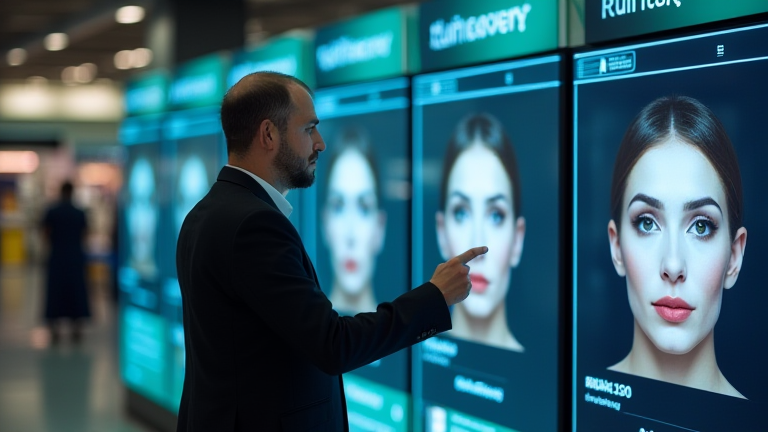
Sainsbury’s Halts AI Facial Recognition After Theft Error
TL;DR: Sainsbury’s has suspended its AI-powered facial recognition pilot after a significant error led to the wrongful accusation of a customer for theft. The decision highlights the critical balance retailers must strike between leveraging advanced security technology and maintaining trust with their consumer base.
The recent move by one of the UK’s leading grocery giants marks a pivotal moment in the adoption of artificial intelligence within the retail sector. The incident involved an AI system incorrectly identifying a shopper as a known shoplifter, resulting in a confrontation that quickly escalated and drew widespread media attention. This event has forced the company to reevaluate its integration of biometric data, signaling a broader industry pause in the deployment of unverified facial recognition tools in high-traffic public spaces.
If you want to dig deeper, check out our guide on Daily Sugar-Sweetened Beverages Linked to Higher Stomach Can.
Market data suggests that while the retail sector is under immense pressure to reduce shrinkage, which averages 1.5% of sales globally, the cost of consumer distrust can be far higher. According to recent surveys, over 60% of UK consumers expressed discomfort with biometric tracking in stores, a figure that has risen sharply following several high-profile privacy scandals. Sainsbury’s decision aligns with a growing trend where major retailers are prioritizing ethical AI implementation over aggressive loss prevention tactics, recognizing that brand loyalty is a fragile asset that can be damaged by perceived invasions of privacy.
Experts in the retail technology space are divided on the long-term viability of these systems. Dr. Elena Ross, a senior analyst at RetailTech Insights, notes, “The failure was not necessarily in the algorithm’s accuracy in a controlled environment, but in the lack of human oversight. AI should act as a decision-support tool, not an autonomous enforcer. The error exposed a gap in the verification protocols, where automated alerts were treated as definitive proof without human context.” This insight underscores a critical shift in how technology is perceived; it is no longer enough for a system to be ‘smart,’ it must also be ‘fair’ and transparent in its operations.
Looking ahead, the future of retail security is likely to move away from invasive biometrics and toward predictive analytics that focus on behavioral patterns rather than identity. Industry predictions suggest that by 2026, over 40% of major retailers will adopt “ambient intelligence” solutions that use anonymized data streams to detect anomalies without identifying specific individuals. This approach allows for robust theft prevention while respecting customer privacy, addressing the core concern that led to Sainsbury’s withdrawal. The lesson for the industry is clear: technology must serve the customer experience, not undermine it. As regulations tighten, particularly with the upcoming EU AI Act, companies that fail to adopt ethical frameworks for AI will face not only legal repercussions but also significant reputational risks. The halt in Sainsbury’s program is not a defeat for AI, but a necessary correction course that prioritizes trust as the ultimate currency in retail.
FAQ
Q: Why did Sainsbury’s stop using facial recognition?
A: The company halted the pilot program after an AI system mistakenly identified a customer as a thief, leading to a wrongful accusation and significant public backlash regarding privacy and algorithmic bias.
Q: What percentage of consumers are uncomfortable with biometric tracking?
A: Recent surveys indicate that over 60% of UK consumers feel uncomfortable with biometric tracking in retail environments, a trend that has accelerated following high-profile privacy incidents.
Q: What alternative security methods are retailers likely to adopt?
A: Experts predict a shift toward “ambient intelligence” and behavioral analytics that monitor patterns without identifying individuals, allowing for effective theft prevention while maintaining customer privacy and trust.
Leave a Reply