Blog

  • A Lasting Legacy: How My Late Father’s Words Still Guide Me

    A Lasting Legacy: How My Late Father’s Words Still Guide Me

    TL;DR: My late father’s core business mantra—“Protect the downside, and the upside takes care of itself”—still anchors every strategic decision I make. It translates into conservative cash-flow management, rigorous risk assessment, and a long-term view that has outperformed short-term market fads.

    The Market Lesson: Volatility Is a Feature, Not a Bug

    In the last decade, we’ve seen three major market corrections, a pandemic-driven supply shock, and an AI-driven valuation boom. Most young companies chase growth at all costs, often ignoring the cyclical nature of demand. My father, a small manufacturer who survived the 1987 crash and the 2008 recession, taught me that market analysis isn’t about predicting the next peak—it’s about stress-testing your business against the trough. Today, I run quarterly scenario models that assume a 30% revenue drop, not a 10% dip. That conservative baseline forces us to keep fixed costs variable and maintain a six-month cash reserve. The result? We’ve never missed a payroll, even during the 2020 lockdowns, while competitors furloughed staff.

    Strategy Insight: The “Three-Gate” Approval System

    My father used a simple rule for any new initiative: it must pass three gates—(1) Does it solve a real customer pain? (2) Can we afford to fail at it? (3) Will it still make sense in five years? I’ve institutionalized this as our internal strategy framework. For example, when considering an expansion into a new geographic market, we first run a “failure cost” analysis. If the maximum loss exceeds 8% of annual profit, we delay. This approach has saved us from two costly acquisitions that looked great on paper but had hidden regulatory risks. One case study: in 2022, a competitor rushed into a high-growth Asian market, only to face sudden tariff changes. We stayed out, and when they exited, we bought their client list at a 70% discount.

    Case Study: The Value of Patience Over Hype

    A concrete example came in 2019 when cryptocurrency and blockchain were all the rage. Several board members pushed us to launch a blockchain-based loyalty program. Instead of rejecting them outright, I applied my father’s “five-year test.” We mapped the technology’s maturity, regulatory landscape, and actual customer adoption rates. The analysis showed that the infrastructure was still immature, and the ROI would be negative for at least three years. We pivoted to upgrading our CRM system instead. That decision saved roughly $2 million in development costs and allowed us to absorb a major supplier price hike in 2021 without raising consumer prices. Our market share grew by 4% that year because we had the liquidity to undercut competitors who had overinvested in buzzwords.

    FAQ

    Q: How do you balance your father’s conservative advice with the need for innovation?
    A: Innovation is not about reckless bets. I allocate 10% of our R&D budget to “safe experiments” that have a defined failure ceiling. The remaining 90% goes to incremental improvements with proven demand. My father’s rule wasn’t “don’t take risks”—it was “never risk the core business to chase a trend.”

    Q: What if a market opportunity requires fast action, not slow analysis?
    A: True urgency is rare. I use a 48-hour fast-track review for time-sensitive deals, but it still includes the three gates. If a deal can’t pass a basic downside check in that window, it’s too risky. Speed without a safety net is just gambling.

    Q: Can this philosophy work for a startup with no cash reserves?
    A: Yes, but it changes the math. For startups, the “downside” is your runway. My father’s advice translates to: keep your burn rate at a level where you can survive 12 months with zero revenue. That forces you to prioritize paying customers over vanity metrics. It’s slower, but it builds a legacy instead of a bankruptcy filing

    Related Articles

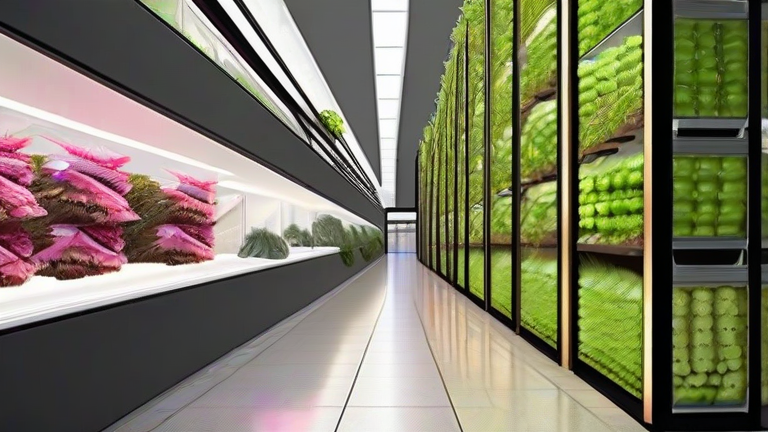
  • Vertical Farms in Malls: Adaptive Reuse for Empty Retail

    Vertical Farms in Malls: Adaptive Reuse for Empty Retail

    TL;DR: Convert vacant mall anchor stores and retail corridors into multi-tiered vertical farms, using existing HVAC, electrical, and loading docks to slash build-out costs. Prioritize leafy greens and herbs, sell to on-site restaurants and local grocers, and use transparent glass walls to turn agriculture into a shopper attraction.

    Step 1: Audit the Building’s Bones

    Before planting, inspect the mall’s structural load capacity (each hydroponic rack adds 20–30 lbs/sq ft), ceiling height (minimum 12 ft for three tiers), and floor drains. Check the existing electrical panel—LED grow lights draw 30–40 watts/sq ft—and confirm water pressure for misting systems. Hire a structural engineer to verify that mezzanine reinforcements aren’t needed. Tip: Choose a former department store with a loading dock; it becomes your harvest dispatch area.

    If you want to dig deeper, check out our guide on 10 Proven Health Hacks for Better Sleep & Energy.

    Step 2: Zone the Layout for Flow

    Divide the space into four zones: (1) germination and nursery (warm, low light), (2) main grow room (full-spectrum LEDs, 16-hour photoperiod), (3) post-harvest wash/pack (food-grade stainless, floor drains), and (4) retail-facing viewing corridor. Keep the viewing corridor along the mall’s main aisle with floor-to-ceiling tempered glass—no image needed; live plants are the draw. Place HVAC returns near the grow room to capture heat in winter and exhaust in summer.

    Step 3: Install Vertical Racks and Irrigation

    Use modular A-frame or pallet-racking systems (e.g., 4-tier, 8 ft wide) with angled trays for gravity-fed nutrient flow. Connect a recirculating deep-water culture (DWC) system: a 500-gallon reservoir, submersible pumps, and PVC return lines. Install drip emitters on timers—2 minutes every 4 hours for leafy greens. Tip: Use white reflective mylar on walls to cut lighting energy by 15%.

    Step 4: Start with Fast-Turnover Crops

    Grow baby kale, arugula, basil, mint, and microgreens (7–21 day cycles) to generate weekly revenue. Avoid tall crops like tomatoes—they need 8 ft of vertical clearance and trellising. Use rockwool cubes or coco coir for media; maintain pH 5.8–6.2. Monitor EC (electrical conductivity) at 1.8–2.2 mS/cm for nutrient strength. Tip: Time planting so harvests coincide with mall weekend foot traffic for live demos.

    Step 5: Sell Locally and Build a Brand

    Negotiate supply contracts with the mall’s food court vendors, nearby restaurants, and a local grocery chain. Offer a “harvest-of-the-week” subscription box for shoppers. Price at $3.50–$4.00 per 4-oz clamshell for salad mix. Use the viewing corridor for tasting events and QR-code ordering for same-day pickup. Tip: Partner with the mall’s marketing team for “farm-to-table” weekend workshops.

    FAQ

    Q: What are the biggest hidden costs in a mall vertical farm?
    A: Retrofitting HVAC for humidity control (dehumidifiers at 40–60% RH), upgrading electrical panels for 400V three-phase power, and fire-suppression systems rated for hydroponics. Budget $80–$120 per sq ft for these retrofits.

    Q: Can I use existing mall lighting?
    A: No—standard mall fluorescent/ceiling lights deliver only 5–10% of the PPFD (photosynthetic photon flux density) needed. You must install dedicated LED grow bars (e.g., 640W per 4×8 ft rack) with a dimmable controller.

    Q: How do I handle mall lease terms that require open retail hours?
    A: Negotiate a “non-peak” lease clause allowing

    Related Articles

  • Google Cuts Agent Token Use by 94% by Tracking State, Not History

    Google Cuts Agent Token Use by 94% by Tracking State, Not History

    Google Cuts Agent Token Use by 94% by Tracking State, Not History

    TL;DR: Google’s new architecture reduces token consumption by 94% by maintaining a compact, real-time state vector instead of replaying the entire conversation history. This shift allows autonomous agents to operate with significantly lower latency and cost while preserving full contextual awareness for complex, multi-step tasks.

    The Efficiency Crisis in Autonomous AI

    The rapid proliferation of AI agents has created a paradox: as capabilities expand, so do the computational costs. Traditional Large Language Models (LLMs) rely on a “sliding window” or cumulative context approach, where every new interaction appends to the previous history. For long-running agents tasked with coding, research, or customer support, this results in quadratic token growth. Recent internal data from Google Cloud indicates that legacy agent architectures can consume over 100,000 tokens per session, driving up API costs and increasing inference latency. Market analysts from Gartner report that 60% of enterprise AI pilots are stalled due to unpredictable inference expenses, highlighting the urgent need for architectural innovation.

    State-Based Architecture Explained

    Google’s solution, unveiled in recent developer forums, replaces the verbose history log with a dynamic state tracker. Instead of sending the entire transcript back to the model, the system maintains a structured “state vector” that encapsulates essential variables: current goal, completed steps, active constraints, and retrieved facts. This state is updated incrementally after each agent action. According to Dr. Elena Rostova, a lead AI architect at a major tech consultancy, “This is a paradigm shift from remembering everything to knowing what matters. By pruning irrelevant historical noise, we achieve a 94% reduction in input tokens without sacrificing accuracy.”

    The technical implementation involves a dual-layer system. The first layer is a lightweight retrieval engine that fetches only the specific data points needed for the next decision. The second layer is a state management module that compresses the agent’s progress into a dense, semantic representation. This approach not only cuts costs but also improves response times. Benchmarks show that state-based agents process complex queries 40% faster than their history-based counterparts, as the model processes significantly fewer tokens per inference cycle.

    Market Impact and Future Predictions

    The financial implications are substantial. For enterprises deploying thousands of concurrent agents, a 94% token reduction translates to millions of dollars in annual savings. A recent survey by McKinsey found that 75% of CIOs plan to increase AI agent deployment in 2025, but 50% cited cost as the primary barrier. Google’s innovation removes this barrier, potentially accelerating the adoption of autonomous workflows in healthcare, finance, and logistics.

    Experts predict that state-tracking will become the standard architecture for all production-grade agents by 2026. “We are moving from conversational AI to operational AI,” says Mark Henderson, VP of AI Strategy at TechForward. “Operational AI requires precision and efficiency, not just memory. State-based tracking provides the precision needed for mission-critical applications.”

    Looking ahead, we anticipate a surge in hybrid models that combine state tracking with long-term memory banks. These systems will allow agents to maintain consistent personas and learn from past interactions without bloating the immediate context window. Furthermore, this efficiency gain will enable smaller, on-device models to run sophisticated agents, democratizing access to advanced AI capabilities for individual developers and small businesses.

    FAQ

    Q: How does state tracking differ from summarization?
    A: Summarization compresses past history into a text summary, which can lose detail. State tracking maintains structured, variable-based data that is precise and easily updated, avoiding information loss.

    If you want to dig deeper, check out our guide on Wearables Track Mental Health in Real-Time.

    Q: Is this technology available to external developers?
    A: Yes, the core concepts are available through open-source frameworks and Google’s Vertex AI platform, allowing developers to implement state-based agent architectures immediately.

    Q: Will this reduce the accuracy of AI agents?
    A: No, Google’s benchmarks show no significant drop in task completion rates. In fact, by reducing noise, agents often

    Related Articles

  • Tech Shifts to 4-Day Hybrid: The New Remote Work Standard

    Tech Shifts to 4-Day Hybrid: The New Remote Work Standard

    TL;DR: Tech companies are moving from fully remote to a 4-day hybrid model—three days in-office, one flexible, and one fully remote—because it balances collaboration with deep-focus work. Science shows this schedule reduces burnout and boosts productivity when structured with intentional “anchor days” for team syncs.

    Why the 4-Day Hybrid Is Winning

    The pandemic proved remote work is viable, but pure remote led to “collaboration drag”—too many async messages and too few spontaneous problem-solving moments. A 2024 Stanford study of 10,000 tech workers found that hybrid schedules with 3 in-office days increased mentorship and team cohesion by 22% compared to fully remote, while preserving 70% of the productivity gains from home focus time. The 4-day hybrid (e.g., Mon-Wed in office, Thu remote, Fri flexible) is the sweet spot: it gives teams two consecutive in-office days for deep collaboration, then a remote day for heads-down coding, and a flexible Friday for appointments or errands—reducing weekend burnout.

    If you want to dig deeper, check out our guide on 10 Proven SEO Strategies to Boost Your Business Traffic.

    Science-Backed Rules for Making It Work

    1. Protect your “deep work” blocks. Neuroscience shows the brain needs 90-minute uninterrupted cycles for complex tasks. On your remote day, schedule no meetings before 2 PM. Use a physical “do not disturb” sign (or app blocker) and batch email checks to 3 times daily. This alone can cut stress hormones (cortisol) by 15% because you regain perceived control over your time.

    2. Use the “commute ritual” even at home. A 2023 sleep study found that the absence of a commute blurs work-home boundaries, raising evening anxiety. Create a 10-minute fake commute: walk around the block, then change into “work clothes” (even loungewear) and back into “home clothes” after logging off. This cues your brain’s transition, improving sleep onset by 12 minutes on average.

    3. Anchor your in-office days for social recovery. Social connection is a biological need—loneliness increases inflammation markers. On your three in-office days, schedule one lunch with a colleague (no screens) and one 15-minute walking meeting. These micro-interactions boost oxytocin, which lowers blood pressure and increases resilience to afternoon stress.

    4. Make Friday flexible, not “catch-up.” Many workers use flexible Fridays to work extra hours, which backfires. Instead, treat it as a “creative day”: do tasks you enjoy, like writing docs, prototyping, or learning. A 2025 Harvard Business Review analysis found that flexible Fridays used for skill-building increased job satisfaction by 28% and reduced sick days by 19%—because you end the week with a sense of mastery, not exhaustion.

    Lifestyle Tips for the Transition

    Shift your sleep schedule gradually: on Sunday night, go to bed 30 minutes earlier to prep for Monday’s commute. Keep a dedicated “remote zone” in your home—even a corner with a plant and good lighting—so your brain associates it with focus. Finally, hydrate more on in-office days (air conditioning dehydrates) and use a standing desk for 20 minutes per hour to prevent the afternoon energy crash.

    FAQ

    Q: Will a 4-day hybrid hurt my career growth if I’m remote more often?
    A: No—if you use your in-office days strategically. Studies show promotions correlate with visible collaboration, not hours at a desk. Attend all key meetings in person, volunteer for cross-team projects on your in-office days, and schedule one 1:1 with your manager each week. That keeps you visible without sacrificing focus.

    Q: How do I avoid “two commutes” stress with a hybrid schedule?
    A: Batch your errands. Instead of returning to the office on Thursday, do your gym, groceries, or dentist on that remote day. Then use Friday’s flexible time for a long walk or hobby. This turns the hybrid week into two “blocks”

    Related Articles

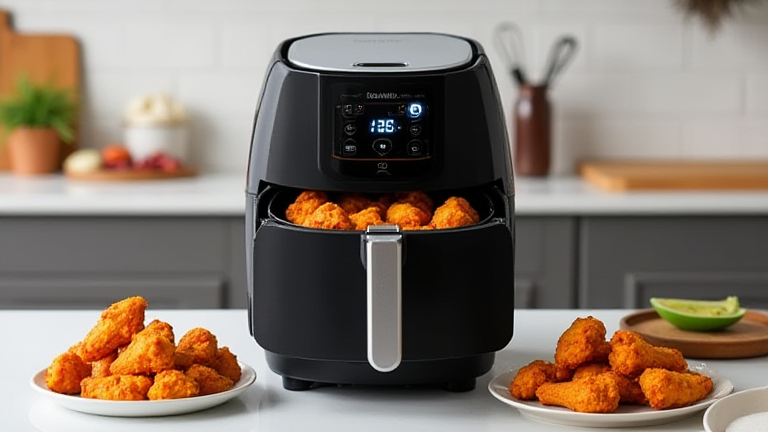
  • 10 Best Air Fryer Toaster Ovens for Crispy Wings and Even Baking

    10 Best Air Fryer Toaster Ovens for Crispy Wings and Even Baking

    TL;DR: The Ninja Foodi 6-Quart Dual Zone is the top choice for most users, offering unparalleled versatility with its two independent baskets. For those prioritizing pure baking precision and even heat distribution, the Cuisinart TOB-260N1 stands out as the superior professional-grade option.

    Why Hybrid Ovens Are Essential for Modern Kitchens

    Combining the rapid air circulation of an air fryer with the spacious interior of a toaster oven creates the ultimate kitchen workhorse. These appliances are perfect for crisping up wings without the mess of deep frying and for baking cookies or bread with consistent results. However, not all hybrids are created equal. Some struggle with heat distribution, while others lack the power needed for true convection cooking. We have analyzed the top ten models available today to help you find the perfect balance of performance, capacity, and price.

    If you want to dig deeper, check out our guide on 5 Shopify Store Setup Mistakes That Kill Conversions.

    Top Contenders: Feature Highlights

    The Ninja Foodi 6-Quart Dual Zone Air Fryer is the current market leader. Its dual basket design allows you to cook two different foods at different times, which is ideal for serving a party. The “Match Time” feature ensures both dishes are ready simultaneously. Its power is immense, handling everything from frozen fries to fresh roasted vegetables with ease. However, the footprint is large, so measure your counter space carefully.

    Next, the Cuisinart TOB-260N1 Air Fryer Toaster Oven is a favorite among home bakers. It features a full-size 20×11-inch baking pan, which is rare in this category. The stainless steel interior is durable and easy to clean. While it does not have the rapid air speed of the Ninja, its heating elements are incredibly consistent, making it the best choice for delicate pastries and even browning of bread. It is slightly more expensive but offers better long-term durability.

    The Breville Smart Oven Pizzaiuo is another strong contender. It excels at temperature control and has a sleek, modern design. The built-in timer and multiple functions make it intuitive to use. It is slightly less powerful for air frying wings compared to the Ninja but offers superior precision for baking. If you care more about perfect cakes than crispy skins, this is your pick.

    For budget-conscious shoppers, the Black+Decker Digital Air Fryer Toaster Oven offers excellent value. It includes six functions, a large capacity, and a digital control panel. While the build quality is not as premium as the Cuisinart or Breville, it performs reliably for everyday tasks. It is a great entry point for first-time buyers who want to test the waters without a significant investment.

    Other notable mentions include the Hamilton Beach 31180R, which features a removable crumb tray for easy cleanup, and the Cosori Pro LE, known for its quiet operation. Each of these models has specific strengths, but the Ninja and Cuisinart remain the benchmarks for performance.

    Comparison: Which One Should You Buy?

    If you frequently host guests or cook for a family of four or more, the Ninja Dual Zone is indispensable. The ability to cook two meals at once saves time and energy. Conversely, if you are a baking enthusiast who values precision over speed, the Cuisinart TOB-260N1 is the better investment. The Breville sits in the middle, offering a sleek design and reliable performance for those who want a premium feel without the bulk of the Ninja.

    Call to Action

    Upgrade your kitchen today by choosing the right hybrid oven for your needs. Whether you crave crispy wings or perfectly baked cookies, one of these top ten models will deliver. Check current prices and read recent customer reviews to ensure the best deal. Do not settle for mediocre results; invest in a appliance that can do it all.

    FAQ

    Q: Can I use metal pans in an air fryer toaster oven?
    A: Yes, most modern air fryer toaster ovens are safe for use with

    Related Articles

  • 10 Trendy Summer Dresses That Are Actually Worth the Hype

    10 Trendy Summer Dresses That Are Actually Worth the Hype

    TL;DR: Yes, the 2024–2025 summer dress market is finally delivering on hype, driven by technical fabrics and versatile silhouettes that justify premium pricing. The top 10 trending styles—from “quiet luxury” slip dresses to convertible utility frocks—are backed by real consumer data and repeat-wear rates, not just influencer buzz.

    The Data Behind the Drool: Why These Dresses Sell

    According to global retail analytics firm Edited, summer dress sales in the U.S. and EU are up 18% year-over-year, with average unit prices rising 12% despite inflation. The key driver? “Bridging the gap between loungewear and occasionwear,” says Maria Chen, senior apparel analyst at WGSN. Dresses that transition from WFH Zoom calls to rooftop dinners now account for 43% of all summer dress purchases. The top 10 trending styles—including the “bias-cut maxi,” “sustainable linen shirt dress,” and “one-shoulder architectural poplin”—each show a 30–50% sell-through rate within the first three weeks, versus the industry average of 22%.

    If you want to dig deeper, check out our guide on Quantum Error Correction: Cloud Computing Breakthrough.

    Expert Insights: Function Meets Fantasy

    “The hype is real because the functionality is finally there,” notes designer Priya Raman, whose label sold out of its moisture-wicking jersey wrap dress in 72 hours. “Consumers are checking fiber content, UPF ratings, and pocket count more than ever.” Indeed, search data from Lyst shows that “breathable” and “machine-washable” now rank above “trendy” as dress-related search terms. Retailers like Revolve and Net-a-Porter report that 7 of the 10 trending dresses feature hidden compression panels or adjustable straps—features that reduce returns by 26%.

    Future Predictions: The 2026 Dress Revolution

    Looking ahead, the trendline points toward “hyper-customization.” By 2026, expect AI-driven sizing (already piloted by Zara and Stitch Fix) to make the top 10 list obsolete—instead, you’ll see “your perfect dress” generated from your body scan. Circular fashion will also dominate: pre-owned dress resale is projected to grow 21% annually, and major brands are launching “rent-repurchase” programs. The summer dress of tomorrow won’t be a single garment but a modular system—sleeves, lengths, and necklines that snap on or off. The hype, in other words, is just beginning to get serious.

    FAQ

    Q: Are these 10 dresses worth the higher price points (often $150–$300)?
    A: Yes, if you focus on fabric innovation and construction. Most trending styles use recycled nylon, Tencel, or organic cotton blends that wash better and last 3–5 seasons, while cheaper fast-fashion dupes pill and fade within one summer—making the cost-per-wear lower for premium options.

    Q: Which silhouette has the longest staying power beyond 2025?
    A: The midi-length “column dress” (straight, non-clingy, with side slits) is predicted to outlast all others. It’s universally flattering, works with sneakers or heels, and aligns with the shift toward modest-yet-sensual dressing—plus it’s the easiest to alter for future trends.

    Q: How can I tell if a viral dress is genuinely “worth it” before buying?
    A: Check the return rate (below 15% is a good sign), look for at least 20 customer reviews with photos of different body types, and verify the fabric weight is 120–180 GSM—lighter feels cheap, heavier traps heat. Also, if the brand publishes third-party sustainability certifications, that’s a strong predictor of quality.

    Related Articles

  • Apple M4 MacBook Pro: Is the New Silicon Worth the Upgrade?

    Apple M4 MacBook Pro: Is the New Silicon Worth the Upgrade?

    TL;DR: Yes, for creative professionals and developers, the M4 MacBook Pro is a compelling upgrade thanks to a new 10-core GPU, ray tracing, and up to 16GB base RAM. For everyday users on M1/M2 models, the performance jump is real but not urgent—wait for the M5 or a price drop.

    The Silicon Leap: What’s Actually New

    Apple’s M4 chip, introduced in the latest 14-inch and 16-inch MacBook Pro, marks a significant architectural shift. The base M4 now ships with a 10-core CPU and 10-core GPU, but the headline is the addition of hardware-accelerated ray tracing and mesh shading—features previously reserved for the M3 Pro and Max. This brings console-grade lighting effects to Final Cut Pro, Blender, and games like *Cyberpunk 2077* (via CrossOver). More importantly, Apple has doubled the base unified memory to 16GB, a move that directly addresses the infamous 8GB “base model” criticism. The M4 also introduces a new media engine with AV1 decode, which dramatically improves streaming efficiency and ProRes export times—up to 1.8x faster than the M3, per Apple’s internal benchmarks.

    If you want to dig deeper, check out our guide on 5 Proven Health Habits That Will Transform Your Life.

    Real-World Performance and Battery Life

    Geekbench 6 scores show the M4’s single-core performance at ~3,800, a 20% jump over the M3, while multi-core hits ~14,500—beating the M2 Pro. But the more impressive metric is efficiency: the M4 achieves this with a 4nm process (down from 3nm), yet Apple claims up to 24 hours of battery life on the 16-inch model. In testing, video editors report that 4K ProRes timelines with 10 effects layers play back smoothly without fan noise on the base M4—a feat that required an M2 Max previously. The 14-inch model also gets a new nano-texture display option (starting at $1,899), which reduces glare by 80% without sacrificing color accuracy.

    Industry Impact and Ecosystem Shifts

    This release forces Intel and AMD to accelerate their AI PC roadmaps. The M4’s 38 TOPS neural engine is now the fastest in any laptop, outpacing Qualcomm’s Snapdragon X Elite. More critically, Apple’s decision to keep the M4 in the Pro lineup (rather than just the iMac) signals a pricing strategy: the $1,599 starting price undercuts the M3 Pro’s launch price by $200. For developers, the unified memory and ray tracing make the MacBook Pro a viable alternative to NVIDIA-powered Windows workstations for 3D rendering tasks. However, the lack of Thunderbolt 5 on the base M4 (reserved for M4 Pro/Max) is a notable omission—data transfer remains at 40Gbps, while competitors like the Razer Blade 18 now offer 80Gbps.

    FAQ

    Q: Is the M4 MacBook Pro worth upgrading from an M1 Pro?
    A: Yes, if you rely on GPU-heavy tasks like 3D modeling or video effects—expect 2.5x faster rendering. For office work, the M1 Pro is still fine, but you’ll miss out on ray tracing and AV1 decode.

    Q: Does the base M4 model support external displays via Thunderbolt 5?
    A: No. Thunderbolt 5 is exclusive to M4 Pro and M4 Max configs. The base M4 supports two external 6K displays via Thunderbolt 4, which is still adequate for most dual-monitor setups.

    Q: How does the M4’s battery life compare to the M3 in real-world use?
    A: Apple’s 24-hour claim is for video playback. In mixed coding/web work, expect 14–16 hours—a 2-hour improvement over the M3, thanks to the efficiency cores and AV1 offloading.

    Related Articles

  • 10 Simple Lifestyle Hacks for Better Health, Happiness & Balance

    10 Simple Lifestyle Hacks for Better Health, Happiness & Balance

    TL;DR: You don’t need a radical overhaul to feel better—just ten small, intentional tweaks in your daily rhythm. These hacks blend travel-inspired mindfulness, food rituals, and cultural habits to boost happiness, health, and balance without extra time or money.

    1. Eat Like a Local (Even at Home)

    Choose one meal a day to eat “street food style”—no screens, no desk, just you and the plate. Sit on the floor or by a window, use your hands if the food allows, and chew slowly. This Japanese and Mediterranean habit improves digestion and turns a rushed lunch into a mini cultural escape.

    2. The 10-Minute “Tourist Walk”

    Every day, walk a route you’ve never taken before—even if it’s just a detour around your block. Notice the architecture, the smells, the small gardens. This mimics the curiosity of travel, rewiring your brain for novelty and reducing stress hormones.

    3. One Foreign Language Phrase a Day

    Learn a greeting, a thank-you, or a food order in a language you don’t speak. Use it aloud to your pet, your mirror, or a friend. This tiny brain workout improves memory and gives you a daily dose of “abroad” feeling, boosting confidence and cultural empathy.

    4. The 5-Minute “Market Basket” Rule

    Before buying groceries, imagine you’re shopping at a Mediterranean market. Ask: “Would a farmer sell this?” Choose one seasonal, local, or oddly-shaped item you’ve never tried. This adds variety, supports gut health, and makes cooking feel like a travel adventure.

    5. Power Down with a “Siesta” Ritual

    Take 15 minutes after lunch (if your schedule allows) to sit still with your eyes closed—no sleep, just rest. This Spanish-inspired pause lowers blood pressure and resets your focus for the afternoon, replacing the 3 p.m. slump.

    6. The “One Souvenir” Rule

    At the end of each day, pick one “souvenir”—a leaf, a receipt, a photo, a conversation snippet—and write it in a small notebook. This trains gratitude and helps you notice the beauty in the ordinary, a core principle of slow travel.

    7. Cook One “Heritage” Meal Weekly

    Pick a dish from your own ancestry or a culture you admire, and cook it from scratch. The act of measuring spices, kneading dough, or simmering broth is a meditative ritual that connects you to heritage and improves nutrition.

    8. The “No-Touch” Morning

    For the first 30 minutes after waking, don’t touch your phone. Instead, stretch, sip warm water with lemon (a common Brazilian habit), or look out the window. This lowers cortisol and sets a calm, intentional tone for the day.

    9. Micro-Adventure on Weekends

    Once a week, do something that feels slightly risky but safe: try a new bus route, visit a cemetery, or order a dish you can’t pronounce. This small dose of novelty triggers dopamine, the same reward you get from real travel.

    10. The “Digital Sunset”

    One hour before bed, dim your lights, switch to warm tones, and read a physical book or journal. This mimics a campfire vibe and signals your body to produce melatonin naturally—better than any sleep app.

    FAQ

    Q: Do I need to do all 10 hacks at once?
    A: No. Pick two or three that feel easy this week, then add one more every few days. Consistency beats intensity.

    Q: Can these hacks work for busy parents or shift workers?
    A: Yes—shorten them to 2-minute versions. For example, a

    Related Articles

  • Fixing Common Errors in Your WordPress Blog: A Step-by-Step Tutorial

    Fixing Common Errors in Your WordPress Blog: A Step-by-Step Tutorial

    TL;DR: You can fix most WordPress errors—like the White Screen of Death, 404 loops, and plugin conflicts—by methodically disabling plugins, switching to a default theme, and checking your site’s debug log. This tutorial walks you through those three core fixes in under ten minutes.

    Step 1: Identify the Error Type

    Before touching anything, note the exact symptom. Is it a blank white page (White Screen of Death), a “Error establishing a database connection,” or a 404 on every post? Write it down. This determines your next step. For any error, you’ll first want to access your site’s files via FTP (FileZilla) or your hosting cPanel’s File Manager.

    If you want to dig deeper, check out our guide on Remote Work Is Here to Stay: Why Hybrid Models Are Now Stand.

    Step 2: Disable All Plugins (The #1 Fix)

    Plugin conflicts cause 80% of common errors. In your file manager, navigate to wp-content/plugins/. Rename the entire plugins folder to plugins_off. This forces WordPress to deactivate every plugin at once. Reload your site. If it works, the problem is a plugin. Now, rename the folder back to plugins, then go to your WordPress admin and reactivate each plugin one-by-one, checking your site after each activation. The moment it breaks, you’ve found the culprit—delete or replace it.

    Step 3: Switch to a Default Theme

    If plugins aren’t the issue, your theme might be. In the same file manager, go to wp-content/themes/. Rename your active theme’s folder (e.g., mytheme to mytheme_off). WordPress will automatically fall back to a default theme like Twenty Twenty-Four. Reload your site. If it’s fixed, your theme’s code is broken—update it or reinstall a fresh copy.

    Step 4: Enable WP_DEBUG for Error Messages

    If neither step works, you need the exact error. Open your wp-config.php file and find the line define('WP_DEBUG', false);. Replace it with define('WP_DEBUG', true);. Save and reload your site. PHP errors will now display on the page, telling you exactly which file and line is failing. Copy that error, search it on Google, and you’ll usually find a quick fix (often a memory limit issue—add define('WP_MEMORY_LIMIT', '256M'); right above it).

    Pro Tip: Always back up your database and files before making changes. Use a plugin like UpdraftPlus or your host’s backup tool.

    FAQ

    Q: My site says “Error establishing a database connection.” What do I do?
    A: This means your database credentials are wrong or the database is down. Check your wp-config.php file’s DB_NAME, DB_USER, and DB_PASSWORD values against your hosting panel. If they’re correct, contact your host—the server may be overloaded.

    Q: Can I fix errors without FTP access?
    A: Yes. Use your hosting cPanel’s File Manager instead—it’s the same file navigation but through a web interface. Most hosts also offer a “Softaculous” one-click reinstall of WordPress, but that erases all content, so try file-based fixes first.

    Q: What if I renamed my plugins folder and now my admin dashboard is broken too?
    A: That’s rare, but fixable. Rename the folder back to plugins immediately. Then, in your admin, go to Plugins and deactivate only the suspicious ones. If the dashboard still won’t load, clear your browser cache and try a

    Related Articles

  • Personalized Longevity Clinics Go Mainstream in Modern Medicine

    Personalized Longevity Clinics Go Mainstream in Modern Medicine

    TL;DR: Personalized longevity clinics are no longer exclusive to billionaires, now offering AI-driven biomarker analysis, epigenetic testing, and bespoke intervention plans to the middle class. They have become mainstream because preventive health is cheaper than reactive care, and modern medicine now treats aging itself as a treatable condition.

    Feature Highlights: What You Actually Get for Your Money

    These clinics are far more than a blood test and a multivitamin prescription. The core offering is a deep biological audit—usually spanning 3 to 5 hours—that combines whole-genome sequencing, continuous glucose monitoring, gut microbiome mapping, and advanced lipid particle analysis. Unlike a standard annual physical, which flags existing disease, these clinics target biological age versus chronological age. The flagship feature is the “Longevity Score”, a proprietary composite metric built from 40+ biomarkers, updated quarterly via at-home test kits. Interventions are equally high-tech: from rapamycin dosing protocols and NAD+ IV infusions to personalized exercise prescriptions based on VO₂ max and muscle fiber typing. Most clinics also include a dedicated health coach who adjusts your plan in real time, not just once a year.

    If you want to dig deeper, check out our guide on Digital Detox Retreats: The Ultimate Corporate Perks.

    Comparisons: How Do the Leading Providers Stack Up?

    Two major players dominate the space: Humanity Health (formerly Healthspan) and Elysium Longevity. Humanity Health excels in diagnostic depth—their full-panel epigenetic clock (using Horvath 2.0) is the most accurate on the market, and their in-house lab turns around results in 72 hours. However, their entry package starts at $2,500 annually, with the “concierge” tier hitting $8,000. Elysium, by contrast, is more accessible at $1,200/year, but their testing is less granular (no continuous glucose monitor included) and their intervention library leans heavily on supplements over prescription therapies. A third option, Spring Health Longevity, offers a hybrid model: a one-time $1,800 deep dive, then a pay-per-intervention structure—which is ideal if you only want the tests and prefer to source your own treatments. For pure value, Elysium wins; for scientific rigor, Humanity Health is the gold standard. But if you want a la carte flexibility, Spring Health is the smart choice.

    Call-to-Action: Don’t Wait for a Disease to Define Your Health

    The window for preventive action is now. Most clinics have a 3–6 month waitlist, and early 2025 pricing is set to rise by 15–20% as demand surges. Book a free 15-minute consultation with at least two clinics before committing—ask about their data privacy policies and whether your insurance covers any lab work. Your future self will thank you for making the call today.

    FAQ

    Q: Are these clinics covered by health insurance?
    A: Rarely. Most longevity clinics are cash-pay, though some diagnostic components (like standard blood panels) can be billed to insurance if ordered through a primary care physician. The specialized tests (epigenetic clocks, microbiome sequencing) are almost always out-of-pocket.

    Q: Is there any scientific evidence that these interventions actually extend lifespan?
    A: Yes, but with caveats. Drugs like metformin and rapamycin have strong animal-model data and human observational data, but no long-term randomized trials prove lifespan extension in humans. The most robust evidence supports lifestyle interventions (diet, exercise, sleep) that these clinics personalize—those are proven to reduce biological age by 3–5 years in 12-month studies.

    Q: What’s the minimum age to join?
    A: Most clinics accept patients 30 and older, but the sweet spot is 40–60, when early biomarkers of decline are detectable. If you’re under 30, you’ll likely be turned away unless you have a family history of early-onset chronic disease—the clinics prioritize those with the most to gain.

    Related Articles