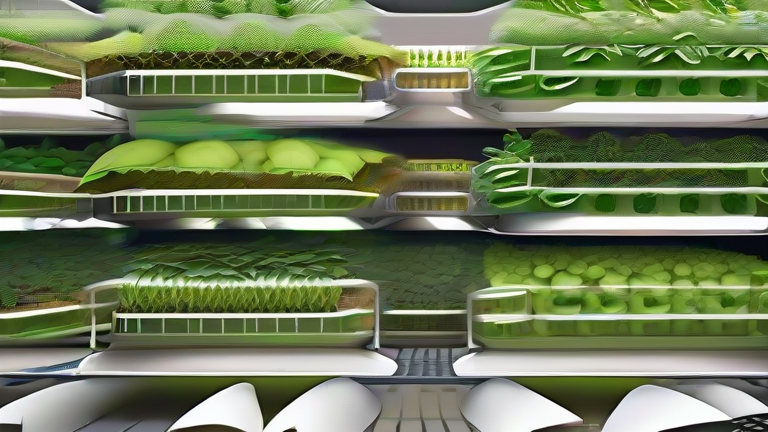
How Vertical Farming Scales to Cities

As urban populations swell and arable land shrinks, the traditional model of agriculture is facing an existential crisis. Climate change, supply chain disruptions, and the sheer logistical burden of transporting fresh produce across continents have pushed city planners and agri-tech innovators to look inward. The solution is rising: vertical farming. This revolutionary approach to agriculture is no longer a niche experiment but a scalable necessity for sustainable urban development. By stacking crops in controlled environments, often using hydroponic or aeroponic systems, cities can produce food year-round with a fraction of the water and land required by conventional farming.
The market data supporting this shift is undeniable. According to recent reports from MarketsandMarkets, the global vertical farming market size is projected to grow from approximately $4.8 billion in 2020 to $12.8 billion by 2025, representing a compound annual growth rate (CAGR) of 23.7%. This explosive growth is driven by increasing consumer demand for locally sourced, pesticide-free produce and the urgent need for food security in dense metropolitan areas. Major retailers and restaurant chains are already partnering with vertical farms to secure consistent supplies of leafy greens, herbs, and microgreens, reducing their carbon footprint significantly.
Industry experts emphasize that the key to scaling vertical farming lies in technological integration and energy efficiency. Dr. Elena Rossi, a leading agronomist at the Urban Agriculture Institute, notes, “The bottleneck has never been the ability to grow plants; it is the cost of energy and the optimization of labor. The next generation of vertical farms utilizes AI-driven climate control and robotics to minimize human intervention and reduce electricity consumption by up to 30%.” This insight highlights a critical trend: the convergence of agriculture and artificial intelligence. Smart sensors monitor nutrient levels, humidity, and light spectra in real-time, allowing plants to thrive in perfect conditions without waste.
Furthermore, the economic model of vertical farming is evolving. Initially criticized for high capital expenditures, newer facilities are adopting modular designs that allow for incremental expansion. This “plug-and-play” approach enables city developers to integrate farming spaces into commercial buildings, residential complexes, and even repurposed industrial warehouses. By co-locating
Leave a Reply