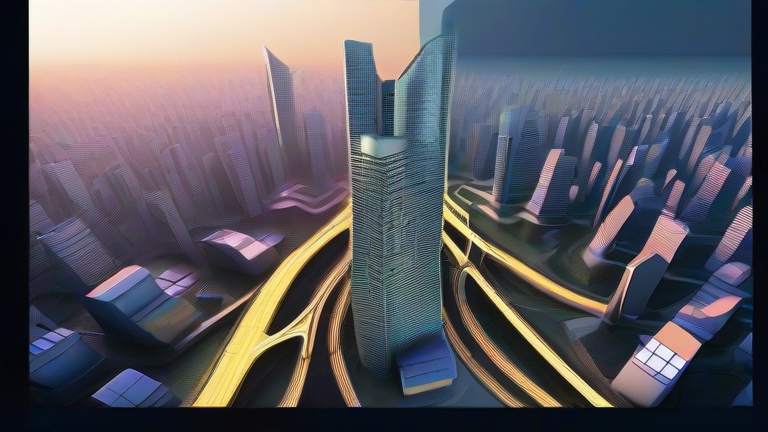
How Digital Twins Optimize Urban Infrastructure Planning
As global urbanization accelerates, city planners face unprecedented challenges in managing complex infrastructure networks. Enter the digital twin: a dynamic virtual replica of physical assets that is revolutionizing how we design, monitor, and maintain urban environments. By integrating Internet of Things (IoT) sensors, artificial intelligence, and real-time data streams, digital twins allow municipalities to simulate scenarios, predict failures, and optimize resources before a single brick is laid or a wire is strung.

The market for this transformative technology is expanding rapidly. According to recent industry reports, the global digital twin market is projected to reach $48.1 billion by 2026, growing at a compound annual growth rate of 35.5%. A significant portion of this growth is driven by the smart cities sector, where infrastructure efficiency is paramount. Cities like Singapore, Helsinki, and New York are already deploying comprehensive digital twin platforms to manage traffic flow, energy consumption, and emergency response protocols. These systems do more than just visualize data; they provide actionable insights that reduce operational costs by up to 20% and extend the lifespan of critical infrastructure assets.
Expert insights highlight the shift from reactive to proactive maintenance. “We are moving away from the era of fixing things after they break,” says Dr. Elena Rodriguez, a leading researcher in urban informatics at the Institute for Advanced City Studies. “Digital twins enable predictive analytics. We can now simulate a hundred-year storm event or a sudden spike in energy demand to see exactly where our grid or drainage systems will fail. This allows us to reinforce weak points proactively, saving millions in emergency repairs and minimizing disruption to citizens.” This predictive capability is crucial for climate resilience, enabling cities to adapt to increasingly volatile weather patterns.
Looking ahead, the integration of generative AI with digital twins promises even greater advancements. Future predictions suggest that within the next decade, these virtual models will become autonomous agents capable of making real-time adjustments to infrastructure without human intervention. For instance, a digital twin could automatically reroute
Leave a Reply