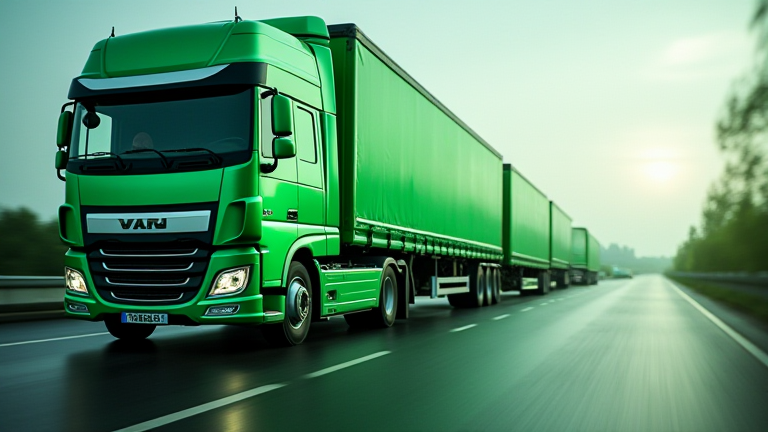
TL;DR: Green hydrogen is emerging as the leading zero-emission solution for heavy industrial transport, where battery-electric alternatives fall short on range and payload. With electrolyzer capacity and policy support accelerating, green hydrogen is poised to decarbonize trucking, shipping, and rail through the 2030s.
Market Momentum Builds
Green hydrogen—produced via electrolysis powered by renewable electricity—is moving from pilot projects to commercial scale. According to the International Energy Agency, global electrolyzer capacity reached roughly 1.4 GW in 2023, with announced projects exceeding 170 GW by 2030. The Hydrogen Council estimates that hydrogen could abate around 80 gigatons of CO2 cumulatively by 2050, with heavy transport among the highest-value applications. Investment is following: BloombergNEF reports that hydrogen sector investment surpassed $10 billion annually in recent years, driven by European Union targets of 10 million tonnes of domestic renewable hydrogen production by 2030 and similar ambitions in Japan, South Korea, and the United States under its hydrogen hubs program.
If you want to dig deeper, check out our guide on Green Hydrogen: Fueling Heavy Industry Decarbonization.
Why Heavy Transport Leads Adoption
Battery-electric solutions work well for passenger cars and short-haul delivery, but long-haul trucking, maritime shipping, and rail demand energy density and refueling speed that batteries struggle to deliver. Green hydrogen offers comparable range to diesel, rapid refueling, and reduced payload penalties. Truck manufacturers including Daimler Truck, Volvo, and Hyundai have committed to hydrogen fuel-cell and hydrogen combustion platforms, while shipping giants are trialing methanol and ammonia derived from green hydrogen. Ports in Rotterdam, Los Angeles, and Singapore are anchoring early demand clusters.
Expert Insights
“The economics of green hydrogen in heavy transport hinge on three factors: cheap renewable electricity, high utilization of refueling infrastructure, and a carbon price that reflects true externalities,” says Dr. Elena Vasquez, a hydrogen analyst at a European energy consultancy. “Where all three align—such as European corridor projects—we’re seeing total cost of ownership converge with diesel faster than expected.” Industry voices also caution that infrastructure remains the bottleneck: fuel-cell trucks are ready, but hydrogen refueling stations along freight corridors are not yet dense enough to support nationwide operations.
Future Predictions
Analysts expect green hydrogen to capture a meaningful share of new heavy truck sales in Europe and East Asia by the early 2030s, with maritime e-fuels scaling later in the decade. Cost declines in electrolyzers—projected by IRENA to fall 40–60 percent by 2030—should narrow the price gap with grey hydrogen. Policy will remain decisive: carbon contracts for difference, hydrogen refueling mandates, and port decarbonization rules are likely to determine which regions lead. The consensus forecast: green hydrogen will not replace batteries everywhere, but in heavy industrial transport it is becoming the default pathway to net zero.
FAQ
Q: Why is green hydrogen preferred over batteries for heavy transport?
A: It offers longer range, faster refueling, and lighter payload penalties, making it better suited to long-haul trucks, ships, and trains.
Q: When will green hydrogen heavy transport become cost-competitive?
A: Most analysts expect total cost of ownership to approach parity with diesel in leading markets during the early-to-mid 2030s, driven by cheaper electrolyzers and carbon pricing.
Q: What is the biggest barrier to adoption?
A: Refueling and production infrastructure. Fuel-cell vehicles exist, but hydrogen corridors and port supply chains must scale before widespread deployment.
Leave a Reply