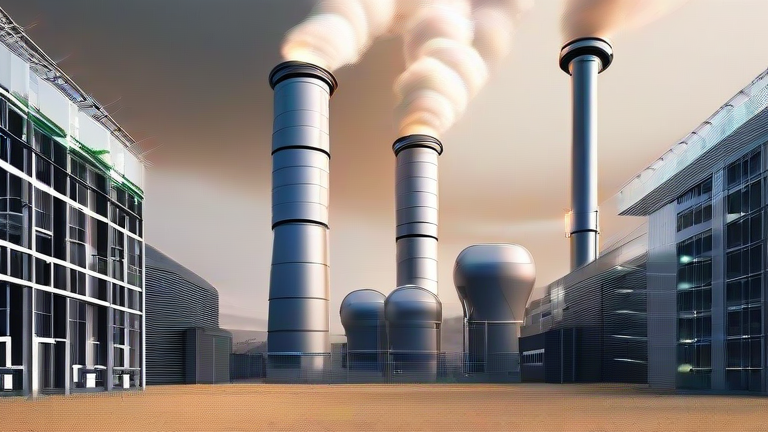
Climate Tech Carbon Capture: Future of Fighting Climate Change
The global race to achieve net-zero emissions has intensified the spotlight on carbon capture, utilization, and storage (CCUS) technologies. As governments and corporations alike face mounting pressure to meet ambitious climate targets, CCUS has emerged not merely as a supplementary tool, but as a critical pillar of the decarbonization strategy. This sector is rapidly evolving from experimental pilot projects into scalable industrial solutions, promising to bridge the gap between current emission levels and the rigorous demands of the Paris Agreement.
Market dynamics are reflecting this urgency. According to recent industry reports, the global carbon capture market is projected to reach approximately $16 billion by 2030, growing at a compound annual growth rate of over 20%. This exponential growth is driven by substantial public and private investment. Major energy conglomerates are allocating billions toward direct air capture facilities, while tech giants are securing long-term offtake agreements for captured carbon to neutralize their operational footprints. The financial viability of these projects is increasingly supported by robust policy frameworks, such as the enhanced 45Q tax credits in the United States, which significantly improve the economic return on investment for captured carbon.
If you want to dig deeper, check out our guide on 10 Proven Health Tips to Boost Energy and Vitality Today.

Experts emphasize that technological innovation is the key driver behind this rapid expansion. “We are witnessing a paradigm shift,” says Dr. Elena Rossi, a leading climate policy analyst. “The focus is moving from simple sequestration to creating circular carbon economies. We are no longer just burying CO2; we are finding valuable uses for it in synthetic fuels, building materials, and chemical manufacturing.” This dual approach of storage and utilization helps mitigate the high costs associated with pure storage, creating more sustainable business models for early adopters.
Looking ahead, the future of climate change mitigation hinges on the scalability of these technologies. Predictions suggest that by 2050, CCUS could contribute up to 15% of the cumulative emission reductions needed to limit global warming to 1.5 degrees Celsius. However, significant challenges remain, including high energy requirements for capture processes and the need for extensive transportation and storage infrastructure. As technology matures and costs decline, CCUS will likely transition
Leave a Reply