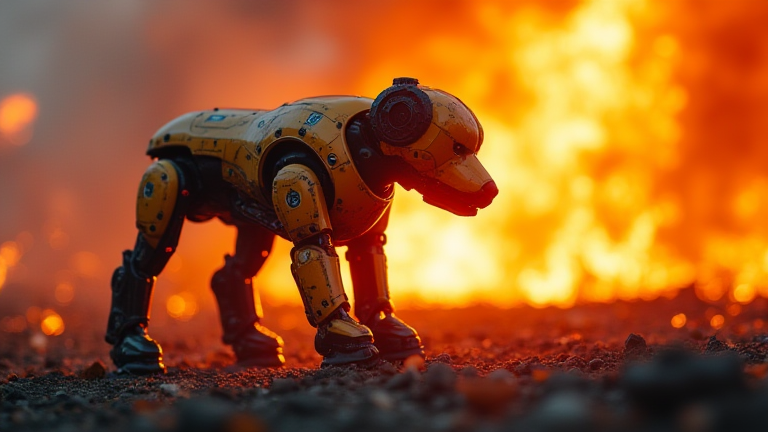
TL;DR: Chinese robot dogs are actively deployed in hazardous environments to extinguish fires and mitigate toxic leaks, significantly reducing the risk to human rescuers. These agile machines utilize advanced sensors and AI to navigate complex terrains where human presence is too dangerous, ensuring safer emergency response operations.
When Technology Meets Tradition
In the bustling heart of modern China, a quiet revolution is unfolding on the streets of Shanghai and Shenzhen. While tourists flock to the historic Bund to admire colonial architecture or savor delicate dim sum in century-old tea houses, a new kind of guardian patrols the shadows. These are not human firefighters braving the flames, nor are they traditional cultural symbols like the dragon dances that celebrate prosperity. Instead, they are quadrupedal robots, sleek and metallic, designed with a singular purpose: to protect the protectors.
If you want to dig deeper, check out our guide on AI Content Flood: Human-Made Content is Now a Luxury.
The integration of these robotic units into emergency services represents a fascinating intersection of cutting-edge technology and public safety. Traditionally, rescue operations in industrial zones or dense urban fires have posed immense risks. Rescuers must often enter zones filled with smoke, unstable structures, and toxic chemicals. The introduction of robot dogs changes this narrative entirely. Equipped with thermal imaging cameras, gas sensors, and high-pressure water nozzles, these machines can enter environments that would be fatal for humans. They move with remarkable agility, climbing stairs and navigating rubble with ease, providing real-time data to command centers.
For the local community, this shift offers a profound sense of security. It is not just about efficiency; it is about preserving human life. Imagine a scenario where a chemical plant leaks hazardous fumes. In the past, human teams had to don heavy, restrictive suits and work under extreme duress. Now, the robot dogs lead the charge, identifying the source and containing the leak before humans even arrive on the scene. This technological leap allows rescuers to focus on coordination and strategy rather than immediate physical peril.
As China continues to lead in robotics innovation, these dog-like machines are becoming symbols of a safer, smarter future. They do not replace the bravery of firefighters but rather enhance it, acting as tireless companions in the line of duty. For travelers and locals alike, witnessing these machines in action is a reminder that technology, when used responsibly, can serve as a powerful tool for preservation and care. It is a testament to how modern engineering can honor the ancient value of community protection, ensuring that those who run towards danger are never left to face it alone.
FAQ
Q: What specific hazards can these robot dogs handle?
A: They are equipped to navigate fire zones, detect toxic gas leaks, and operate in unstable structural environments.
Q: How do they assist human rescuers?
A: They provide real-time thermal imaging and environmental data, allowing humans to plan safer and more effective rescue strategies.
Q: Are these robots currently in active service?
A: Yes, they are actively deployed in major Chinese cities for emergency response and industrial safety inspections.
Leave a Reply