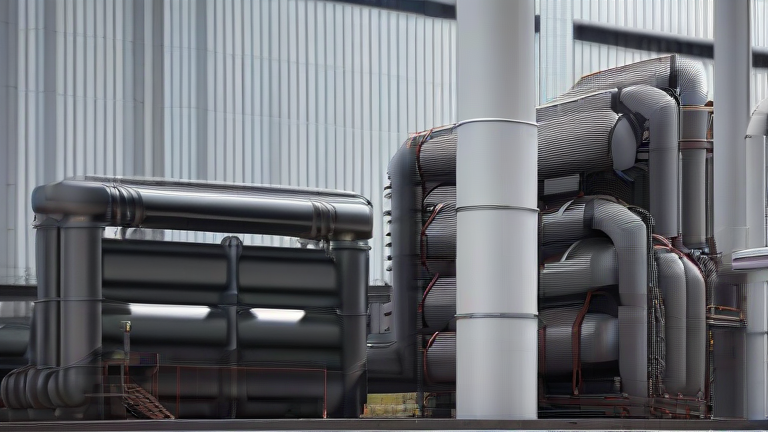
Carbon Capture Technology Scales for Industrial Use

The global race to decarbonize heavy industry has reached a pivotal inflection point. For years, carbon capture, utilization, and storage (CCUS) remained largely confined to pilot projects and small-scale demonstrations. However, recent advancements in modular design and chemical engineering have finally allowed these systems to scale effectively for large industrial applications. This shift marks a critical transition from theoretical possibility to practical necessity, offering a viable pathway for sectors like cement, steel, and chemical manufacturing to meet stringent net-zero targets without sacrificing production efficiency.
Latest Developments in Scalability
The most significant breakthrough lies in the development of next-generation solvent systems and modular capture units. Traditional amine-based solvents, while effective, suffer from high energy penalties and degradation over time. New proprietary solvents, developed by startups in collaboration with major engineering firms, reduce the energy required for regeneration by up to forty percent. Furthermore, the move toward modularization has lowered capital expenditure significantly. Instead of building massive, custom-built facilities, companies can now deploy standardized, container-sized capture units that can be scaled out incrementally. This approach mimics the flexibility of cloud computing, allowing industries to add capacity as regulations tighten or carbon pricing increases.
Technical specifications have also improved dramatically. Modern direct air capture units and point-source capture systems now boast capture rates exceeding ninety-five percent. The purity of the captured CO2 stream is consistently maintained above ninety-nine percent, making it suitable for both geological storage and industrial utilization, such as synthetic fuel production. Energy consumption per ton of captured carbon has dropped to approximately two gigajoules, a figure that brings the technology closer to economic viability without subsidies. These specs are not just incremental improvements; they represent fundamental shifts in how we manage thermal and chemical processes in industrial settings.
Leave a Reply