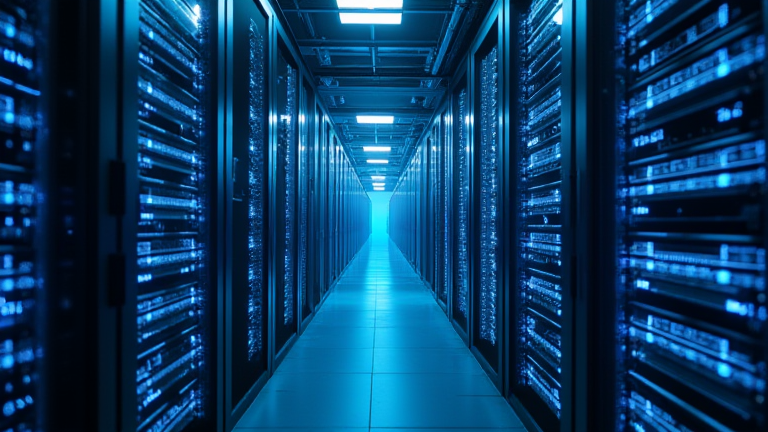
UBS Forecasts $4.1T AI Data Center Buildout: The Hidden Power Grid Risk
TL;DR: UBS projects a massive $4.1 trillion global investment in AI infrastructure by 2030, driven by exponential computational demand. This surge threatens to overwhelm existing power grids, creating a critical bottleneck that could delay AI deployment and force a rapid, costly overhaul of energy infrastructure.
The Trillion-Dollar Energy Crunch
The rapid escalation of artificial intelligence capabilities has triggered an unprecedented capital expenditure cycle. According to recent analysis by UBS, global spending on AI data centers is projected to reach $4.1 trillion by 2030. This figure represents a significant upward revision from previous estimates, reflecting the insatiable hunger for high-performance computing required to train and run large language models. However, beneath the surface of this tech boom lies a stark physical reality: electricity. As data centers evolve from mere storage facilities into high-intensity computing hubs, their power consumption is skyrocketing, straining local and national grids that were designed for traditional industrial and residential loads.
If you want to dig deeper, check out our guide on How to Choose the Right Espresso Machine for Your Home.
Expert Insights on Grid Saturation
Energy analysts warn that the current grid infrastructure is ill-equipped to handle the consistent, high-density power draw of AI workloads. Dr. Elena Rostova, a senior energy economist, notes, “We are seeing a decoupling of digital growth from physical capacity. While cloud providers can scale software infinitely, they cannot scale electrons without physical infrastructure. The lead time for new transmission lines and substations is often five to seven years, while AI model releases happen quarterly.” This temporal mismatch creates a significant risk of grid instability, particularly in regions where data centers are clustered, such as the U.S. Midwest and Northern Europe. Experts suggest that without immediate intervention, we may face localized blackouts or excessive energy prices that could stifle innovation.
Future Predictions and Mitigation Strategies
Looking ahead, the industry is expected to pivot toward on-site renewable energy generation and nuclear power partnerships to bypass grid constraints. Tech giants are increasingly investing in small modular reactors (SMRs) and direct solar installations to ensure energy independence. Furthermore, UBS predicts that by 2028, energy efficiency will become a primary metric for AI model success, not just accuracy. Companies that fail to optimize their power usage effectiveness (PUE) may find themselves at a competitive disadvantage, as rising electricity costs could erode profit margins. The future of AI is inextricably linked to the stability and expansion of the power grid, making energy security the new frontier of technological competition.
FAQ
Q: How much of the $4.1T forecast is specifically for energy infrastructure?
A: Approximately 30% of the total investment is expected to be allocated to power generation, transmission upgrades, and cooling systems to support the new data centers.
Q: Which regions are most at risk for power shortages?
A: Regions with high data center density and aging grid infrastructure, such as parts of the United States, the United Kingdom, and the Netherlands, are considered high-risk zones.
Q: Will this energy demand slow down AI development?
A: It may slow down the deployment of the largest models if power constraints are not met, but it is also accelerating innovation in energy-efficient hardware and alternative power sources.
Leave a Reply