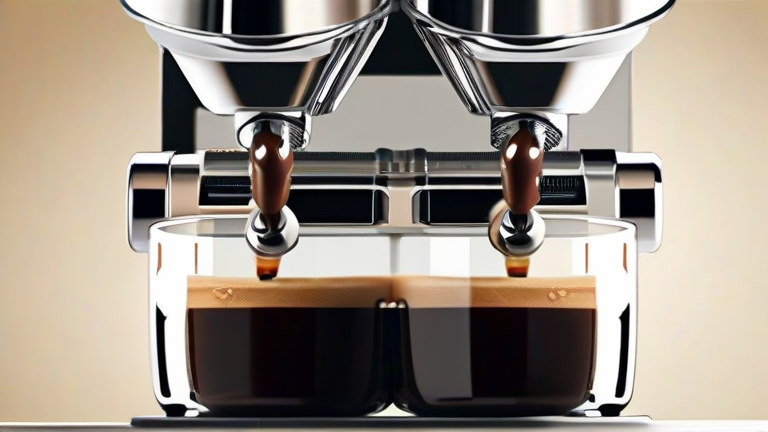
How to Choose the Right Espresso Machine for Your Home
TL;DR: Select a machine that matches your daily consumption level and skill preference, prioritizing stable temperature control for consistency. For beginners, automatic models offer ease, while enthusiasts should opt for prosumer units with manual pressure profiling capabilities.
Understanding Your Needs
Before diving into specifications, assess your coffee habits. Do you drink one cup in the morning or multiple shots throughout the day? High-volume drinkers need robust heating elements to maintain temperature stability, whereas casual drinkers might find entry-level machines sufficient. Consider counter space as well; compact pod machines save room but sacrifice customization, while lever or dual-boiler units require more space but deliver superior flavor profiles.
If you want to dig deeper, check out our guide on 80% of Devs Say AI Coding Is Addictive, Not Helpful.
Key Feature Highlights
When evaluating options, focus on three critical components: the pump, the boiler, and the pressure gauge. A 9-bar pump is standard, but the type matters. Rotary pumps offer smoother pressure curves compared to vibratory pumps, leading to more even extraction. For boilers, single-boiler machines can brew and steam simultaneously but may suffer from temperature drops. Dual-boiler systems separate these functions, ensuring optimal heat for both extraction and milk texturing. Additionally, look for PID (Proportional Integral Derivative) temperature control. This digital feature maintains precise water temperatures, preventing the bitter taste associated with overheated beans or the sourness from under-extraction. The presence of a pressure gauge is also vital for troubleshooting shots in real-time.
Comparing the Options
Entry-level machines, typically under $300, are ideal for convenience. They often feature simple on/off switches and basic steam wands. While they produce decent espresso, they lack the precision required for fine-tuning. Mid-range prosumer models, ranging from $500 to $1,000, strike the best balance for most home users. These units usually include PID control, pre-infusion features, and higher-quality build materials like stainless steel. They allow for significant skill development without the steep learning curve of commercial gear. High-end semi-professional machines exceed $1,500 and offer multi-boiler configurations and advanced flow profiling. These are for dedicated enthusiasts who view espresso as a craft rather than a mere beverage.
Make the Right Choice
Choosing the right espresso machine is an investment in your daily ritual. If you prioritize speed and simplicity, an automatic machine will serve you well. However, if you seek the nuanced flavors of fresh beans, a prosumer model with PID control is the superior choice. Don’t forget to factor in the cost of accessories like burr grinders and tamper, which are essential for achieving professional results at home. Read recent user reviews to gauge reliability and customer service support before purchasing.
FAQ
Q: Do I need a separate grinder?
A: Yes, a dedicated burr grinder is crucial for consistent particle size, which is vital for proper espresso extraction.
Q: What is the difference between automatic and semi-automatic?
A: Automatic machines handle grinding and brewing automatically, while semi-automatic requires you to grind, tamp, and start the shot manually.
Q: How often should I descale my machine?
A: It depends on water hardness, but generally, you should descale every one to three months to prevent mineral buildup and maintain performance.
Leave a Reply