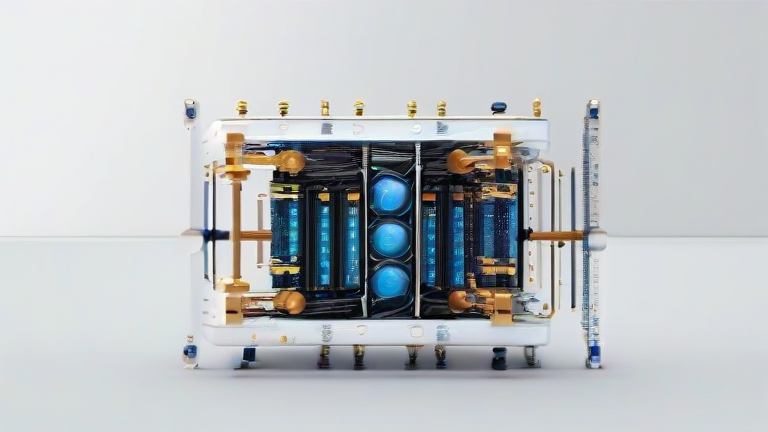
Quantum Computing Hits Commercial Error Correction Milestone

For decades, the promise of quantum computing has been hindered by a single, persistent adversary: noise. Qubits, the fundamental units of quantum information, are notoriously fragile. Any slight interaction with the environment—temperature fluctuations, electromagnetic interference, or even cosmic rays—can cause them to lose their state, a phenomenon known as decoherence. This fragility has historically limited quantum computers to small-scale experiments, preventing them from solving real-world, complex problems. However, a significant breakthrough has finally shifted the paradigm. The recent announcement regarding the achievement of commercial-grade error correction marks a pivotal moment in technology history, effectively transitioning quantum computing from theoretical physics to practical engineering.
Feature Highlights: Stability at Scale
The core innovation lies in the new logical qubit architecture. Unlike previous physical qubits that operated independently and were prone to high error rates, this new system uses surface codes to create “logical qubits.” These logical units are composed of many physical qubits working in concert. If one physical qubit fails, the others compensate, ensuring the overall integrity of the data. The result is a dramatic reduction in error rates, dropping below the critical threshold required for fault-tolerant computing.
Furthermore, the system boasts improved coherence times. Where earlier models might maintain a stable state for mere microseconds, the new hardware extends this duration significantly, allowing for deeper circuit depths and more complex algorithms to run to completion. This stability is not just a laboratory curiosity; it is a commercial necessity. Enterprises require reliability, and this milestone provides the confidence needed to invest in quantum infrastructure for drug discovery, financial modeling, and logistics optimization.
Comparative Analysis: The Leap Forward
When compared to legacy quantum processors from just two years ago, the difference is stark. Older systems required extensive post-processing to correct errors, often rendering the final output useless if the error rate exceeded a certain percentage. The new error-corrected systems perform real-time correction, meaning the data output is clean and usable immediately. In terms of processing power, while classical supercomputers still dominate standard tasks, this new quantum architecture begins to outperform classical systems in specific, highly optimized simulations, such as
Leave a Reply