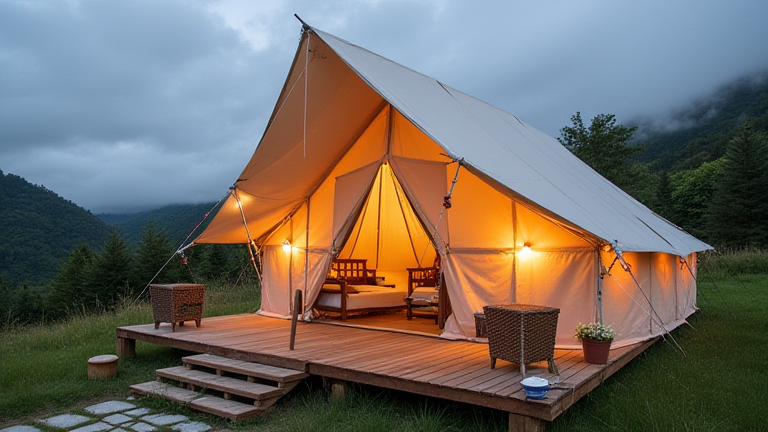
The surging popularity of glamping tents is reshaping the travel sector by offering a high-end, sustainable alternative to traditional accommodations. This shift appeals to modern tourists seeking immersive natural experiences without sacrificing luxury or comfort.
The Market Shift Toward Premium Outdoor Experiences
The global glamping market is experiencing unprecedented growth, driven by a post-pandemic desire for safe, isolated, yet luxurious getaways. According to recent industry reports, the glamping market size was valued at approximately $2.2 billion in 2021 and is projected to reach over $4.5 billion by 2030, growing at a compound annual growth rate (CAGR) of nearly 8.5%. This expansion is not merely a niche trend but a fundamental restructuring of how hospitality operators view land utilization. Traditional hotels face high construction costs and rigid infrastructure requirements, whereas glamping sites can be deployed rapidly on underutilized land, offering operators faster return on investment and greater flexibility in location selection.
Expert Insights on Consumer Behavior
Industry analysts suggest that the success of glamping lies in its ability to bridge the gap between adventure and comfort. “Travelers are no longer willing to compromise on amenities for the sake of immersion,” says Sarah Jenkins, a hospitality trend analyst. “Modern glamping tents feature king-sized beds, private en-suite bathrooms, climate control, and high-speed Wi-Fi, catering to the digital nomad and the luxury seeker simultaneously.” This hybrid model attracts a diverse demographic, including families seeking educational nature experiences, couples looking for romantic escapes, and corporate groups desiring unique team-building environments. The psychological appeal of “soft adventure”—experiencing the outdoors without the physical rigors of backpacking—resonates strongly with millennials and Gen Z travelers who prioritize experiences over material possessions.
If you want to dig deeper, check out our guide on 10 Simple Lifestyle Hacks for a Happier, Healthier You.
Sustainability as a Core Value Proposition
Environmental consciousness is another critical driver. Glamping often emphasizes eco-friendly practices, such as solar power, water conservation, and minimal footprint construction. Many operators position their tents as low-impact solutions that preserve local ecosystems while providing economic benefits to rural areas. This aligns with the growing consumer demand for sustainable tourism. By choosing glamping, travelers feel they are making an ethical choice, supporting local economies and reducing the carbon footprint associated with large-scale hotel construction and operation. This alignment with personal values creates strong brand loyalty and word-of-mouth marketing, which is crucial in the digital age.
Future Predictions and Technological Integration
Looking ahead, the integration of smart technology will further elevate the glamping experience. Future tents may feature AI-driven climate controls, automated lighting systems, and augmented reality overlays that educate guests about local flora and fauna. Furthermore, the rise of modular tent designs will allow for easier customization and scalability, enabling operators to adjust offerings based on seasonal demand. As urbanization continues to drive people toward nature, glamping is expected to become a standard offering in the hospitality portfolio, rather than a boutique exception. The industry will likely see increased competition, leading to higher standards of quality and service, ultimately benefiting the consumer through better experiences and more diverse options.
FAQ
Q: Is glamping more expensive than traditional hotels?
A: While glamping can be premium-priced, it is often comparable to mid-range hotels, offering unique experiences that justify the cost for many travelers.
Q: What is the main advantage of glamping for hotel operators?
A: Operators benefit from lower initial infrastructure costs, faster deployment times, and the ability to utilize land that is unsuitable for permanent concrete structures.
Q: How does glamping impact local environments?
A: When managed responsibly, glamping has a lower environmental footprint than traditional development, preserving natural landscapes while providing economic support to local communities.
Leave a Reply