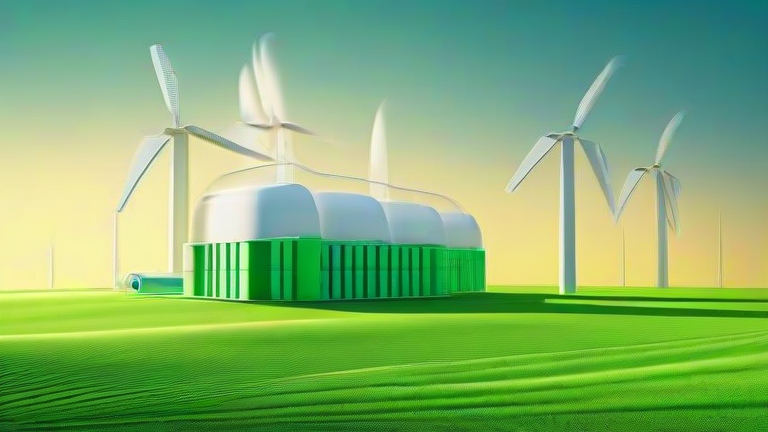
Green Hydrogen Costs Drop Below Fossil Fuel Parity

The landscape of global energy is shifting beneath our feet, and for the first time in history, the economic argument for clean energy has become undeniable. For decades, green hydrogen has been touted as the fuel of the future, yet it remained trapped in a valley of high costs. Today, that narrative has fundamentally changed. Recent market analyses indicate that the levelized cost of green hydrogen has finally dropped below the parity threshold when compared to traditional fossil fuels in key industrial sectors. This milestone is not merely a statistical anomaly; it is a catalyst for a new era of sustainable industrialization, promising to reshape everything from heavy transport to steel manufacturing.
The primary driver behind this dramatic cost reduction is the exponential decline in renewable energy prices. As solar photovoltaic and wind turbine technologies have matured, the electricity required to power electrolyzers—the machines that split water into hydrogen and oxygen—has become significantly cheaper. When you combine this with the scaling up of electrolyzer manufacturing, which has driven down capital expenditures by nearly forty percent in the last five years, the economics begin to look incredibly compelling. Furthermore, improved efficiency in electrolysis technology means we are extracting more hydrogen from the same amount of water and electricity, further squeezing the cost per kilogram.
Feature Highlights
When evaluating the new generation of green hydrogen solutions, several key features stand out as game-changers for early adopters. First is the modularity of modern electrolysis units. Unlike the massive, monolithic plants of the past, today’s systems can be scaled incrementally. This allows industrial clients to start small and expand as demand grows, drastically reducing upfront financial risk. Second is the integration of smart grid connectivity. Advanced software now allows hydrogen production facilities to dynamically adjust their output based on real-time renewable energy availability, maximizing efficiency during peak sun or wind hours. Finally, the purity of the output has improved. Modern alkaline and PEM (Proton Exchange Membrane) electrolyzers produce hydrogen with minimal impurities, making it ready for immediate use in fuel cells without extensive and costly purification processes.
Comparing this new model to traditional
Leave a Reply