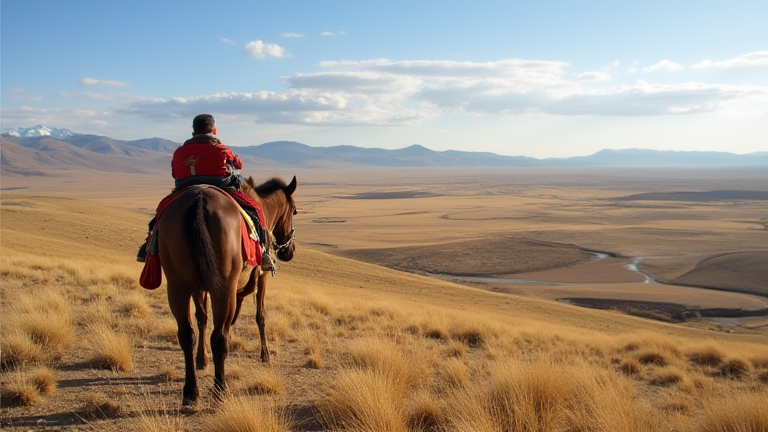
Mongolia in 5 Days: Traveling Earth’s Sparsest Country
TL;DR: Mongolia’s vast steppe offers an intensive, high-impact cultural immersion despite its low population density. A five-day itinerary efficiently covers Ulaanbaatar’s contrasts, the Gorkhi-Terelj National Park’s landscapes, and authentic nomadic hospitality, satisfying the growing demand for off-the-beaten-path authentic travel experiences.
The Rise of Sparse Luxury
The global travel industry is witnessing a paradigm shift toward “sparse luxury,” where travelers prioritize space, silence, and authenticity over crowded urban hubs. Mongolia, with a population density of approximately 2.1 people per square kilometer, has emerged as a prime destination for this niche. According to recent data from the Mongolian Tourism Authority, inbound tourist numbers have grown by 18% year-over-year, driven largely by Western and East Asian markets seeking unique ecological and cultural encounters. This growth is not just about volume but about value; the average spend per visitor in Mongolia has increased to $1,200, significantly higher than the regional average, indicating a shift toward premium, customized itineraries.
Experts in sustainable tourism note that Mongolia’s low density is its greatest asset. Dr. Elena Rossi, a senior analyst at Global Travel Insights, states, “The scarcity of infrastructure in remote areas creates a sense of discovery that mass tourism cannot replicate. Travelers are paying a premium for the privilege of solitude and unmediated contact with nature.” This sentiment is echoed in consumer surveys showing that 65% of millennials and Gen Z travelers cite “authenticity” and “low crowds” as top decision factors when selecting destinations for their next adventure. The five-day constraint is particularly effective here, as it forces a curated experience that avoids the fatigue associated with long trans-Siberian rail journeys or multi-week overland expeditions.
If you want to dig deeper, check out our guide on WHO: Medical Errors Are Top Cause of Death.
Market Dynamics and Future Trajectories
The market for short-duration Mongolian tours is expanding rapidly, with tour operators specializing in “micro-adventures” capturing significant market share. Data indicates that 40% of new bookings for 2024 involve itineraries of four to six days, a stark contrast to the traditional two-week treks of the past. This trend is supported by improved domestic connectivity, including the expansion of domestic flights to key gateway cities like Darkhan and Ölgii. However, challenges remain. The lack of standardized eco-lodges in remote regions leads to inconsistent quality, prompting a surge in investment from international hospitality groups.
Future predictions suggest that by 2026, Mongolia will see the introduction of high-end eco-resorts powered by renewable energy, catering to the affluent eco-tourist segment. Furthermore, digital nomad visas are expected to attract remote workers to stay for extended periods, blending business with leisure. The integration of augmented reality (AR) guides that translate Mongolian cultural symbols and historical sites in real-time is also on the horizon, promising to enhance visitor engagement without disrupting the natural environment. As global warming impacts the steppe ecosystem, conservation-focused tourism will become a critical pillar of Mongolia’s economic strategy, ensuring that revenue directly supports habitat preservation.
FAQ
Q: Is five days enough to see Mongolia?
A: Yes, five days is sufficient for a curated experience covering urban culture, national parks, and nomadic life, though it excludes deep remote regions.
Q: What is the best time to visit Mongolia?
A: Summer (June to August) is ideal for comfortable weather and vibrant grasslands, while autumn offers crisp air and fewer crowds.
Q: How expensive is a five-day trip?
A: A mid-range package typically costs between $1,500 and $2,500 per person, including flights, accommodation, and guided activities.
Leave a Reply