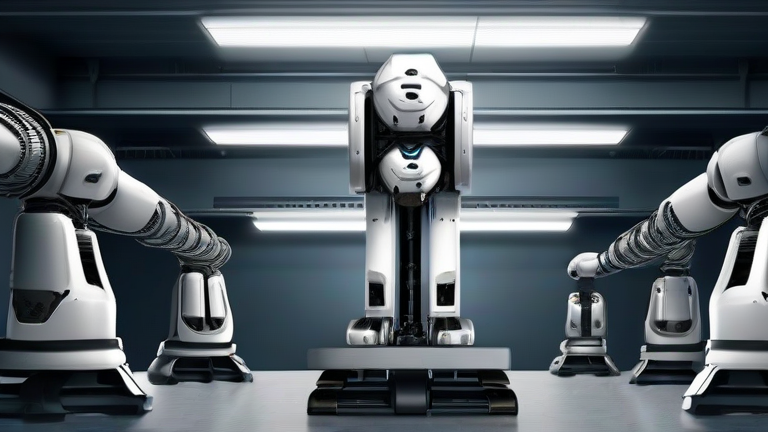
TL;DR: No, humanoid robots cannot currently replace industrial arms in high-speed, high-precision manufacturing tasks. Industrial arms remain superior for repetitive, heavy-duty work due to their speed, accuracy, and lower operational costs.
The debate between humanoid and industrial robots often centers on versatility versus efficiency. While humanoids promise flexibility in unstructured environments, industrial robots like six-axis arms are engineered for specific, repetitive tasks with millimeter precision. For factory floors, this specialization is a critical advantage that humanoids have yet to match economically or technically. Understanding this distinction is vital for business owners and engineers planning automation strategies.
If you want to dig deeper, check out our guide on Scott Galloway Says SpaceX Shares Are ‘Crazy Overvalued.
The Efficiency Gap
Industrial robots excel in structured environments where tasks are predictable. A standard industrial arm can perform thousands of identical welds or assemblies per day without fatigue, error, or slowdown. This consistency is backed by decades of engineering optimization. In contrast, humanoids are still in the developmental phase regarding reliability and speed. Their complex joint mechanisms and heavy processing units slow them down significantly compared to the rigid, direct-drive motors of industrial arms. For health and wellness-focused factories, this matters because unpredictable downtime can lead to increased stress and irregular work schedules for human staff. Maintaining a stable production rhythm is essential for worker well-being, as consistent operations reduce cognitive load and anxiety.
Economic and Safety Considerations
The cost disparity is another major factor. Industrial arms have a proven track record of return on investment (ROI) within a few years due to their low maintenance and high throughput. Humanoids, however, are currently expensive to manufacture and maintain. Their batteries require frequent recharging, and their sensors are susceptible to degradation in harsh factory conditions. From a lifestyle perspective, companies that prioritize employee safety and well-being benefit from the predictable safety profiles of industrial robots, which are typically caged or monitored by advanced sensors. Humanoids, designed to work alongside humans, introduce new safety variables that require extensive training and monitoring. This added complexity can increase workplace stress if not managed properly. Therefore, for now, sticking with industrial arms is the safer, more economical choice for most manufacturing needs.
The Future of Hybrid Workforces
While humanoids may not replace industrial arms soon, they could complement them in logistics and inspection roles. This hybrid approach allows factories to maintain high-speed production while adding flexibility for quality control and material handling. For employees, this means fewer monotonous tasks and more opportunities for skill development, which is linked to higher job satisfaction and mental health. By adopting a balanced automation strategy, companies can enhance productivity without compromising the physical and mental well-being of their workforce. It is crucial to monitor ergonomic factors and ensure that any new technology integrates smoothly into existing workflows to prevent strain or injury.
FAQ
Q: Are humanoid robots safer than industrial arms?
A: Humanoids are designed for collaborative work, but industrial arms offer more predictable safety profiles in caged environments.
Q: Can humanoids handle heavy materials?
A: Currently, no, as most humanoid prototypes lack the torque and structural integrity of specialized industrial arms.
Q: When will humanoids become cost-effective for factories?
A: Experts predict significant cost reductions in the next decade, but widespread industrial adoption remains years away.
Leave a Reply