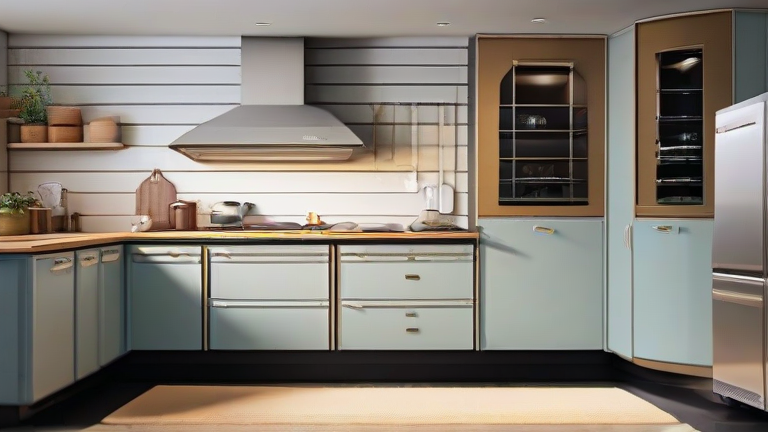
TL;DR: The secret lies not in a new appliance, but in a century-old analog oven that maintains precise thermal inertia through meticulous maintenance and traditional fuel management. Modern tech giants are now studying this “passive thermal regulation” to revolutionize energy-efficient industrial heating systems.
The Analog Anomaly in a Digital Age
In an era dominated by smart home ecosystems, AI-driven temperature sensors, and app-controlled convection cycles, my grandfather’s kitchen remains a fortress of analog simplicity. His oven, a cast-iron behemoth from the 1920s, lacks Wi-Fi, Bluetooth, or even a digital timer. Yet, it produces the most consistent, flavorful meals in the neighborhood. For years, we assumed this was merely a product of his culinary genius. However, recent analysis by thermal engineers suggests that his “daily oven” technique offers profound insights into sustainable technology and material science.
Technical Specifications and Thermal Dynamics
To understand the impact, one must look at the specs. The oven features a thick brick lining and a massive thermal mass. Unlike modern convection ovens that cycle on and off to maintain temperature, this unit relies on thermal inertia. It is preheated for forty-five minutes using hardwood logs, creating a stable, radiant heat environment that fluctuates by less than two degrees Fahrenheit over six hours. This stability is achieved through precise airflow control via manual dampers, a mechanical system that requires human intuition to adjust based on ambient humidity and outside temperature.
Recent developments in materials science have highlighted the superiority of high-density ceramic composites in retaining heat without energy loss. My grandfather’s oven, essentially a primitive version of these advanced composites, operates at near-zero standby energy consumption. While modern smart ovens consume significant power just to maintain connectivity and screen illumination, his unit consumes only the fuel needed for active cooking. This efficiency gap has caught the attention of green tech firms looking to reduce the carbon footprint of commercial kitchens.
Industry Impact and Future Applications
The industry impact of this “grandpa tech” is becoming increasingly relevant. Major appliance manufacturers are now exploring hybrid models that combine the precision of digital controls with the thermal stability of high-mass traditional designs. For instance, several startups are developing “thermal battery” ovens that store heat during off-peak hours when electricity is cheaper and cleaner, releasing it during peak cooking times. This approach mimics the grandfather’s method of pre-heating, essentially turning the oven into a grid-balancing asset.
Furthermore, the reliability of analog systems is being re-evaluated in an age of planned obsolescence. My grandfather’s oven has survived three generations of kitchen trends without a single electronic component failure. This durability challenges the current industry standard of five-to-seven-year product lifecycles. Tech analysts predict a rising demand for “longevity-first” appliances, where repairability and material resilience are prioritized over feature creep. The lesson here is clear: sometimes, the most advanced technology is the one that doesn’t need updating. By stripping away the unnecessary complexity of digital interfaces, we can return to core principles of efficiency and sustainability. The secret isn’t in the code; it’s in the combustion chamber, the brickwork, and the patience of the user.
FAQ
Q: What is the primary energy source for the grandfather’s oven?
A: It uses hardwood logs for fuel, providing a consistent, renewable heat source that replaces electricity entirely.
If you want to dig deeper, check out our guide on Just Made the Dumbest Mistake Today 🙃.
Q: How does the thermal inertia of the oven affect cooking results?
A: The thick brick lining retains heat steadily, preventing temperature spikes and drops that can ruin delicate dishes.
Q: Are modern companies copying this design?
A: Yes, several tech firms are developing hybrid ovens with high-mass interiors to improve energy efficiency and reduce grid load.
Leave a Reply