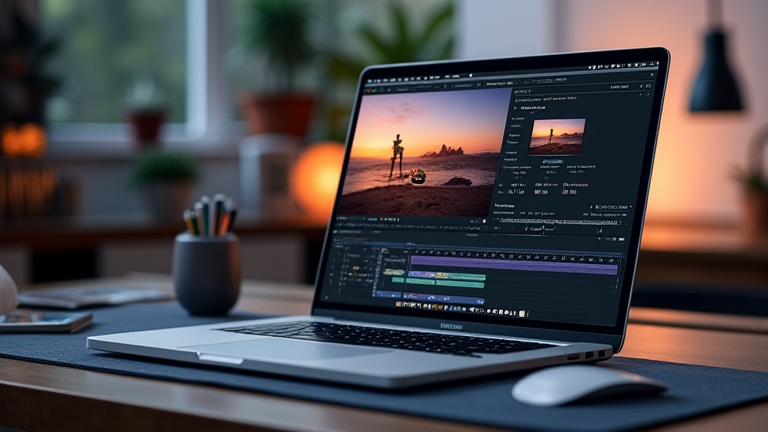
TL;DR: The MacBook Pro M3 boosts video editing speed through its revolutionary 3nm architecture, which significantly enhances media engine performance and neural engine capabilities. This hardware leap allows professionals to handle complex 4K and 8K timelines with unprecedented fluidity and reduced render times.
Revolutionizing Professional Workflows
The introduction of the M3 series chips marks a pivotal moment in the evolution of portable computing, particularly for creative professionals who rely on heavy computational power. By transitioning to a third-generation 3-nanometer process, Apple has managed to pack more transistors into a smaller footprint, resulting in superior efficiency and performance per watt. For video editors, this translates to a seamless experience when manipulating high-resolution footage, applying real-time effects, and managing multiple layers of audio and video tracks simultaneously.
The media engine within the M3 chip has been specifically optimized to handle H.264, H.265, and ProRes codecs with incredible speed. This dedicated hardware acceleration means that playback of high-bitrate footage is smooth, even on devices with only 16GB of unified memory. Unlike previous generations, the M3 series introduces hardware-accelerated mesh shading, which not only benefits gaming but also aids in complex rendering tasks associated with 3D video editing and motion graphics.
Industry Impact and Adoption
The tech industry has responded enthusiastically to these developments, noting a shift in how professionals approach mobile editing workflows. Major software providers like Adobe, DaVinci Resolve, and Final Cut Pro have quickly updated their applications to leverage the full potential of the M3 architecture. This synergy between hardware and software ensures that users can take advantage of new features like enhanced AI-driven tools for object removal, color grading assistance, and automatic captioning.
Furthermore, the impact extends beyond individual creators to entire production houses. The ability to edit high-quality content on a single, portable device reduces the need for expensive desktop setups and data center resources. This democratization of high-end video editing tools allows independent filmmakers and small agencies to compete with larger studios. The M3 MacBook Pro is not just a laptop; it is a powerful studio in a box, redefining the boundaries of mobile productivity and setting a new standard for performance in the creative industry.
FAQ
Q: What is the primary reason for the speed increase in the M3 chip?
A: The primary reason is the transition to a third-generation 3-nanometer process, which allows for more transistors and improved efficiency.
If you want to dig deeper, check out our guide on Microsoft Retires Excel’s COPILOT Function After Just One Ye.
Q: Which video codecs are best supported by the M3 media engine?
A: The M3 media engine is optimized for H.264, H.265, and ProRes codecs, ensuring smooth playback and editing.
Q: How does the M3 impact the need for desktop editing stations?
A: It reduces the need for expensive desktop setups by enabling high-quality mobile editing, allowing professionals to work efficiently on the go.
Leave a Reply