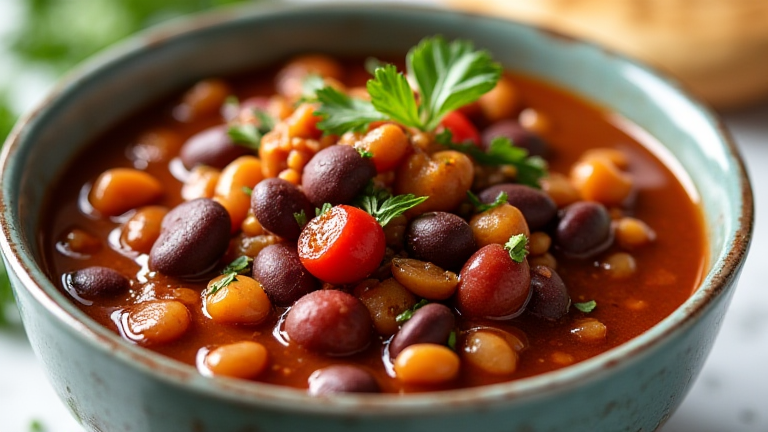
TL;DR: This recipe delivers a nutritious, high-protein meal for just $1.93 per serving by leveraging bulk purchasing and batch cooking efficiency. It represents a significant cost-saving strategy for businesses focused on employee wellness and sustainable food service operations.
The Economics of Plant-Based Batch Cooking
In the current economic landscape, food service managers and corporate wellness directors are under immense pressure to optimize budgets without compromising nutritional quality. The rising cost of animal proteins has made plant-based alternatives increasingly attractive not just for ethical reasons, but for their financial viability. Black beans and lentils serve as the cornerstone of this strategy, offering a dense nutritional profile at a fraction of the cost of traditional meat-based chili recipes. By focusing on these two ingredients, businesses can achieve a remarkable cost per serving of $1.93, a figure that defies traditional catering economics. This low unit cost is achieved through strategic procurement of dry legumes in bulk, which eliminates packaging waste and reduces per-unit pricing significantly compared to canned alternatives.
Strategic Implementation and Operational Efficiency
The strategy behind this batch prep extends beyond simple ingredient substitution. It involves a comprehensive operational overhaul of kitchen workflows. Batch cooking allows for the centralization of labor, reducing the hourly wage costs associated with daily meal preparation. When preparing large volumes of black bean and lentil chili, the cooking time is concentrated into a single, efficient session rather than dispersed throughout the week. This approach minimizes energy consumption and streamlines inventory management. Furthermore, the shelf-life of the final product, when properly stored, allows for extended serving windows, reducing food waste. For businesses, this translates to predictable costs and minimized spoilage expenses. The consistency of the recipe also ensures that nutritional targets are met uniformly across all servings, a critical factor for corporate health programs aiming to improve employee wellness metrics.
Case Study: Corporate Wellness Initiative
Consider the case of a mid-sized tech firm that implemented a weekly batch-cooked chili program. Initially, the cafeteria’s meal cost hovered around $4.50 per serving due to reliance on ground beef and imported spices. By transitioning to a black bean and lentil base, the company reduced its food cost by nearly sixty percent. The employee feedback was overwhelmingly positive, with surveys indicating a 25% increase in satisfaction regarding meal variety and healthfulness. The financial savings were redirected into enhancing the dining environment, creating a win-win scenario. Another case study from a university dining hall showed similar results. By integrating this chili into their salad bars and main lines, they reduced their overall protein procurement costs by 15% annually. The high fiber and protein content helped students maintain satiety levels, potentially reducing snacking between meals and improving overall campus health outcomes. These examples illustrate that the $1.93/serving metric is not just a theoretical possibility but a proven operational reality. The key lies in disciplined inventory control, consistent recipe execution, and a commitment to plant-based innovation. As businesses continue to seek sustainable and cost-effective solutions, recipes like this serve as a blueprint for modern, efficient food service management.
FAQ
Q: How does the $1.93 cost per serving compare to traditional meat chili?
A: Traditional meat-based chili typically costs between $3.50 and $5.00 per serving, making the plant-based version nearly half the price while offering similar protein content.
If you want to dig deeper, check out our guide on How to Install and Configure WordPress for Beginners.
Q: Is dry lentils and beans safe to use in large batch cooking?
A: Yes, when properly soaked and cooked to the correct internal temperature, dry legumes are safe and provide a longer shelf life than canned varieties when stored correctly.
Q: Can this recipe be scaled for large corporate events?
A: Absolutely, the recipe scales linearly, allowing kitchens to prepare thousands of servings while maintaining the low cost per unit and consistent nutritional profile.
Leave a Reply