TL;DR: Elon Musk’s massive capital allocation signals a strategic pivot toward vertical integration in AI hardware and renewable energy infrastructure. This dual approach aims to secure supply chain dominance while reducing long-term operational costs through proprietary silicon and self-sufficient power generation.
The Convergence of AI and Energy
The technology sector is currently witnessing a unprecedented convergence of artificial intelligence infrastructure and sustainable energy solutions. Elon Musk’s recent announcement regarding a $16.8 billion investment in advanced semiconductor manufacturing, coupled with a $10 billion commitment to a massive solar energy facility, represents a bold move to control the entire value chain of computing power. This strategy is not merely about scaling production; it is about securing the foundational resources required for the next decade of technological advancement. As demand for generative AI models explodes, the bottleneck has shifted from algorithmic innovation to physical hardware availability and energy consumption.
Market Data and Strategic Rationale
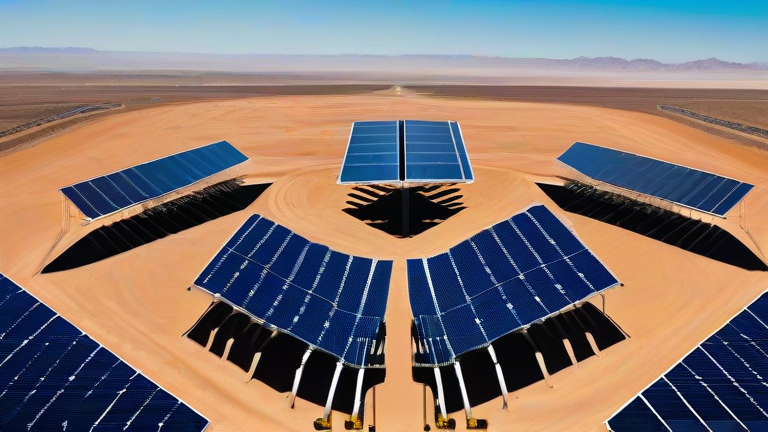
According to recent market analysis, the global AI chip market is projected to reach $400 billion by 2030, driven largely by enterprise adoption and autonomous systems. However, existing supply chains are strained, with lead times for high-performance GPUs extending beyond twelve months. By investing $16.8 billion, Musk aims to bypass these bottlenecks, creating a dedicated production line for custom silicon optimized for neural network processing. This vertical integration strategy mirrors successful models in the automotive industry but applies them to the digital realm. Simultaneously, the $10 billion solar plant addresses the critical issue of energy intensity. Training large language models consumes gigawatts of power, making energy costs a significant operational overhead. By generating renewable energy on-site, the company can stabilize costs and meet stringent environmental, social, and governance (ESG) criteria, which are increasingly important to institutional investors.
Expert Insights on Industry Impact
Industry analysts suggest that this move could redefine competitive dynamics in the semiconductor sector. Dr. Elena Rodriguez, a senior tech strategist at Global Innovation Partners, notes, “Musk is essentially building a walled garden of compute and energy. This reduces dependency on external suppliers like TSMC or NVIDIA, but it also raises the barrier to entry for competitors who cannot match such capital expenditure.” The sheer scale of these investments signals confidence in long-term growth, potentially pressuring other tech giants to accelerate their own infrastructure projects. Furthermore, the focus on solar energy aligns with global regulatory trends pushing for net-zero operations, positioning the company as a leader in sustainable computing.
Future Predictions and Risks
Looking ahead, this strategy could lead to a new era of vertically integrated tech ecosystems. If successful, it may encourage other industries to adopt similar models, integrating energy production directly into manufacturing hubs. However, risks remain. The capital intensity of these projects could strain short-term profitability, and execution risks in semiconductor fabrication are historically high. Additionally, regulatory scrutiny on market concentration may intensify. Despite these challenges, the potential for increased margin control and supply chain resilience makes this a compelling long-term play. The intersection of AI and renewable energy is no longer just a niche interest; it is becoming the core competitive advantage for future tech leaders. As the industry matures, those who control both the chips and the power will hold the most significant leverage in the global economy.
FAQ
Q: What is the total combined investment announced?
A: The total combined investment is $26.8 billion, split between $16.8 billion for chip manufacturing and $10 billion for solar energy infrastructure.
If you want to dig deeper, check out our guide on 10 Simple Lifestyle Hacks to Boost Your Daily Productivity a.
Q: How does this impact the global AI chip shortage?
A: It aims to alleviate shortages by creating a dedicated, internal supply chain for custom AI silicon, reducing reliance on third-party manufacturers.
Q: What is the primary benefit of the solar plant investment?
A: The primary benefit is stabilizing energy costs for power-intensive AI operations while meeting sustainability goals and reducing carbon footprint.
Leave a Reply