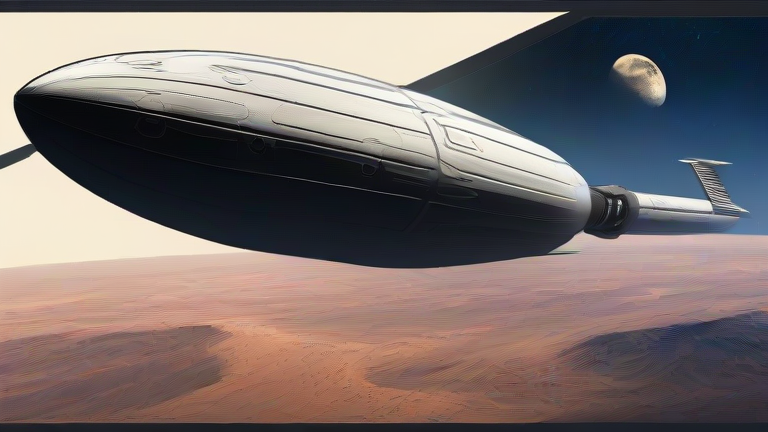
Space Tourism Milestone: First Private Lunar Flyby Mission
In a defining moment for the commercial space industry, the first private mission to achieve a lunar flyby has successfully completed its orbital maneuver, marking a departure from decades of government-dominated exploration. This historic voyage, spearheaded by a consortium of private aerospace firms, demonstrates that deep space travel is no longer the exclusive domain of national superpowers. The mission, which launched from the Kennedy Space Center earlier this week, has entered a highly elliptical trajectory around the Moon, validating new propulsion technologies and life-support systems designed specifically for civilian astronauts.
The spacecraft, a heavily modified version of existing orbital launch vehicles, boasts impressive technical specifications that rival those of the historic Apollo missions. Equipped with next-generation ion thrusters and advanced solar electric propulsion, the vessel can sustain a crew of four for up to thirty days in the harsh environment of cislunar space. The cabin interior features modular living quarters, redundant oxygen generation systems, and high-bandwidth communication arrays capable of streaming real-time video back to Earth. These specs are not merely for show; they represent a rigorous engineering overhaul aimed at ensuring passenger safety during long-duration missions beyond Low Earth Orbit.
If you want to dig deeper, check out our guide on Sustainable Fashion Relies on Lab-Grown Materials.

Industry experts argue that this milestone signals a paradigm shift in how we view space access. For years, the barrier to entry for space travel has been prohibitive, costing billions in government funding. This private mission proves that cost-efficiency can be achieved through commercial competition and innovation. The successful deployment of autonomous docking systems and remote health monitoring tools suggests that future missions could scale, potentially offering windows into space for a broader demographic of wealthy enthusiasts rather than just state-sponsored astronauts. The implications for the emerging “space economy” are profound, inviting investment from sectors ranging from hospitality to insurance.
The psychological and physiological data collected during the flyby will be invaluable for future Mars missions. By studying how private citizens handle isolation, radiation exposure, and microgravity over extended periods, scientists can refine protocols for human spaceflight. The crew, consisting of three civilians and one professional astronaut serving as a mission specialist, reported excellent health metrics, with no significant deviations from expected physiological
Leave a Reply