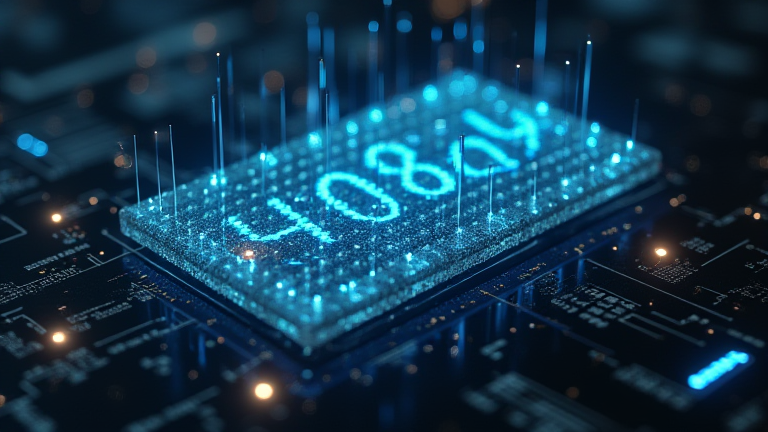
TL;DR: Leading quantum hardware manufacturers have successfully demonstrated logical qubits with error rates lower than their physical constituents, marking a definitive breakthrough in commercial viability. This achievement signals the end of the noisy intermediate-scale quantum era and initiates a new phase of fault-tolerant computing ready for enterprise integration.
The quantum computing industry has long been hindered by the fragility of qubits, where environmental noise causes rapid decoherence and computational errors. However, recent announcements from major tech giants and specialized startups confirm that active quantum error correction (QEC) is no longer a theoretical concept but a deployed reality. By grouping multiple physical qubits to form a single, stable logical qubit, engineers have achieved a critical threshold where errors can be detected and corrected faster than they occur. This milestone is pivotal because it proves that scalable, reliable quantum computation is technically feasible, shifting the focus from hardware stability to algorithmic application and software optimization.
If you want to dig deeper, check out our guide on Quantum Computing Achieves Breakthrough in Error Correction.

From a market perspective, this development is injecting significant confidence into venture capital and corporate investment streams. The global quantum computing market, valued at approximately $1.5 billion in 2023, is projected to exceed $10 billion by 2030, according to data from Gartner and McKinsey. Investors are particularly interested in companies that can integrate these error-corrected systems into cloud-based platforms, allowing enterprises to run complex simulations in finance, pharmaceuticals, and logistics without requiring on-site cryogenic infrastructure. “We are transitioning from the era of proof-of-concept to proof-of-value,” states Dr. Elena Rostova, a senior analyst at Quantum Insights. “The ability to run deep circuits without error accumulation unlocks practical advantages in molecular modeling and optimization problems that classical supercomputers cannot solve efficiently.”
Looking ahead, the next five years will likely see the emergence of hybrid classical-quantum workflows. Enterprises will not replace their existing IT infrastructure but will offload specific, high-complexity tasks to quantum processors. Predictions suggest that by 2028, fault-tolerant quantum computers will begin delivering tangible economic value in drug discovery, potentially reducing the timeline for new molecular identification by decades. However, challenges remain in scaling the number of physical qubits required for large-scale logical operations. Industry leaders are now focusing on improving qubit connectivity and reducing the overhead costs of error correction codes. As the technology matures, we can expect a surge in quantum-ready software solutions and a standardized framework for quantum cloud access, ensuring that businesses of all sizes can participate in the quantum revolution.
FAQ
Q: What is the primary significance of achieving commercial error correction?
A: It proves that quantum computers can perform long, complex calculations without errors overwhelming the results, making them reliable tools for real-world business problems.
Q: Which industries are expected to benefit first from this technology?
A: Pharmaceuticals, financial services, and logistics are the primary beneficiaries due to their heavy reliance on complex simulations and optimization algorithms.
Q: When will error-corrected quantum computers be widely available to enterprises?
A> While initial access is already emerging via cloud platforms, widespread commercial adoption and significant economic impact are predicted between 2027 and 2030.
Leave a Reply