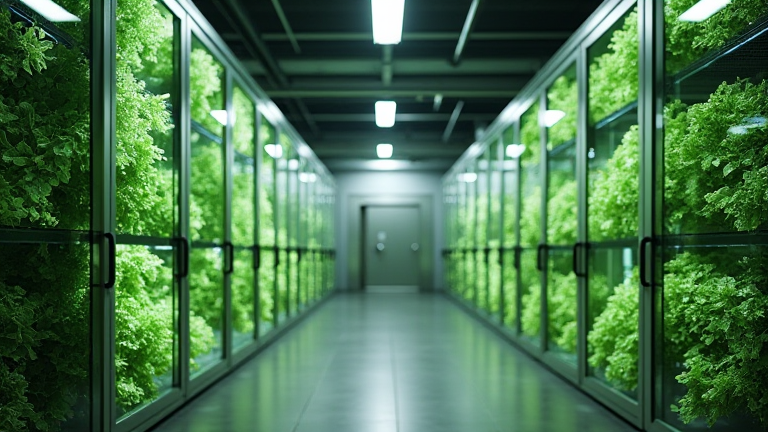
How Urban Vertical Farms Reduce Food Carbon Footprint
As global climate concerns intensify, the traditional agricultural supply chain faces unprecedented scrutiny. Conventional farming accounts for a significant portion of global greenhouse gas emissions, driven by heavy machinery, synthetic fertilizers, and, most notably, the immense carbon cost of transportation. Enter urban vertical farming: a revolutionary agri-tech model that redefines how we produce food by bringing cultivation directly into the heart of metropolitan centers. This shift is not merely a trend but a critical strategic pivot for sustainable business growth and environmental stewardship.
The Market Analysis: A Growing Demand for Sustainability
The vertical farming market is experiencing exponential growth, projected to reach billions in valuation within the next decade. This surge is fueled by two primary factors: rising consumer awareness of food miles and the urgent need for supply chain resilience. According to recent industry reports, the average meal travels over 1,500 miles from farm to plate in traditional systems. By contrast, vertical farms located in urban warehouses reduce this distance to mere blocks. Investors are increasingly capitalizing on this sector, recognizing that companies like AeroFarms and Bowery Farming are not just growing lettuce; they are building infrastructure for a low-carbon future. The economic viability of these operations is improving as energy-efficient LED technologies and automation lower operational costs, making them competitive with conventional agriculture.
If you want to dig deeper, check out our guide on AI-Driven Autonomous Cybersecurity Defense Systems.

Strategic Insights: Efficiency and Local Integration
Strategically, vertical farms leverage precision agriculture to minimize waste and maximize yield. By controlling every variable from light spectrum to nutrient delivery, these facilities use up to 95% less water than traditional farming. Furthermore, the reduction in transportation distances drastically cuts down on fossil fuel consumption associated with logistics. Businesses must adopt a hybrid distribution strategy, partnering with local grocery chains and restaurants to ensure fresh produce reaches consumers rapidly. This localized model not only reduces the carbon footprint but also enhances brand loyalty among eco-conscious consumers who value transparency and sustainability.
Case Studies: Real-World Impact
Consider the case of Farm.One, a New York-based vertical farm that supplies
Leave a Reply