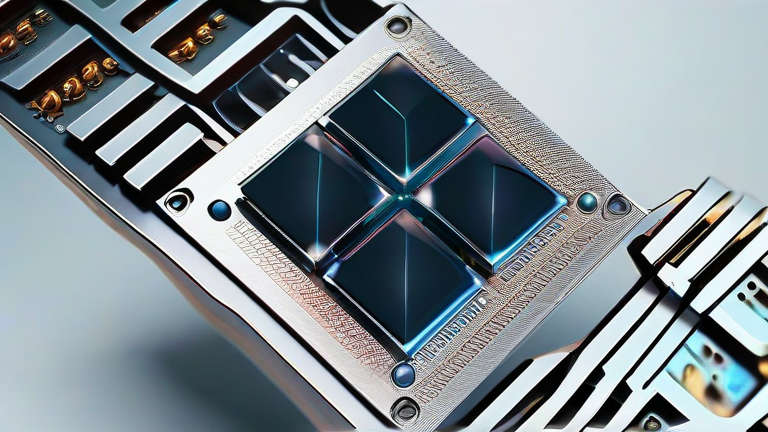
Quantum Computing Reaches Commercial Viability: What’s Next?

For decades, quantum computing remained a theoretical curiosity, confined largely to university laboratories and the research divisions of tech giants. The journey from proof-of-concept to practical application was fraught with challenges, primarily concerning decoherence and error rates. However, a significant paradigm shift has occurred in the last twelve months. Major industry leaders have officially announced that quantum processors have reached a level of stability and scale where they are no longer just experimental toys, but viable commercial tools. This milestone marks the end of the “noisy intermediate-scale quantum” (NISQ) era and the beginning of the fault-tolerant age.
Breaking the Error Threshold
The core of this commercial breakthrough lies in error correction. Previously, qubits were so fragile that environmental noise would cause calculations to fail before completion. Recent developments from leading firms like IBM and Google have introduced logical qubits composed of hundreds of physical qubits. These logical units maintain coherence long enough to perform complex algorithms with error rates below one percent, a critical threshold for utility. The latest processors boast over 1,000 stable qubits, with coherence times extending into the millisecond range—orders of magnitude better than previous generations. This stability allows for the execution of deep circuits that were previously impossible, enabling real-world problem solving in finance, logistics, and materials science.
Industry Impact and Early Adopters
The financial sector has been among the first to capitalize on this new capability. Banks are now using quantum algorithms for portfolio optimization and risk analysis, identifying correlations in market data that classical supercomputers miss. In pharmaceuticals, the impact is even more profound. Companies are leveraging quantum simulations to model molecular interactions at an atomic level, drastically reducing the time required to identify potential drug candidates. What once took years of wet-lab experimentation can now be simulated in days, potentially accelerating the development of life-saving treatments for Alzheimer’s and cancer.
Furthermore, the logistics and supply chain industries are beginning to integrate quantum annealing systems to solve complex routing problems. With global supply chains becoming increasingly intricate, the ability to optimize routes
Leave a Reply