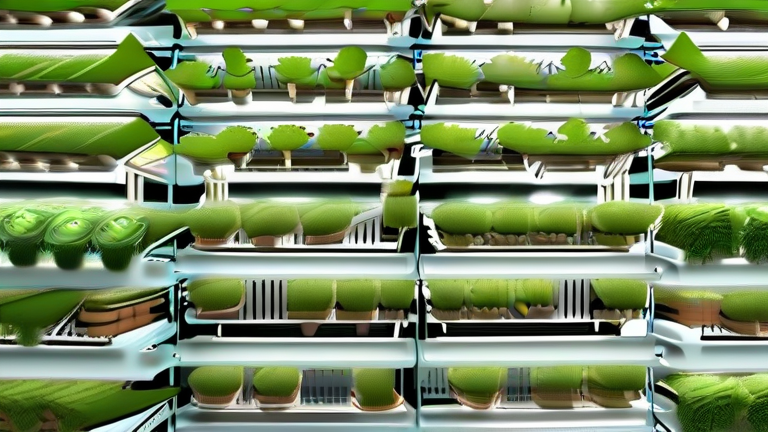
Vertical Farming: How It Feeds Growing Urban Populations
As the global population surges toward nine billion by 2050, traditional agriculture faces an existential crisis. With arable land shrinking and climate change disrupting weather patterns, the race to secure food supplies has accelerated the adoption of vertical farming. This innovative agricultural technique involves growing crops in stacked layers, often in controlled indoor environments, utilizing hydroponic, aeroponic, or aquaponic systems. By decoupling food production from soil and seasonal constraints, vertical farming is emerging as a critical pillar in the future of urban food security.

The market dynamics surrounding this sector are shifting rapidly. According to recent industry reports, the global vertical farming market was valued at approximately $4.5 billion in 2022 and is projected to expand at a Compound Annual Growth Rate (CAGR) of over 25% through 2030. This explosive growth is driven by rising consumer demand for locally sourced, pesticide-free produce, as well as the economic benefits of reduced transportation costs and lower water usage. Traditional farming requires vast amounts of water, whereas vertical systems can use up to 95% less water by recirculating nutrient solutions. This efficiency is not just an environmental win; it is a financial imperative for cities facing water scarcity.
If you want to dig deeper, check out our guide on Lab-Grown Meat Hits Mainstream Supermarkets.
Industry experts emphasize that the technology has moved past the experimental phase into scalable commercial viability. Dr. Elena Ross, a leading agritech analyst, notes, “We are no longer asking if vertical farming works; we are asking how efficiently it can operate. The integration of AI and machine learning has allowed operators to optimize light spectra and nutrient delivery in real-time, drastically reducing energy costs and increasing yield per square foot.” This technological maturity is enabling companies to diversify their crop portfolios beyond leafy greens, moving into high-value herbs, strawberries, and even microgreens, thereby improving profit margins and market resilience.
Looking ahead, the future of vertical farming lies in hybridization and policy integration. Experts predict that major metropolitan areas will soon mandate a certain percentage of local food production in new commercial developments. Furthermore, advancements in renewable energy integration, such as solar-powered LED systems,
Leave a Reply