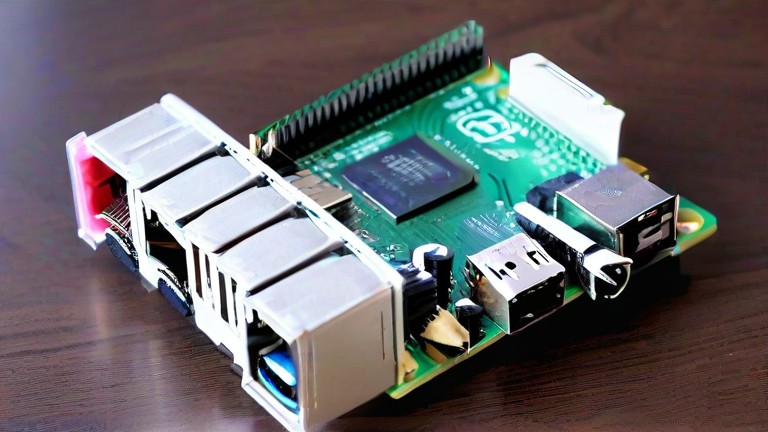
Raspberry Pi 5 vs 4: Which One Is Right for Your Home Lab?
TL;DR: The Raspberry Pi 5 is the superior choice for most new home lab builds due to its significantly faster CPU, dedicated video processing, and improved power delivery. However, the Pi 4 remains a viable, cost-effective option for low-power, legacy, or strictly budget-constrained projects where raw performance is less critical.
Performance and Hardware Leap
The transition from the Raspberry Pi 4 to the Pi 5 represents a generational shift rather than a simple iteration. The Pi 5 features a Quad-Core ARM Cortex-A76 processor clocked at 2.4 GHz, offering roughly 2 to 3 times the performance of the Pi 4’s Cortex-A72 cores. This increase is not merely academic; it directly impacts home lab utility. For users running Docker containers, virtual machines, or compiling code, the Pi 5 drastically reduces build times and improves overall system responsiveness. Additionally, the Pi 5 introduces a dedicated video codec block, which offloads media decoding tasks from the main CPU. This is crucial for home media servers, allowing the system to handle 4K HDR playback smoothly without taxing the core processors, a common bottleneck in Pi 4 setups.
If you want to dig deeper, check out our guide on GLP-1 Drugs: How They Are Reshaping the Food & Beverage Indu.
Power, Cooling, and Connectivity
Industry impact is heavily influenced by the Pi 5’s power requirements. While the Pi 4 required 5V/3A, the Pi 5 demands 5V/5A via a USB-C PD (Power Delivery) connector. This change necessitates a new power supply for optimal performance and stability. Furthermore, the increased thermal output makes passive cooling insufficient for sustained workloads. Most Pi 5 builds now require an active cooling fan or a high-quality heatsink. On the connectivity front, the Pi 5 supports PCIe 2.0 x1 via a dedicated port, enabling the use of NVMe SSDs for high-speed storage. This is a game-changer for home labs, as it eliminates the latency and speed limits of SD cards or USB 3.0 attached SSDs, making the Pi 5 feel much more like a traditional x86 server in terms of I/O throughput.
Which One Should You Choose?
If you are building a new home lab from scratch, the Raspberry Pi 5 is the clear winner. Its superior processing power, faster storage options, and dedicated media engine make it a more versatile platform for running complex services like Kubernetes clusters, high-load databases, or multi-container media stacks. The industry is moving toward higher-performance SBCs, and the Pi 5 aligns with this trend by offering near-desktop performance in a compact form factor. Conversely, the Pi 4 is still worth considering if you already have the hardware, power supplies, and cooling solutions in place. It is also ideal for edge computing nodes where power consumption is a primary concern, or for educational purposes where the lower price point allows for purchasing multiple units for redundancy or testing. However, for new projects demanding reliability, speed, and future-proofing, the Pi 5’s advantages are too significant to ignore. The ecosystem of compatible cases, power supplies, and accessories has matured rapidly, making the transition to Pi 5 seamless for most users.
FAQ
Q: Can I use a Raspberry Pi 4 power supply with a Pi 5?
A: No, the Pi 5 requires a 5V/5A USB-C PD power supply for full performance; using a 3A supply will throttle the CPU and may cause instability under load.
Q: Is the Pi 5 significantly faster for running Docker containers?
A: Yes, the Pi 5 is approximately 2-3 times faster than the Pi 4 in CPU-bound tasks, resulting in much quicker container startup times and better concurrent execution.
Q: Does the Pi 5 require an active cooling fan?
A: While not strictly mandatory for light use, an active cooling fan is highly recommended for the Pi 5 to prevent thermal throttling during sustained workloads in a home
Leave a Reply