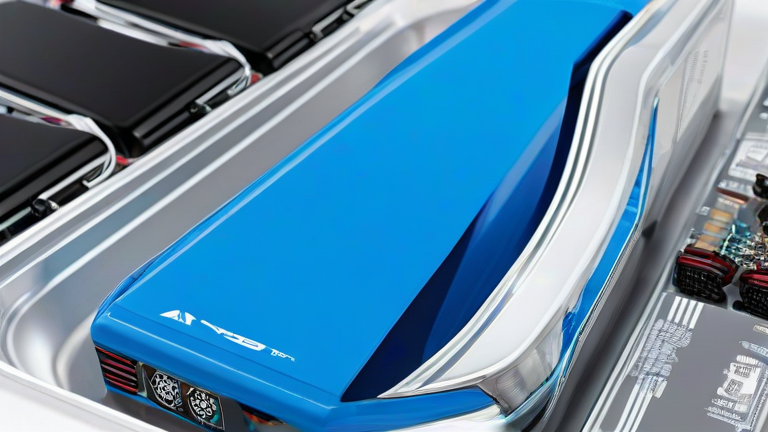
TL;DR: Solid-state batteries have officially entered mass production for electric vehicles, with pilot lines in Japan, China, and Europe scaling to commercial volumes in 2025. This milestone promises faster charging, greater range, and improved safety—but high costs and limited capacity mean widespread adoption will take several more years.
A Long-Awaited Milestone
After a decade of laboratory breakthroughs and repeated delays, solid-state batteries are finally rolling off production lines. Toyota, backed by Idemitsu Kosan, began commercial output at its Fukui facility in early 2025, while China’s CATL and France’s Blue Solutions have launched competing lines. Unlike conventional lithium-ion cells that use liquid electrolytes, solid-state designs replace them with ceramic or sulfide materials, enabling higher energy density and dramatically lower fire risk.
If you want to dig deeper, check out our guide on Solid-State Batteries Reach Mass Production for Affordable E.
Market Analysis: Demand Outpaces Supply
Analysts estimate the solid-state EV battery market will reach $8 billion by 2028, growing at over 35% annually. However, early production volumes remain modest—global capacity is projected at just 12 GWh in 2025, a fraction of the 1,500 GWh liquid-electrolyte market. Premium automakers are first in line: Mercedes-Benz and Nio have secured multi-year supply agreements, while mass-market brands will likely wait until costs fall below $100 per kWh, expected around 2030.
Strategy Insights for Manufacturers
Winning in this transition requires three moves. First, secure raw material supply chains—sulfide electrolytes depend on lithium and lanthanum, both subject to geopolitical risk. Second, invest in hybrid production lines that can switch between solid-state and conventional cells to manage yield volatility. Third, target niche high-margin segments like luxury EVs and commercial fleets before scaling to economy models. Partnerships between automakers and battery specialists, such as the Toyota–Idemitsu alliance, are proving more effective than solo efforts.
Case Studies
Toyota–Idemitsu: The joint venture converted an existing petroleum facility into a solid-state line, cutting construction time by 40% and leveraging Idemitsu’s materials expertise to improve sulfide electrolyte durability.
Nio: The Chinese automaker’s 150 kWh semi-solid pack, offered via battery-swap stations, delivers over 1,000 km of range and serves as a real-world proving ground before full solid-state rollout.
FAQ
Q: Are solid-state EVs available to buy today?
A: Yes, but only in limited numbers. Premium models from Toyota and Nio are available in select markets, with broader availability expected by 2027.
Q: Will solid-state batteries make current EVs obsolete?
A: No. Liquid lithium-ion batteries will dominate mass-market vehicles for years due to lower costs and established supply chains.
Q: What is the biggest barrier to adoption?
A: Manufacturing cost and yield. Solid-state cells currently cost roughly twice as much per kWh as conventional cells.
Leave a Reply