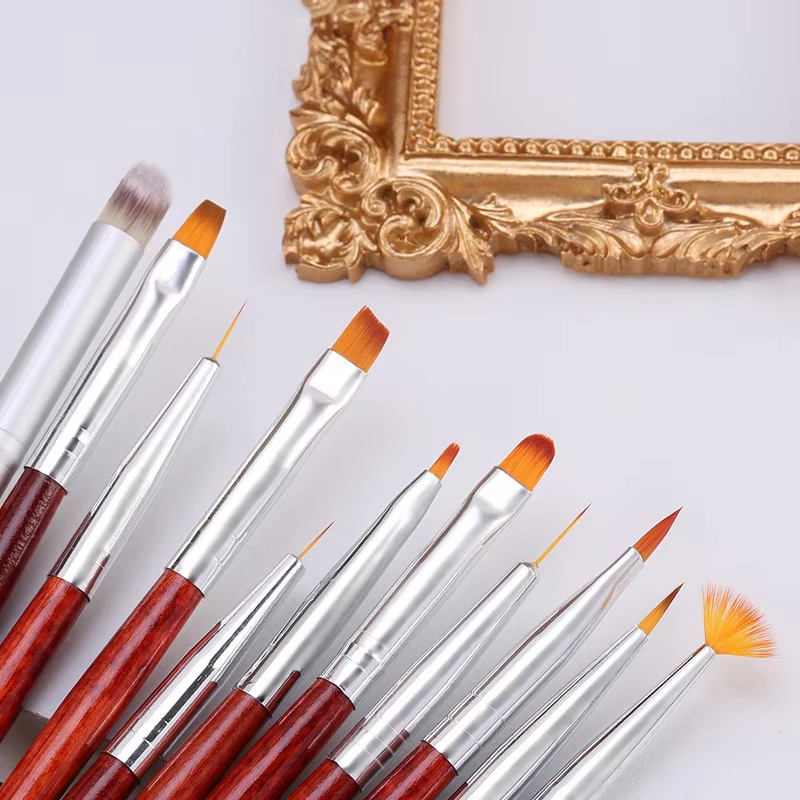
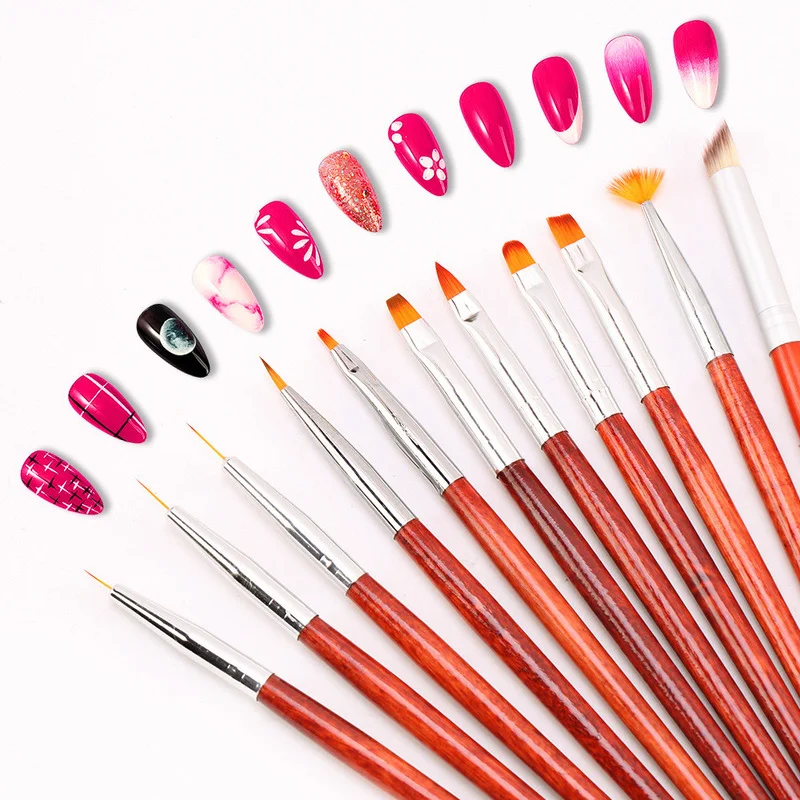
This is a fine-detail brush with a wooden handle, designed for painting intricate lines and patterns in UV gel or acrylic. It suits artists who value a rigid, stable grip for precise control over thick or thin tips, rather than those seeking lightweight or flexible options.
What to look for
Handle Rigidity
Wood provides a stiff, unyielding grip that translates hand movements directly to the tip. This is crucial for steady lines but offers less shock absorption than plastic handles, which may feel heavier during long sessions.
Hair Quality
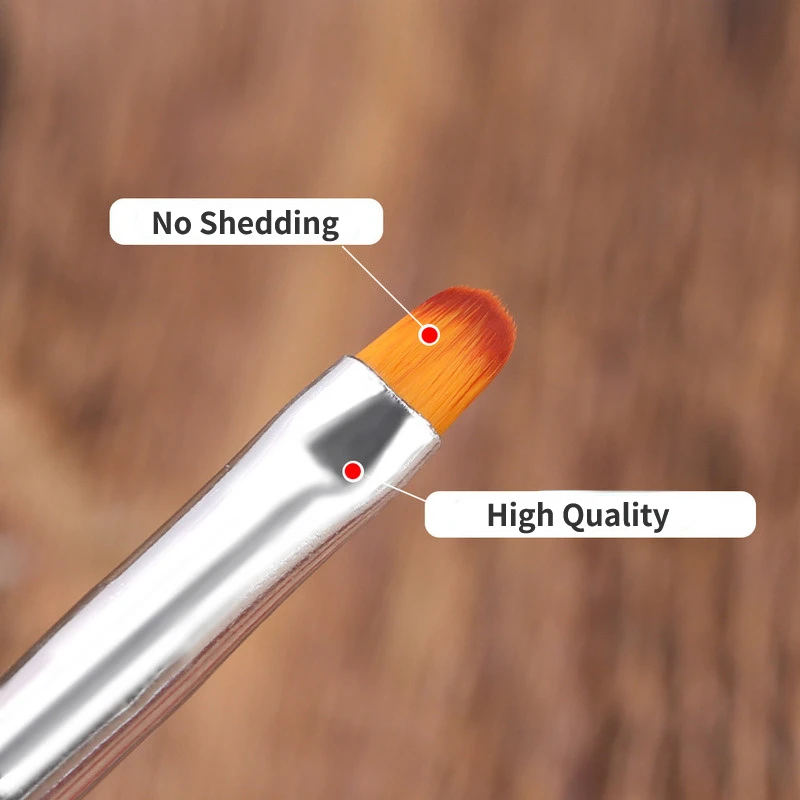
Check if the bristles are synthetic or natural hair. Synthetic bristles hold gel better and resist water, while natural hair offers softer application. Ensure the ferrule is tight to prevent shedding during vigorous painting.
Taper Precision
Inspect the tip taper for consistency. A sharp, fine point allows for hair-thin lines in nail art. A blunter tip is better for filling larger areas but lacks the precision needed for detailed dotting or line work.
Maintenance Ease
Wood handles can warp or crack if soaked in solvent for extended periods. Wipe clean instead of soaking to prolong the life of the handle. Synthetic handles are generally more resistant to moisture damage.
How to use it
Fine Line Art
Use this brush for drawing thin geometric patterns or French tip lines. Hold the brush close to the ferrule for maximum control and use a light hand to prevent the gel from pooling at the tip.
UV Gel Extension
Apply a small amount of builder gel and drag the brush to sculpt the apex of an extension. The rigid wood handle helps maintain a consistent angle, ensuring even thickness across the nail surface.
Dotting and Details
Dip only the very tip of the brush into gel to create uniform dots. The stability of the wood handle prevents accidental smudging when placing adjacent dots for complex designs.
Product photos
At a glance
| Material | Wood handle with synthetic or natural hair bristles |
|---|---|
| Typical size | Standard nail art brush length |
| Best for | Precise line work and detailed gel painting |
| Where it fits | closet, pantry, or under-desk storage |
Frequently asked questions
Is a wood-handled brush better than plastic for nail art?
Wood offers more rigidity, which many artists prefer for steady, precise line work. Plastic handles are lighter and often cheaper but may feel less stable. The choice depends on whether you prioritize tactile feedback or weight reduction during long sessions.
Can I soak a wood nail brush in acetone?
It is best to avoid prolonged soaking in acetone or other solvents. Wood can absorb moisture, leading to swelling or cracking over time. Instead, wipe the brush clean with solvent-soaked wipes to preserve the structural integrity of the handle.
What type of bristles are best for UV gel?
Synthetic bristles are generally preferred for UV gel because they hold the product well and resist damage from solvents. Natural hair bristles offer a softer touch but may wear out faster and require more careful cleaning after each use.
Verdict
Buy this if you need rigid control for precise gel line work and are willing to maintain the wood. Skip it if you prioritize lightweight ergonomics or want a tool that can be soaked in solvent without care.
Product: Wood Nail Brushes vs Synthetic: Durability and Control Trade-offs

View this product on AliExpress
Listing: https://www.aliexpress.com/item/1005004471662837.html
Related guides
- Silicone Oiler vs. Traditional Brushes: Practical Kitchen Trade-Offs
- Spatial Computing in Enterprise: Finding Its Real-World Footing
- How to Use Notion for Project Management: A Step-by-Step Tutorial
{“@context”: “https://schema.org”, “@graph”: [{“@type”: “Article”, “headline”: “Wood Nail Brushes vs Synthetic: Durability and Control Trade-offs”, “description”: “Compare wood-handled nail art brushes to synthetic options. Learn how material affects gel flow, durability, and cost to find the right tool for your detail wor”, “inLanguage”: “en”, “author”: {“@type”: “Organization”, “name”: “mambag.com”}}, {“@type”: “FAQPage”, “mainEntity”: [{“@type”: “Question”, “name”: “Is a wood-handled brush better than plastic for nail art?”, “acceptedAnswer”: {“@type”: “Answer”, “text”: “Wood offers more rigidity, which many artists prefer for steady, precise line work. Plastic handles are lighter and often cheaper but may feel less stable. The choice depends on whether you prioritize tactile feedback or weight reduction during long sessions.”}}, {“@type”: “Question”, “name”: “Can I soak a wood nail brush in acetone?”, “acceptedAnswer”: {“@type”: “Answer”, “text”: “It is best to avoid prolonged soaking in acetone or other solvents. Wood can absorb moisture, leading to swelling or cracking over time. Instead, wipe the brush clean with solvent-soaked wipes to preserve the structural integrity of the handle.”}}, {“@type”: “Question”, “name”: “What type of bristles are best for UV gel?”, “acceptedAnswer”: {“@type”: “Answer”, “text”: “Synthetic bristles are generally preferred for UV gel because they hold the product well and resist damage from solvents. Natural hair bristles offer a softer touch but may wear out faster and require more careful cleaning after each use.”}}]}, {“@type”: “Product”, “name”: “Wood Nail Brushes vs Synthetic: Durability and Control Trade-offs”, “description”: “This is a fine-detail brush with a wooden handle, designed for painting intricate lines and patterns in UV gel or acrylic. It suits artists who value a rigid, stable grip for precise control over thick or thin tips, rather than those seeking lightweight or flexible options.”, “image”: “https://ae-pic-a1.aliexpress-media.com/kf/Sf45ac099144c45f3970665971c73b5ecJ.jpg”, “offers”: {“@type”: “Offer”, “availability”: “https://schema.org/InStock”}}]}
Leave a Reply