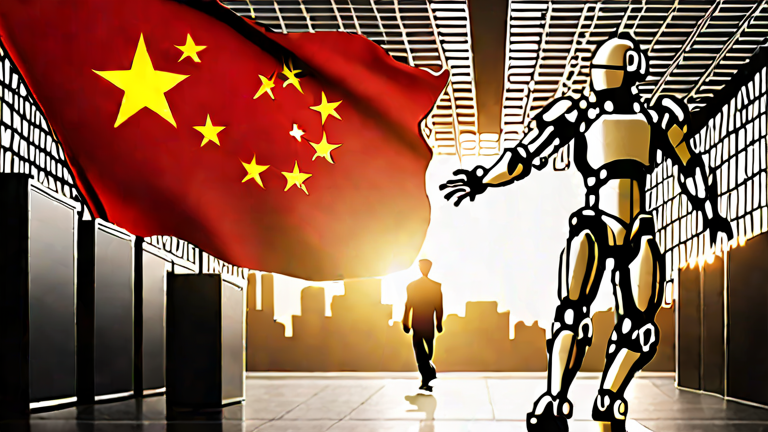
China’s AI Reach Will Beat the US, Says Kai-Fu Lee
TL;DR: Kai-Fu Lee predicts China will surpass the US in AI adoption due to lower costs and massive data scale. This shift will reshape global tech markets by 2030.
The Cost of Innovation
Leading investor and Sinovation Ventures founder, Kai-Fu Lee, has recently asserted that China is poised to overtake the United States in the practical deployment of artificial intelligence. This prediction is not based on raw computing power alone, but on the economic efficiency and data volume that characterize the Chinese market. While US firms often focus on foundational model development, Chinese companies are rapidly integrating AI into consumer applications, leveraging a population of over 1.4 billion users to generate unprecedented datasets. This “data flywheel” effect allows for rapid iteration and refinement, giving Chinese AI services a distinct competitive edge in speed and utility.
If you want to dig deeper, check out our guide on Why Matcha Latte Trends Are Taking Over Social Media.
Market data supports this trajectory. Recent reports indicate that China’s AI market size is projected to grow at a compound annual growth rate (CAGR) of 35% through 2030, significantly outpacing the US market’s estimated 25% growth. Furthermore, the cost of inference in China is often cited as being 40-50% lower than in the US, thanks to optimized hardware supply chains and competitive pricing structures among cloud providers like Alibaba Cloud and Tencent Cloud. These economic factors make advanced AI features accessible to a broader demographic, accelerating mass adoption rates that the US, with its higher operational costs, struggles to match in consumer sectors.
Expert Insights and Strategic Shifts
Industry experts note that the US advantage lies in frontier research and chip manufacturing, particularly with Nvidia’s dominance. However, Lee argues that the battle is shifting from “who builds the best model” to “who solves the most problems.” Chinese tech giants are focusing on vertical-specific AI solutions in healthcare, logistics, and finance. For instance, in the healthcare sector, AI-driven diagnostic tools in China are being deployed in rural clinics at a scale and speed unseen in Western markets. This practical application drives revenue and user loyalty, creating a self-sustaining ecosystem that funds further research.
Moreover, the regulatory landscape in China, while strict, provides a clear framework for AI development. The government’s proactive stance on AI guidelines has allowed companies to innovate within defined boundaries, reducing legal uncertainties. In contrast, the fragmented regulatory approach in the US and EU often slows down deployment. Experts predict that by 2027, China will account for over 40% of global AI patent filings, a significant jump from its current share.
Future Predictions
Looking ahead, the convergence of 5G infrastructure and AI in China will create new market opportunities. Predictions suggest that by 2030, AI-driven services will contribute over 10% to China’s GDP, compared to 6% in the US. This economic impact will likely lead to a bifurcation of the global tech landscape, with distinct AI ecosystems emerging in the East and West. For businesses, this means understanding both markets is crucial for long-term survival. The era of US-centric AI dominance is waning, replaced by a multipolar competition where China’s scale and efficiency will play a decisive role in shaping the future of intelligent technology.
FAQ
Q: What is the primary reason for China’s expected AI lead?
A: Lower operational costs and massive data scale enable faster adoption and iteration.
Q: How does the US compare in AI research?
A: The US still leads in foundational model development and semiconductor manufacturing.
Q: When is China predicted to surpass the US in AI market share?
A: Experts predict China will dominate in practical deployment by 2030.
Leave a Reply