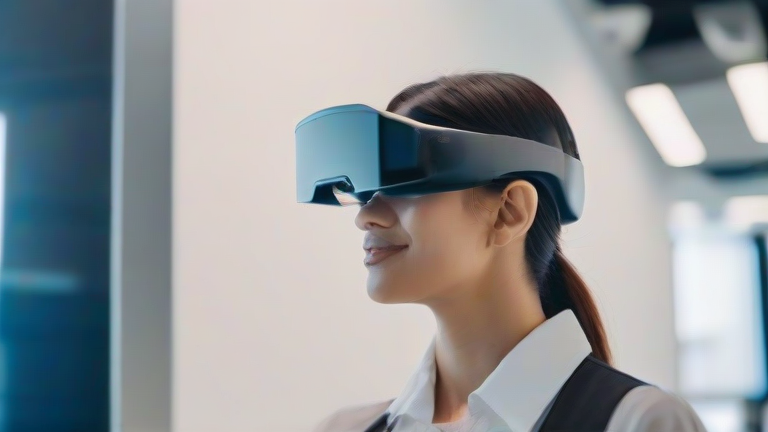
Scale Employee Training with Hands-Free AR Glasses
TL;DR: Augmented Reality (AR) glasses enable enterprises to scale immersive, hands-free training by overlaying digital instructions onto physical tasks, significantly reducing onboarding time. This technology transforms static manuals into dynamic, real-time guides, allowing employees to learn complex procedures without interrupting workflow or requiring immediate supervisor presence.
The global market for enterprise Augmented Reality is experiencing unprecedented growth, driven by the urgent need for efficient workforce development in manufacturing, healthcare, and logistics. Recent industry reports indicate that the AR sector for enterprise training is projected to expand at a compound annual growth rate exceeding 20% over the next five years. This surge is not merely a technological trend but a strategic necessity. Traditional training methods, which rely heavily on classroom instruction and printed manuals, are increasingly viewed as obsolete. They are time-consuming, costly, and often fail to translate theoretical knowledge into practical skill effectively. In contrast, hands-free AR solutions offer a scalable alternative that addresses the gap between learning and doing. By projecting step-by-step instructions, safety warnings, and visual cues directly into the employee’s field of view, organizations can ensure consistency and accuracy across distributed teams. This capability is particularly critical in industries where precision is paramount and the cost of error is high.
If you want to dig deeper, check out our guide on Neural Wearables: Turn Thoughts to Text for Daily Tasks.
Strategic Insights for Implementation
Successfully integrating AR into training programs requires a shift in strategic thinking from content creation to experience design. Leaders must focus on reducing cognitive load. Unlike video tutorials, which require users to pause, rewind, and look away from the task, AR glasses provide contextual, just-in-time information. This allows trainees to keep their hands on the tools and their eyes on the job. Strategy insights suggest that companies should start with high-value, complex tasks rather than simple onboarding. For example, training a technician to repair a specific engine model benefits immensely from AR because the visual overlay can highlight specific components and torque settings. Furthermore, data analytics integrated into AR platforms allow managers to track performance metrics in real-time. By analyzing how long employees spend on specific steps and identifying common errors, organizations can refine their training modules continuously. This data-driven approach ensures that training remains relevant and effective, adapting to new technologies and processes as they evolve. The key to success lies in seamless integration with existing Learning Management Systems (LMS), ensuring that AR content is easily accessible and updated without requiring extensive IT overhauls.
Case Studies in Action
Leading manufacturing firms have already reaped the benefits of this technology. One major automotive manufacturer implemented AR glasses for its assembly line workers. The system provided real-time guidance on complex wiring installations. As a result, training time for new hires was reduced by 30%, and error rates dropped by 40% within the first quarter. The hands-free nature of the device allowed workers to maintain productivity levels while learning, eliminating the need for paid downtime. Similarly, a global logistics company used AR to train warehouse staff on inventory management. By scanning items and receiving immediate visual confirmations, employees could navigate the facility more efficiently. This led to a 25% increase in picking accuracy and a significant reduction in training costs. These case studies demonstrate that AR is not just a futuristic concept but a practical tool for immediate operational improvement. The return on investment is evident in reduced training durations, lower error costs, and improved employee retention due to a more engaging and supportive learning environment.
FAQ
Q: Is AR training suitable for all employee levels?
A: Yes, AR is beneficial for everyone, but it is most impactful for complex tasks. New hires benefit from guided onboarding, while experienced workers can use it for advanced troubleshooting and skill updates.
Q: How does AR reduce training costs compared to traditional methods?
A: It reduces costs by minimizing the need for physical travel, reducing the time supervisors spend on one-on-one training, and lowering the expense of errors and rework caused by improper training.
Q: What are the main challenges in adopting AR glasses?
A: The primary challenges include initial hardware investment, ensuring network connectivity in remote areas, and managing user comfort during long sessions. However,
Leave a Reply